




Introduction
Verdicchio is the unsung heroine of Italian white wines – a variety that wins over drinkers with its refreshing acidity, mineral elegance and a characteristic almond note on the palate. In the gentle hills of Le Marche along the Adriatic coast, this indigenous grape produces wines that perfectly suit the Italian way of life: uncomplicated in the best sense, yet with surprising depth and ageing potential. While international varieties like Chardonnay and Sauvignon Blanc are in the spotlight, Verdicchio has won over a loyal circle of connoisseurs who appreciate its crisp freshness and outstanding value for money.
Flavour Profile & Character
Verdicchio presents itself on the palate as a true all-rounder with character. The first encounter is defined by a lively, almost crisp acidity that immediately conveys freshness. This acid structure is the backbone of the wine and makes it so refreshing and vibrant. The flavour is initially dominated by notes of green apple and citrus fruits, especially lemon and lime. The most distinctive feature comes, however, on the finish: a subtle but unmistakable bitter almond note that lends the wine complexity and memorability.
The body sits in the medium range – Verdicchio is not as light on its feet as a Pinot Grigio, but not as powerful as an oak-aged Chardonnay either. This balance makes it a versatile food companion. The texture is usually silky-creamy, especially in wines that have undergone some lees ageing.
Depending on ageing and origin, Verdicchio shows different faces: simple, youthfully drunk versions from the DOC Verdicchio dei Castelli di Jesi are fresh, uncomplicated and with a pronounced fruit emphasis. Wines from the smaller, higher-elevation DOCG Matelica, by contrast, show more structure, minerality and complexity. The finest Riserva wines, often aged in barrique, develop additional notes of white peach, a nutty creaminess and can age for years.
With age Verdicchio gains in depth. The fresh fruit aromas give way to more complex notes of honey, toasted almonds and a hint of petrol – similar to aged Riesling. High-quality Verdicchio wines can readily age for 5–10 years and longer.
Origin & History
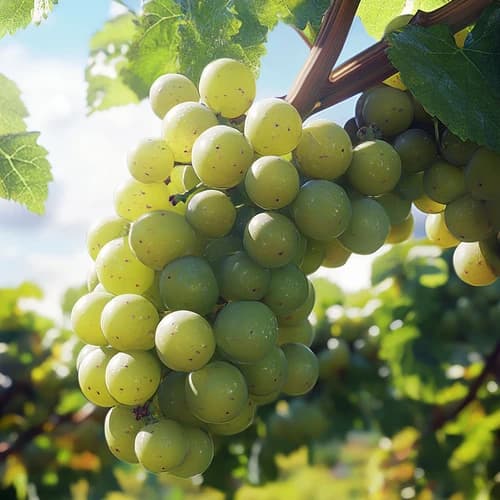
Verdicchio comes from Le Marche, that often-overlooked region on the Adriatic coast of central Italy between Emilia-Romagna and Abruzzo. The name probably derives from the Italian "verde" (green) and refers to the greenish-yellow colour of the grapes – or to the colour of the young wine. The first documented mentions of the variety date back to the 14th century, when it was still known by various local names.
For a long time Verdicchio was something of a local secret and was marketed as an uncomplicated everyday wine in its characteristic amphora-shaped bottle reminiscent of traditional olive oil vessels – a bottle shape that has remained a trademark to this day. It was not until the 1980s and 1990s that ambitious winemakers such as Garofoli, Umani Ronchi and Bucci began to reveal the true potential of the variety, producing complex, age-worthy wines that attracted international attention.
Today Verdicchio is grown mainly in two DOC/DOCG areas: Verdicchio dei Castelli di Jesi DOC (the larger area with around 3,000 hectares) and Verdicchio di Matelica DOCG (the smaller, often more highly rated area with around 300 hectares). Smaller quantities are also found in other parts of Le Marche and sporadically in Lombardy.
Cultivation & Terroir
Verdicchio is a relatively adaptable variety that nevertheless prefers certain conditions. It thrives best in a temperate climate with warm but not excessively hot summers. The proximity to the Adriatic provides cooling breezes that help the variety preserve its characteristic acidity – a decisive factor for quality.
The two main growing areas differ climatically: the Castelli di Jesi zone lies closer to the coast at elevations of 200–500 metres and is somewhat warmer and milder. Matelica, on the other hand, is located inland in a valley between the Apennines at 300–500 metres elevation. Here day-to-night temperature swings are greater, which leads to a slower ripening and consequently more structure and minerality.
As regards soils, Verdicchio shows a preference for calcareous, clay-rich soils with good drainage. In Matelica the soils are often more interspersed with limestone, which contributes to the pronounced minerality of these wines. The variety is relatively vigorous and productive, making yield reduction an important quality factor.
Harvest typically takes place between early and mid-September. The right timing is crucial: harvested too early, Verdicchio can be too acidic and thin; too late, and it loses its characteristic freshness and elegance.
Wine Styles & Variants
Verdicchio appears in various stylistic directions, ranging from simple everyday wine to complex top-tier example.
Classic style: The majority of Verdicchio wines are aged in stainless steel tanks to preserve freshness and fruitiness. These wines come to market young and should be drunk within 2–3 years. They are uncomplicated, refreshing and perfect for everyday enjoyment.
Riserva & barrique ageing: Higher-quality Verdicchio wines, especially the Riserva versions, often mature partially or fully in oak barrels. This gives them more structure, creaminess and complexity. The best producers use large old barrels or small barriques, with the oak influence typically restrained so as not to overwhelm the fruit and minerality. These wines need time to open up and can age for 10 years and longer.
Sur Lie: Some producers leave the wine on the fine lees for an extended period (sur lie), which gives it additional creaminess, a round texture and complex, yeasty aromas.
Spumante: On a smaller scale, Verdicchio is also made into sparkling wine, mostly by the Charmat method. These Spumante are fresh, fruity and an interesting alternative to Prosecco.
Blends: Verdicchio is sometimes blended with other local varieties such as Trebbiano or Malvasia, but is most often found as a single variety. The finest wines are 100% Verdicchio and carry the designation "Classico" or "Superiore".
Typical Aromas
Primary Aromas (from the grape)
The primary aromas of Verdicchio are shaped above all by citrus fruits. Fresh lemon and lime notes dominate, accompanied by green apple that lends the wine its crisp freshness. Depending on terroir and ripeness, notes of white peach are added, especially in wines from warmer sites. A characteristic element is the mineral component – particularly pronounced in Matelica – reminiscent of wet stones or flint. In cooler years or with wines from higher elevations, green, herbal notes can also appear.
Secondary Aromas (through winemaking)
In wines with lees ageing, creamy, yeasty notes develop that recall fresh brioche or buttermilk. Verdicchio aged in wood also shows subtle vanilla and hazelnut notes, though good producers take care that the oak does not overpower the primary fruit aromas. Malolactic fermentation, carried out for some Riserva wines, softens the acidity slightly and adds buttery nuances. These secondary aromas arise through vinification.
Tertiary Aromas (through ageing)
With bottle age, Verdicchio develops fascinating tertiary aromas. The fresh citrus notes give way to more complex notes of honey, beeswax and toasted almonds. Particularly characteristic is the development of a petrol note in well-aged wines, similar to aged Riesling – a sign of quality rather than a fault. High-quality Verdicchio wines, especially those from Matelica, can readily age for 10–15 years, gaining in complexity and depth without losing their fundamental freshness.
Food Pairing
Perfect Combinations
Seafood and fish from the Adriatic coast: Verdicchio is made for seafood – it is no coincidence that it comes from a coastal region. The high acidity and citrus freshness harmonise perfectly with raw oysters, clams, grilled calamari or a classic fritto misto. The bitter almond note on the finish builds an exciting bridge to pan-fried or grilled seafood. Particularly recommended: brodetto, the traditional fish stew of Le Marche.
Pasta with seafood: Spaghetti alle vongole (spaghetti with clams) is the classic pairing. The wine's acidity cuts through the olive oil, while the minerality underscores the sea aromas. Verdicchio is also ideal alongside pasta with prawns, squid or a light tomato-fish sauce.
Soft cheeses and white poultry: The medium body makes Verdicchio a good partner for creamy cheeses such as stracchino or young pecorino. It also pairs superbly with white poultry, especially chicken with lemon and herbs or a schnitzel in a light white wine sauce.
Roasted vegetables: The almond note and moderate structure of Verdicchio harmonise wonderfully with roasted vegetables such as courgette, aubergine or fennel. A mixed vegetable platter with olive oil and fresh herbs is a fantastic vegetarian option.
Pro tip: Try an aged Verdicchio Riserva with truffle pasta dishes – the wine's nutty, complex aromas are a perfect match for the earthy truffle notes.