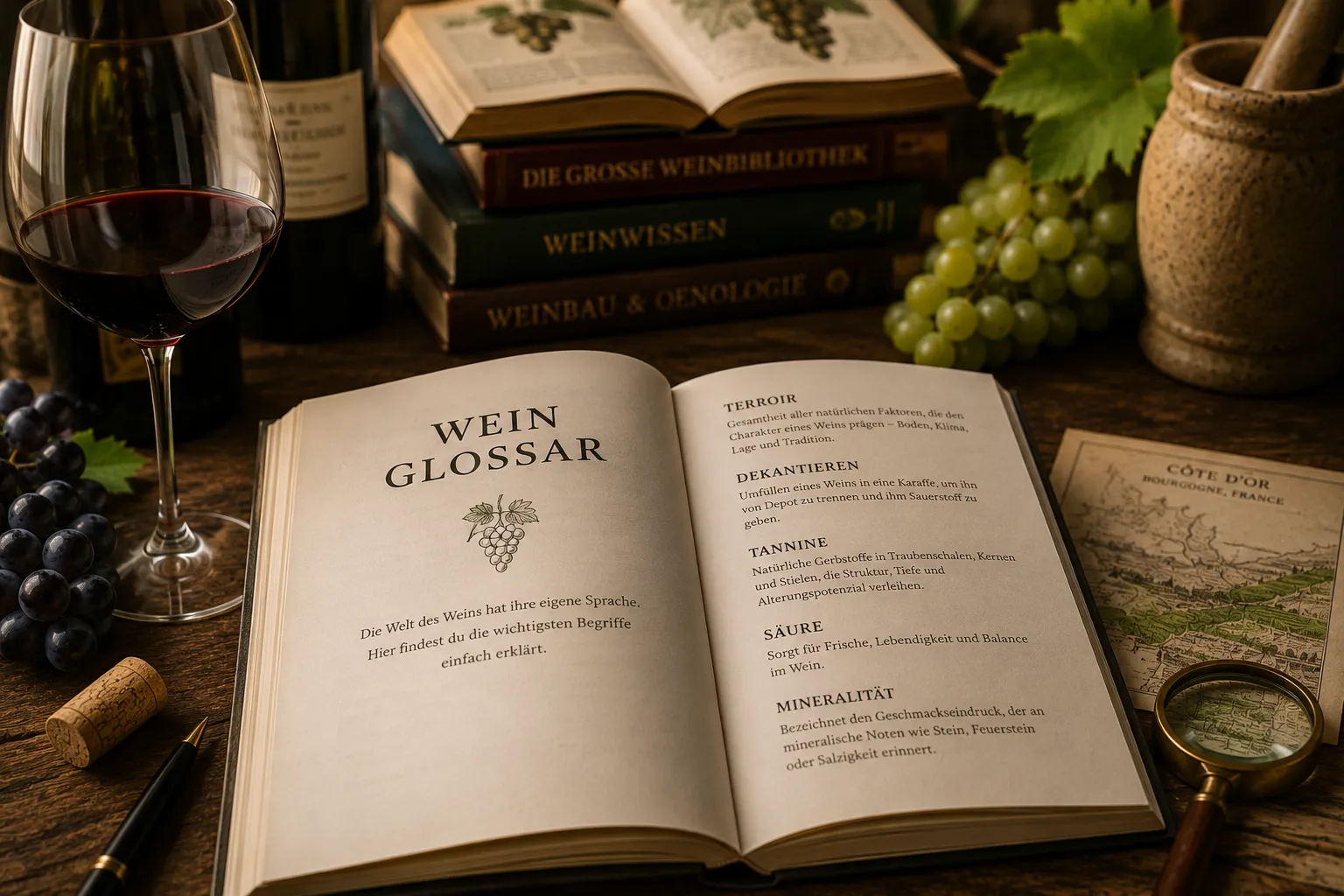
All important wine terms explained simply - from A to Z.
Decanting or carafing? What exactly is a tannin, and why do sommeliers rave about a long finish? Wine language often feels like a secret code – yet behind most terms lie simple, easy-to-grasp concepts.
Our wine glossary translates the jargon into plain language: over 100 terms from A for acidity to T for terroir, each with a short definition, a detailed explanation, and concrete real-world examples. Instead of dry encyclopedia entries, you get answers that genuinely help you on your next wine purchase or restaurant visit.
The glossary works best in combination with the rest of the knowledge section: if you come across an unfamiliar term in a grape variety profile or article, the explanation is just one click away – and from there, related terms lead you ever deeper.
Champagne is the protected sparkling wine from the French Champagne region, made by the traditional bottle fermentation. Learn everything about production, grape varieties, styles, and sweetness levels.
Prosecco is Italy's most popular sparkling wine, made from the Glera grape using the Charmat method. Learn everything about production, styles, quality levels, and serving.
Old vines produce the most concentrated, complex wines. Learn why Vieilles Vignes wines are so special and what age does to the vine.
Appellation d'Origine Contrôlée (AOC) guarantees the origin and quality of French wines. Learn everything about the French designation of origin system.
Autolysis is the breakdown of yeast cells after fermentation, lending Champagne and white wines a creamy texture and brioche-like aromas. Everything about this important technique.
Blanc de Noirs is Champagne made from red grapes (Pinot Noir, Pinot Meunier) with white juice. Find out what makes this Champagne style so special.
Crianza is Spain's ageing tier between Joven and Reserva: at least 24 months of ageing, including 6–12 in oak. Meaning, taste and key differences.
A cuvée is a wine made from multiple grape varieties or vineyards. Learn everything about the art of blending and famous cuvée wines around the world.
DAC is Austria's origin system for regionally typical quality wines. Learn everything about the various DAC zones and their requirements.
Bottle fermentation (Méthode Champenoise) is the quality process for Champagne and sparkling wine. Learn how this labor-intensive process works and what makes it so special.
Grand Cru designates the finest wine sites in France. Discover everything about the highest quality level in Burgundy, Alsace, and Champagne.
Hand harvesting is the gold standard in quality winemaking. Find out why picking by hand yields better wines and when it is absolutely essential.
Maceration time is the duration of skin contact during red wine fermentation and determines the color, tannin structure, and aromatic intensity of the wine.
Phenolic ripeness describes the maturity of tannins, color pigments, and aromas in grape skins and seeds -- a decisive factor for red wine quality.
Reserva is the premium quality level for Spanish wines with a longer legally prescribed ageing period in barrel and bottle. Discover the differences between Crianza and Gran Reserva.
Residual sugar describes the unfermented sugar remaining in wine. Learn everything about sweetness levels, from bone-dry to nobly sweet, and how residual sugar shapes flavour.
Rosé wine – the perfect bridge between red and white. Discover how rosé is made, what styles exist, and what makes it so special.
Acidity gives wine its freshness and vibrancy. Discover which acids occur in wine and how they influence flavour and ageing potential.
Slate shapes some of the most mineral wines in the world. Discover how slate soils give Riesling, Mencía and others their characteristic elegance.
Tannins give red wine its structure and aging potential. Learn where they come from, what they taste like, and what role they play in wine maturation.
Fortified wines (liqueur wines) such as Port, Sherry, or Madeira are made by adding alcohol. Discover the different styles and their distinctive characteristics.
Vintage Port — the most prestigious Port wine from exceptional years. Everything about production, maturation, the best years, and how to enjoy it properly.
The finish describes the lingering taste impression of a wine. Learn how to recognize quality and properly evaluate a wine's finish.
Astringency describes the furry, mouth-drying sensation caused by tannins. Learn when astringency is positive and when it's problematic.
Aromas are the olfactory and gustatory impressions of a wine. Learn about the three aroma categories and how to identify them correctly.
The bouquet describes the complex aromas of aged wines. Learn how tertiary aromas develop and how to recognise a fine bouquet.
Degustation is the systematic, professional tasting of wine according to defined criteria. Learn the method and phases of wine evaluation.
The finish describes how long the aromas of a wine persist after swallowing. An important quality indicator for wine connoisseurs.
Texture describes the tactile sensation of wine in the mouth. Learn how to properly evaluate body, structure, and mouthfeel.
Wine faults can ruin the drinking experience. Learn to recognise the most common faults such as cork taint, oxidation, and reductive notes.
Alcohol content in wine: how it develops, how it's measured, and how it influences body, taste, and warmth. Everything about volume percent and balance.
Ampelography is the science of identifying and classifying grape varieties. Learn how grape varieties are distinguished through leaf shape, DNA analysis, and morphological features.
Appassimento is the traditional drying method for Italian top wines like Amarone. Learn how this technique concentrates and refines wines.
Assemblage is the French art of wine blending. Learn the difference from cuvée and why blended wines are often more complex than single-variety wines.
Ausbruch is an Austrian sweet wine speciality from Burgenland. Learn everything about its traditional production, noble rot, and its quality ranking between Beerenauslese and TBA.
Auslese is a Prädikat level in German winemaking for highly ripe, sometimes nobly sweet wines. Learn everything about must weight, flavour, and the best examples.
What does autochthonous mean in viticulture? Learn everything about indigenous grape varieties and why they are so important for the diversity of the wine world.
Balseiros are large traditional wooden casks from Portugal. Learn how they shape the wines of the Douro and Port wines, and how they differ from barriques.
A barrique is a small oak barrel holding 225 litres. Learn how barrique ageing shapes wine and what aromas it creates.
Bâtonnage is a winemaking technique in which the fine lees are stirred regularly to give the wine more creaminess, complexity, and texture.
What is a Beerenauslese? Discover the fourth Prädikat level – made from overripe, noble-rot berries. Everything about the production of this nobly sweet rarity.
Malolactic fermentation (MLF) converts sharp malic acid into softer lactic acid. Everything about MLF and its influence on wine.
A Bordeaux Blend is the classic assemblage of Cabernet Sauvignon, Merlot, Cabernet Franc, Petit Verdot, and Malbec. Everything about the legendary cuvée.
Botrytis cinerea transforms ripe grapes into precious sweet-wine delicacies. Find out how a mould becomes liquid gold.
Botti are large traditional oak casks made from Slavonian oak used for ageing wine. Find out how they shape the character of Barolo, Brunello, and more.
Cava is the traditional Spanish sparkling wine from Catalonia, produced using the traditional method. Learn everything about production, grape varieties, and quality levels.
The Charmat method (tank fermentation) produces sparkling wines like Prosecco quickly and cost-effectively. Find out how the method differs from Champagne.
Co-fermentation means different grape varieties are fermented together. Find out how this traditional technique influences the wine.
Crémant is French sparkling wine made by the same method as Champagne – from about €10. How it differs from Champagne, taste, regions and serving temperature.
D.O. (Denominación de Origen) is Spain's system of controlled designations of origin. Learn what the quality levels mean and how they protect wine.
Understand Italian wine law: DOC and DOCG stand for controlled origin and guaranteed quality. Everything about Italy's wine appellations.
DOC stands for Denominazione di Origine Controllata — Italy's protected designation of origin for quality wines. Learn everything about the standards and requirements.
DOCG is the highest quality tier for Italian wines. Learn about the strict requirements DOCG wines must meet and which zones carry this distinction.
Stainless steel tanks are the standard tool in modern winemaking. Learn how stainless steel preserves freshness, fruitiness, and varietal character in wine.
Noble sweet wines combine intense sweetness with complex aromas. From Spaetlese to Trockenbeerenauslese -- the pinnacle of winemaking.
Eiswein is a rare Praedikat wine specialty made from frozen grapes. Learn about the elaborate production process, intense flavors, and the best vintages.
En Vaso (also Gobelet or bush vine) is a traditional Mediterranean vine training method. Ideal for dry, hot climates. Learn more now!
Yield in viticulture -- why less is often more. Learn how yield reduction influences wine quality and what hectoliters per hectare means.
Federspiel is the middle quality level of the Wachau. Everything about this elegant wine category with a perfect balance between power and freshness.
Aging on the fine lees gives wines greater complexity and a creamy texture. Discover everything about this classic winemaking technique and its effects.
Whole cluster fermentation is a traditional winemaking technique that adds additional complexity to red wines. Discover everything about this Burgundian method.
Garrigue: What does this term mean in wine language? Discover the typical Mediterranean herb and spice aromas of southern red wines.
Gran Reserva denotes the highest Spanish quality level for wine, with a minimum of 5 years of aging. Discover the art of long barrel maturation.
Grande Reserva designates top wines from exceptional vintages with extended aging. Discover the differences between Portugal and Spain.
Grosse Lage is the highest quality level in German viticulture. Discover everything about the Grosses Gewächs (GG), the strict criteria, and the finest sites.
Sur Lie (lees ageing) gives wines creaminess, complexity, and yeasty aromas. Find out how this ageing method shapes wine – from Muscadet to Champagne.
Lees maturation (Sur Lie) gives wines a creamy texture and brioche aromas. How yeast autolysis works and which wines benefit from it.
Oak barrels in winemaking – from barrique to botti. Find out how barrel size, wood type, and toast level shape wine flavour, and why one barrel is never the same as another.
Joven means 'young' and refers to Spanish wines with little or no barrel maturation. Discover the fruity, vibrant side of Spanish wines.
What does Kabinett mean in wine? Find out everything about the lightest Prädikat level, its typical characteristics, and why Kabinett wines are so versatile.
Body in wine explained: what makes a wine light, medium, or full-bodied? Which factors influence body and how do you recognise it?
Find out everything about carbonic maceration: the special fermentation method behind fruity, fresh red wines such as Beaujolais Nouveau.
Ageing potential: which factors determine how long a wine can cellar? Acidity, tannins, alcohol, and more – everything about maturation in the cellar.
Loess soils rank among the finest wine soils in the world. Find out why these fertile, mineral-rich soils of aeolian origin create ideal conditions for grapevines.
Fermentation on the skins is the central process in red wine production. Learn how color, tannins, and aromas are extracted from grape skins.
Malolactic fermentation (biological acid reduction) makes wine softer and adds buttery aromas. Learn how and why this process is used.
Learn everything about maceration: the key process in red wine production for extracting color, tannins, and aromas from grape skins.
Microclimate refers to the small-scale climatic conditions in a vineyard. Learn how slope, aspect, and air currents shape wine quality.
Minerality in wine explained: where does the mineral taste come from, how do you recognize it, and which wines show particularly pronounced minerality?
Muschelkalk is a lime-rich sedimentary soil from the Triassic period. It shapes mineral white wines with a salty note and crisp acidity — especially along the Mosel and in Franconia.
Mutation in viticulture: natural genetic changes give rise to new grape varieties. How Pinot Gris arose from Pinot Noir and what clonal selection means.
Natural wine stands for minimal intervention in the vineyard and cellar. Learn everything about spontaneous fermentation, unfined wines, and the philosophy behind them.
Orange wine – white wine made with skin maceration. Discover the traditional winemaking method, typical aromas, and what makes orange wines so distinctive.
Oxidative aging is a deliberate winemaking technique that exposes wine to oxygen. Learn how Sherry, Madeira, and Vin Jaune develop their unique aromas through oxidation.
Port wine is a fortified sweet wine from Portugal's Douro Valley. Discover the differences between Ruby, Tawny, and Vintage Port and learn all about its production.
Pradikatsweine are the pinnacle of German and Austrian wine quality. Learn all about Kabinett, Spatlese, Auslese, Beerenauslese, Trockenbeerenauslese, and Eiswein.
Discover primary aromas – the variety-typical aromas that come directly from the grape. From fruit to blossoms, herbs, and minerality.
Pyrazines are aromatic compounds that produce green pepper and herbal notes in wine. Learn how they form and which grape varieties are most affected.
Qvevri – traditional Georgian clay amphorae used in winemaking. Learn how this 8,000-year-old method produces orange wines.
Grape variety: definition, significance, and influence on wine character. From Cabernet Sauvignon to Riesling – everything about the diversity of wine grapes.
Riserva denotes Italian wines with a longer ageing period and higher quality. Learn everything about minimum requirements, production, and the finest Riserva wines.
Sekt is German sparkling wine with at least 3.5 bar of pressure. Everything about traditional bottle fermentation, quality levels, and differences from Champagne.
Secondary aromas develop during winemaking: yeast, butter, vanilla, toast. Discover how fermentation, barrel ageing, and lees contact shape wine character.
Smaragd designates the highest quality level of the Wachau. Everything about this storied classification and its significance for Austria's finest wines.
Spätlese is a German Prädikatswein level for wines from late-harvested, ripe grapes. Discover everything about must weight, style, and ideal food pairings.
Spontaneous fermentation — natural fermentation without cultured yeast. Discover how wild yeasts give rise to complex, terroir-driven wines.
Steinfeder is the lightest quality level of the Wachau. Everything about these fresh, zesty summer wines with a maximum of 11.5% alcohol.
The Stückfass is the traditional large wooden barrel in German winemaking. Discover everything about its size, use, and the difference from barrique.
Super Tuscans revolutionised Italian winemaking. Discover how Sassicaia, Ornellaia and others made history with international grape varieties.
Sur lie explained: What does aging on the lees mean, how does it influence the wine, and what aromas arise from yeast autolysis? Everything about this classic method.
What is Terra Rossa? Learn everything about the characteristic red soil of Mediterranean wine regions and its influence on wine character.
Discover tertiary aromas — the complex scents that develop through bottle maturation. From leather and tobacco to honey, mushrooms, and dried fruits.
Trockenbeerenauslese is the highest German Prädikat level. Learn everything about noble rot, must weight, production, and the legendary sweet wines made from raisin-like berries.
Coulure is a physiological problem in viticulture that leads to reduced yields. Learn about the causes, affected grape varieties, and effects on wine quality.
What is vinification? Learn everything about the winemaking process from grape to bottle and the various vinification methods.
Weissherbst is the German designation for a high-quality rosé wine made from a single red grape variety. Learn everything about its production and quality characteristics.
Everything about decanting: which wines benefit and which don't? Step-by-step guide and tips for the correct technique.
Terroir explained: Why does the same wine taste different depending on the region? The interplay of soil, climate, and the human hand.
With the Grape Guru app, you always have your personal wine encyclopedia in your pocket - plus AI scanner and food pairing.

