


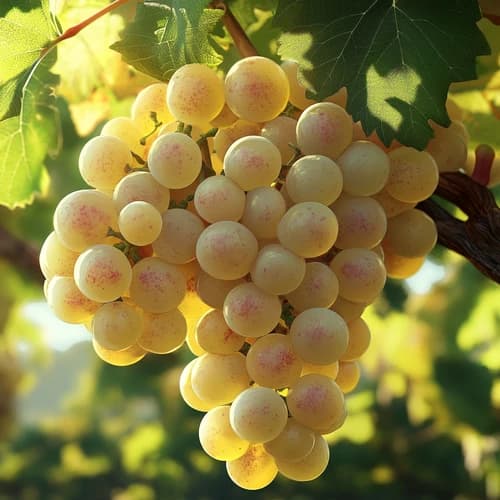


Introduction
Cortese is the grape behind one of northern Italy's most elegant white wines: the Gavi. This ancient Piedmontese variety embodies precisely what so many people love about Italian white wine – crystal-clear freshness, restrained fruit and a minerality that evokes the limestone hills of its homeland. While the red varieties of Piedmont such as Nebbiolo and Barbera achieved worldwide fame, Cortese long remained an insider tip for connoisseurs. Yet this very modesty is part of its charm.
Flavour Profile & Characteristics
Cortese is the antithesis of opulent, buttery Chardonnay. Its strength lies in restraint, elegance and freshness. On the palate a typical Cortese wine presents itself as taut and lively, with an acidity that refreshes without dominating. The fruit aromas are subtle – think freshly sliced green apple, a squeeze of lemon, perhaps a hint of white peach.
What truly sets Cortese apart is its mineral signature. The finest wines from the limestone hills around Gavi bring a salty, almost chalky note that lends the wine structure and depth. Some describe it as the taste of wet stones after a summer rain – it sounds unusual but is incredibly appetite-inducing.
Depending on ageing, the profile can shift slightly. Most Cortese wines are aged in stainless steel to preserve their freshness. Some winemakers, however, experiment with oak casks or lees ageing, which can lend the wine more body and a creamy texture. These versions additionally show subtle notes of almond and brioche.
With age – and we are talking 3 to 5 years for the finest Gavi – Cortese develops honeyed nuances and a certain softness as the acidity integrates. Most wines, however, are designed to be drunk young and fresh.
Origin & History
Cortese is one of the oldest indigenous varieties of Piedmont and has likely been at home in the region for centuries. The name probably derives from the Italian word "corto" (short) – a reference to the compact bunch form. The first written records date back to the 17th century.
Its home is south-eastern Piedmont, specifically the hills around the small town of Gavi in the province of Alessandria. Here, at the border with Liguria where the climate already shows Mediterranean influences, Cortese finds its perfect conditions. Proximity to the Mediterranean ensures mild winters and warm summers, while the elevation and cooling breezes provide the necessary freshness.
The breakthrough came in the 1970s when Gavi became a trend-setter – the perfect white companion to the new, lighter Italian cuisine. In 1998 the region was awarded the highest quality designation DOCG (Denominazione di Origine Controllata e Garantita). Today Cortese is cultivated on around 1,500 hectares, almost exclusively in Piedmont and neighbouring Lombardy.
Viticulture & Terroir
Cortese is a late-ripening variety that prefers cool to temperate climates. It is relatively undemanding but needs well-drained soils and protection from late spring frosts. The grape is susceptible to powdery mildew, making careful canopy management important.
The terroir of Gavi is decisive for quality. The best sites are on calcareous marl and clay soils at elevations between 150 and 350 metres. These limestone soils are what give the wine its characteristic minerality. South and south-west exposure ensures optimal sun exposure, while proximity to the Ligurian Sea brings cooling breezes.
Alongside Gavi, Cortese is also grown in the DOC areas of Colli Tortonesi, Monferrato and Oltrepò Pavese (Lombardy). There somewhat simpler but still very drinkable wines are produced. Outside Italy the variety is virtually unrepresented – it remains a Piedmontese treasure.
Wine Styles & Variants
The classic style is Gavi or Cortese di Gavi DOCG – a dry, fresh white wine aged in stainless steel. These wines are usually relatively light (11.5–12.5% alcohol), have a crisp acidity and show notes of citrus fruits, green apple and white blossoms. They are perfect for summer and should be drunk young.
Then there are the Riserva variants, which must age for at least 12 months, often with some oak contact. These wines have more structure, display nutty aromas and a creamier texture. They can age 3–5 years and suit more ambitious dishes.
Some innovative producers also make sparkling wines from Cortese – either by traditional method or as a Prosecco-like Frizzante. These sparklers are rare but well worth discovering, with their fine bubbles and citrus-laden aromatics.
Colli Tortonesi Cortese is the somewhat simpler but often more affordable alternative to Gavi. These wines come from neighbouring hills and offer a similar style, sometimes a little more fruit-forward and with less minerality.
Cortese is only rarely used in blends – its strength lies in the purity of a varietal wine.
Typical Aromas
Primary Aromas (from the grape)
Citrus fruits: Fresh lemon and lime often dominate the bouquet, especially in young wines. These aromas lend the wine its characteristic vivacity.
Green apple: A core theme in Cortese – this crisp, slightly tart apple note is almost always present and reinforces the refreshing character.
White peach: More subtle than in many other white wines, but present – a delicate stone fruit that adds depth without becoming too lush.
White blossom: Delicate floral notes, sometimes evoking acacia or elderflower, give the wine elegance.
Minerality: The signature element – a salty, stony note that comes directly from the limestone soil and lends the wine length and complexity.
Secondary Aromas (from winemaking)
Almond: Particularly in wines with lees ageing, a subtle, not overly sweet almond note develops, reminiscent of fresh almond skin.
Butter and brioche: In the few wines with barrique ageing or malolactic fermentation, buttery notes and a hint of dough can develop – always restrained, never dominant.
Tertiary Aromas (from ageing)
Honey: After 3–4 years in bottle, high-quality Gavi develops a fine honeyed sweetness that counterbalances the acidity and lends the wine harmony.
Nutty tones: With age, nuances of roasted hazelnuts emerge, adding complexity.
Cortese is fundamentally designed for early to medium-term enjoyment. Only the finest single-vineyard wines and Riservas should be kept beyond 2–3 years. After 5 years most wines begin to lose the freshness that is their great strength.
Food Pairing
Perfect Combinations
Fresh seafood and fish: This is where Cortese truly shines. The high acidity and salty minerality are made for raw oysters, prawn carpaccio, sea bass or grilled calamari. The citrus notes in the wine enhance the freshness of the seafood while the minerality builds a bridge to the sea.
Pesto alla Genovese: A match made in heaven! The proximity to Liguria is no coincidence – Cortese is the perfect partner for pasta with classic basil pesto. The acidity cuts through the oil while the green notes in the wine harmonise with the basil.
Lemon or asparagus risotto: The creamy texture of the risotto is lifted by the wine's acidity, while the subtle aromas complement each other beautifully. A risotto with green asparagus or a lemon risotto is especially revelatory.
Goat's and sheep's cheese: Young, fresh goat's cheese or a light Pecorino pair beautifully. The wine's acidity balances the creaminess of the cheese while the citrus notes highlight the freshness of the cheese.
Antipasti and Vitello Tonnato: Piedmontese cuisine in general is a celebration with Cortese. From pickled vegetables to acciughe (anchovies) to the classic Vitello Tonnato – the versatility of this variety shows itself in its ability to harmonise with the most diverse flavours without masking them.
Cortese is not a wine for heavy, creamy sauces or strongly spiced dishes. It would be overwhelmed there. Its strength lies in accompanying light, fresh dishes where its elegance comes into its own.