


Introduction
Pinot Noir is considered the diva of grape varieties — demanding to grow, yet unrivalled in elegance in the glass. This thin-skinned grape produces some of the finest and most nuanced red wines in the world, from the legendary Grand Crus of Burgundy to the velvety examples from Oregon and New Zealand. If you are looking for a red wine that combines complexity, elegance, and a silky texture, Pinot Noir is the only choice.
Flavour Profile & Character
Pinot Noir captivates with its extraordinary elegance and finesse. In the glass the variety typically presents itself in a light to medium ruby, already hinting at the light to medium body. The first impression on the palate is often defined by lively acidity that gives the wine freshness and structure. The tannins are fine and silky — quite unlike powerful red wines such as Cabernet Sauvignon or Syrah.
The flavour profile is dominated by red fruits: cherry, strawberry, and raspberry take centre stage, accompanied by subtle earthy notes that recall damp forest floor or mushrooms. In cooler climates Pinot Noir develops particularly bright, crisp fruit aromas with pronounced minerality. Warmer regions produce fuller, riper fruit aromas with a slightly jam-like texture.
Barrique ageing gives the wine additional complexity: vanilla, smokiness, and warm spice notes integrate harmoniously into the fruit spectrum. With increasing age, tertiary aromas develop such as leather, undergrowth, and dried blossoms, lending the wine even greater layering.
Origin & History
Pinot Noir's home is Burgundy, a region in eastern France where the variety has been cultivated since Roman times. Archaeological finds suggest that wine was already being produced in the area in the 1st century AD. The Cistercian monks of the Middle Ages perfected cultivation and early recognised the importance of individual sites — a philosophy that defines Burgundy to this day.
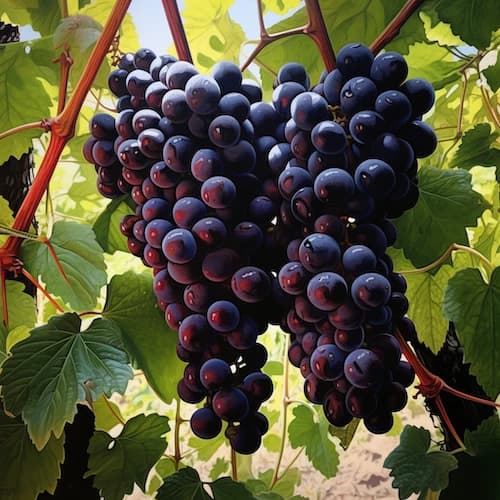
The name "Pinot" derives from the French word "pin" (pine cone), as the tightly clustered grapes resemble pine cones in shape. "Noir" simply means "black" and refers to the dark blue colouring of the grapes.
Today Pinot Noir is cultivated on all continents. Besides Burgundy, Champagne (where the grape serves as the basis for Champagne), Germany (as Spätburgunder), Oregon in the USA, Central Otago in New Zealand, and the Mornington Peninsula and Yarra Valley regions in Australia have established themselves as top regions.
Cultivation & Terroir
Pinot Noir is one of the most demanding grape varieties in viticulture. The thin-skinned grape is susceptible to disease and rot and reacts extremely sensitively to climatic fluctuations. It prefers cool to temperate climates where it can ripen slowly and retain its characteristic acidity. Too much warmth leads to overripe, jammy wines that lose their elegance; too cool conditions prevent full ripening.
The best Pinot Noirs are produced on calcareous soils that ensure good drainage and bring a mineral component to the wine. Burgundy with its complex limestone formations is the prime example of ideal terroir conditions. Volcanic soils, such as those found in the Willamette Valley in Oregon, also produce excellent results.
The most important growing regions for Pinot Noir are:
- Burgundy (France): The Côte d'Or with its legendary appellations such as Vosne-Romanée, Gevrey-Chambertin, and Chambolle-Musigny
- Champagne (France): Basis for high-quality sparkling wines
- Germany: Spätburgunder from Baden, Pfalz, and Ahr
- Oregon (USA): Willamette Valley as an alternative to California
- New Zealand: Central Otago and Martinborough
- California: Russian River Valley, Sonoma Coast, Santa Barbara County
Wine Styles & Variants
Pinot Noir shows very different styles depending on region and vinification. In classic Burgundy, wines of medium body emerge with a perfect balance between fruit, acidity, and tertiary aromas. Barrique ageing is restrained — usually in older barrels with a small proportion of new oak to avoid masking the fruit.
German Spätburgunder tends towards a more elegant, lighter style with pronounced acidity and clear fruit. In recent decades, however, German producers have increasingly produced more powerful, Burgundian-style wines.
Californian Pinot Noirs from warmer sites are fuller-bodied and more fruit-driven, with riper aromas and higher alcohol content. In cooler coastal regions more elegant versions emerge that emulate Burgundian models.
In Champagne, Pinot Noir plays a central role in the production of Champagne. The grape brings structure, body, and longevity to the assemblage and is especially important for Blanc de Noirs — Champagnes vinified white exclusively from red grapes.
As a blend partner, Pinot Noir is occasionally combined with other Burgundian varieties such as Gamay, but is mostly produced as a single variety since its individuality shows best on its own.
Typical Aromas
Primary Aromas (from the grape)
The primary aromas of Pinot Noir are defined by red cherries that form the heart of the aroma profile. Depending on ripeness these range from crisp, tart sour cherries in cooler climates to darker, fuller cherry notes in warmer regions.
Raspberries and strawberries complement the berry spectrum and provide a fruity freshness that is particularly dominant in young wines. These red berry notes give Pinot Noir its characteristic approachability.
A hallmark of the variety are earthy notes that recall damp forest floor, undergrowth, or mushrooms. This complex aroma layer develops particularly on calcareous soils and distinguishes Pinot Noir from other red wine varieties.
Violet and other floral notes bring a perfumed, elegant component, lending the wine additional finesse. These blossom notes are especially pronounced in wines from Burgundy.
Terroir plays a decisive role: Pinot Noir from cool sites shows taut, clear fruit aromas with high minerality, while warmer locations lead to riper, more concentrated fruit aromas.
Secondary Aromas (from winemaking)
Barrique ageing brings vanilla and warm spice aromas to the wine. High-quality Pinot Noirs are mostly aged restrainedly in older barrels to avoid masking the fruit — the wood notes should be supportive, not dominant.
Malolactic fermentation develops a creamy texture that lends the wine additional suppleness. Some producers also work with whole-berry fermentation or whole-cluster fermentation, which generates spicy notes and additional complexity.
Tertiary Aromas (from ageing)
With increasing bottle age, Pinot Noir develops leather and truffle aromas that lend the wine an earthy, animal component. These ageing notes are characteristic of well-cellared Burgundy and a sign of ageing potential.
Dried blossoms, tobacco, and undergrowth join in and gradually replace the primary fruit aromas. The acidity is preserved throughout and continues to provide freshness.
Pinot Noir belongs among the age-worthy red wines. Simple wines should be drunk within 3–5 years, while high-quality Burgundy from Grand Cru sites can comfortably age for 15–30 years or longer. The best Pinot Noirs develop impressive complexity over time without losing their fundamental elegance.
Food Pairing
Perfect Combinations
Roasted Duck Breast with Cherry Sauce: The combination of tender poultry and fruity sauce harmonises perfectly with the cherry and berry notes of Pinot Noir. The acidity of the wine cuts through the fat of the duck, while the silky texture underlines the tenderness of the meat.
Grilled Salmon or Tuna: Pinot Noir is one of the few red wines that pair excellently with fish. The light tannins and moderate power of the wine do not overpower the fish, while the acidity balances the oily fish. Particularly suitable are more powerful Pinots from New Zealand or Oregon.
Coq au Vin or Bœuf Bourguignon: Classic Burgundian cuisine was made for Pinot Noir. Braised dishes with mushrooms, lardons, and rich sauce find the ideal partner in Pinot Noir. The earthy notes of the wine mirror the mushrooms, while the acidity balances the rich sauce.
Aged Comté or Époisses de Bourgogne: Nutty, creamy cheeses from the home region of Pinot Noir are a natural pairing. The salty, umami-rich flavour of the cheese highlights the fruit notes of the wine, while the creaminess of the cheese softens the tannins.
In general: Pinot Noir pairs excellently with dishes featuring mushrooms, truffles, game, white meat, and even Asian dishes with not-too-dominant spicing. The versatility of this variety makes it one of the finest food pairing wines of all.