




Introduction
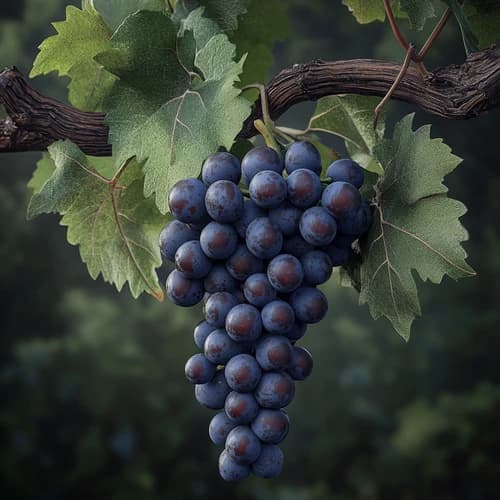
Nebbiolo is considered Italy's royal grape variety and produces some of the longest-lived and most complex red wines in the world. In Piedmont, it gives rise to the legendary wines Barolo and Barbaresco, which captivate wine lovers worldwide. What makes this grape variety so extraordinary is its perfect balance of powerful tannins, vibrant acidity, and aromatic elegance that unites rose petals with earthy notes.
Flavor Profile & Characteristics
Nebbiolo presents itself as a true paradox: while the color is often surprisingly light and garnet-red, behind it hides a monumental structure with powerful tannins and pronounced acidity. On the palate, a complex aroma spectrum unfolds, from red cherries and rose petals through dried herbs to tar, leather, and licorice.
The texture is firm and grippy, almost astringent in youth. The high acidity lends the wine impressive freshness and, together with the tannins, accounts for the legendary aging ability. On the palate, Nebbiolo is full-bodied and powerful without becoming heavy or alcoholic.
Depending on climate conditions, the style varies significantly: in cooler sites like Barbaresco, Nebbiolo shows itself more elegant and approachable with pronounced fruitiness and floral notes. In the warmer hills of Barolo, the wine develops more power, concentration, and earthy complexity. Modern winemaking methods with shorter maceration times and less new oak emphasize the fruit, while traditional long-term aging in large wooden barrels highlights the tertiary aromas.
With increasing age, Nebbiolo transforms dramatically: the initially harsh tannins integrate, the fruit becomes subtler and gives way to complex notes of dried rose petals, truffle, tobacco, tar, and spicy seasonings. A mature Nebbiolo of 15-20 years shows a silky texture and an aromatic depth that is unmatched.
Origin & History
Nebbiolo comes from Piedmont in northern Italy and has been cultivated there since the 13th century. The name likely derives from the Italian word "nebbia" (fog) – either because of the foggy autumn mornings at harvest time or because of the hazy bloom on the grapes.
The first documented mention is found in 1268 in documents from Rivoli near Turin. In the 19th century, winemakers like Camillo Benso di Cavour and the Falletti family recognized the extraordinary potential of the grape variety and laid the foundation for the modern Barolo and Barbaresco wines.
Today, Nebbiolo is grown almost exclusively in Piedmont, with small plantings in Lombardy (Valtellina) and experimental plantings in California, Australia, and South America. Outside Italy, the grape has rarely achieved the same success, underscoring its deep connection with Piedmontese terroir.
Cultivation & Terroir
Nebbiolo is one of the most demanding grape varieties in the world and thrives only under very specific conditions. It requires long, warm growing seasons with cool nights, yet ripens very late – often not until late October. This makes it susceptible to autumn rains and fog, which are, however, part of the typical Piedmontese climate.
The best sites are found on calcareous marl soils in sunny south and southwest exposures. These soils store warmth and promote the slow, even ripening essential for developing complex aromas. Elevation plays a decisive role: between 200 and 450 meters, Nebbiolo reaches its full potential.
In Piedmont, cultivation concentrates on the Langhe hills between Alba and Asti. The Barolo region encompasses eleven communes with different microclimates and soil types. Serralunga and Monforte produce structured, long-lived wines, while La Morra and Barolo itself yield more elegant, earlier-accessible styles.
Barbaresco lies slightly lower and benefits from a slightly warmer microclimate, resulting in somewhat fruitier and more approachable wines. In the Valtellina in Lombardy, Nebbiolo (called Chiavennasca there) grows on steep terraces and develops a distinctive, spicier character.
Wine Styles & Variants
Nebbiolo is almost exclusively vinified as a single-varietal wine, with Barolo and Barbaresco being the most famous appellations. Both legally require 100% Nebbiolo and long aging periods: Barolo at least 38 months (18 of which in wood), Barbaresco 26 months (9 of which in wood).
Traditional Barolo producers rely on long maceration times of 30-60 days and aging in large, old oak casks (Botti). This creates powerful, tannin-driven wines with earthy tertiary aromas that need years to decades to develop. Modern producers shorten maceration to 7-14 days and use smaller barriques to create fruitier, earlier-drinking wines with softer tannins.
Beyond the great DOCG wines, there are also more accessible Nebbiolo variants: Langhe Nebbiolo offers an earlier glimpse into the grape, Nebbiolo d'Alba comes from the broader area, and Roero presents a lighter, more fragrant style on sandstone soils.
In the Valtellina, spicy, alpine interpretations are produced under the names Valtellina Superiore and Sforzato (from air-dried grapes). Experimental Nebbiolo wines from the New World show interesting approaches but rarely match the complexity of Piedmontese wines.
Blends are rare; occasionally one finds Nebbiolo with small amounts of Barbera for more acidity or Bonarda for additional color, especially in simpler categories.
Typical Aromas
Primary Aromas (from the grape)
The most characteristic primary aromas of Nebbiolo are rose petals and rose leaves – a floral hallmark that hardly any other grape variety shows with such intensity. Red cherries, often with a tart note, form the fruity backbone of young wines. In cooler years and sites, dried herbs like sage and thyme dominate, lending the wine a spicy component.
Terroir significantly influences the primary aromatics: warmer sites in Barolo develop darker fruit nuances and more concentration, while Barbaresco and higher-altitude sites are more fruit-forward and floral. On calcareous soils, a mineral component with hints of flint often emerges.
Secondary Aromas (from winemaking)
Aging in oak barrels profoundly shapes Nebbiolo. Traditional large Botti of Slavonian oak impart subtle vanilla and spice notes to the wine without masking the primary fruit. The long maceration time extracts leather notes and reinforces the tannin structure.
Modern barriques intensify roasted aromas like coffee and cocoa but can mask the fine floral notes if overused. Malolactic fermentation rounds out the acidity and adds creamy texture, while biological acid conversion develops additional complexity.
Tertiary Aromas (from aging)
Nebbiolo is among the longest-lived red wines in the world and develops extraordinary aromatic complexity with maturity. After 10-15 years of bottle aging, leather and licorice come to the fore, accompanied by tar, truffle, and dried rose petals.
Well-aged Barolo and Barbaresco of 20-30 years show notes of tobacco, soy sauce, dried porcini mushrooms, and forest floor. The tannins become silky, the initially dominant acidity integrates perfectly, and the red fruit transforms into dried fruits and spices.
Premium vintages can easily age 30-40 years and longer, never becoming heavy but instead developing an ethereal, complex elegance. This longevity makes Nebbiolo one of the most fascinating grape varieties for collectors and lovers of mature wines.
Food Pairing
Perfect Combinations
Brasato al Barolo (beef braised in Barolo): The classic Piedmontese combination par excellence. The powerful tannins of Nebbiolo cut through the fattiness of the slowly braised beef, while the wine aromas in the dish create a harmonious bridge to the glass. The high acidity of the wine perfectly balances the richness of the roast.
Truffle risotto or tajarin with white truffle: The earthy tertiary aromas of a mature Nebbiolo harmonize masterfully with the intense truffle notes. The creaminess of the risotto softens the tannins, while the wine's acidity balances the richness. This combination shows Nebbiolo at its most elegant.
Game (venison, deer, wild boar): Rich game dishes with dark sauces of berries or red wine make ideal partners for tannic Barolo. The structure of the wine stands up to the intensity of the game without overwhelming it. Especially autumnal preparations with mushrooms, juniper berries, and lingonberries complement the complex aromas.
Aged cheese (Parmigiano Reggiano, Grana Padano, Castelmagno): Hard cheeses with nutty, crystalline notes are excellent companions for mature Nebbiolo. The saltiness and umami complexity of the cheese softens the tannins, while the fat texture prepares the palate. The Piedmontese blue cheese Castelmagno with its pungent spiciness makes a particularly exciting combination with the earthy notes of a mature Barolo.