




Introduction
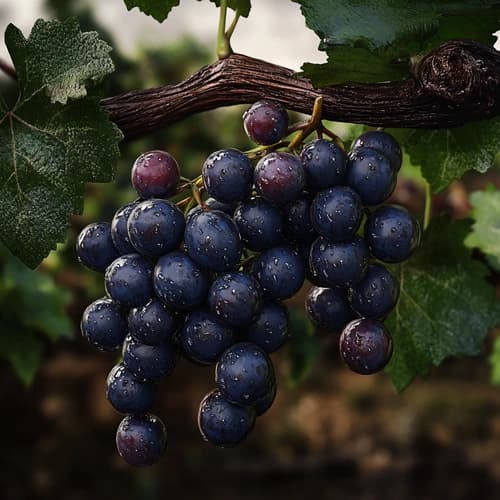
Frühburgunder is a genuine insider tip among German red wines. As an early-ripening mutation of Spätburgunder, it unites the elegance of the Pinot family with a distinctive, approachable character. Particularly in the Ahr valley and in Württemberg, this variety produces filigree red wines that impress with their fruity intensity and silky texture.
Flavour Profile & Characteristics
Frühburgunder presents itself as a charming, approachable red wine with pronounced fruitiness. In the glass it shows a bright ruby red with violet reflections, somewhat more intensely coloured than its relative Spätburgunder. The aromatic profile is dominated by red cherries, fresh strawberries and raspberries, evoking a summer walk through the forest.
On the palate, Frühburgunder reveals its particular strength: it combines the elegant structure of the Pinot family with a fruit-forward, almost playful quality. The tannins are fine and silky, never intrusive. The acidity is present and lively, lending the wine freshness and tension without being overpowering. The medium body makes it a versatile companion.
In cooler sites and years, Frühburgunder develops particularly fine finesse and elegance. Here, floral notes of rose petals and fresh herbal nuances come through more strongly. In warmer vintages it shows greater opulence, with more concentrated fruit aromas and somewhat more fullness. The alcohol content typically falls between 12 and 13.5% by volume, making it a moderate, very drinkable wine.
With increasing age, Frühburgunder develops additional complexity. After three to five years of bottle ageing, tertiary notes of forest floor, dried herbs and a fine, mushroom-like spice emerge. The primary fruit becomes more subtle but gains depth. High-quality wines from good vintages can certainly age for ten years and beyond.
Origin & History
Frühburgunder is a natural mutation of Spätburgunder that likely arose in French vineyards during the Middle Ages. Its name already reveals its most important characteristic: the grapes ripen approximately one to two weeks earlier than classic Pinot Noir. This earlier ripening was a decisive advantage in cooler wine-growing regions.
In France the variety is known as "Pinot Noir Précoce," but it never truly established itself there. Germany – and the Ahr valley in particular – became the true home of Frühburgunder. Here, growers in the 1960s and 1970s grew increasingly fond of the variety, which delivered excellent results on the steep slate slopes along the Ahr.
Today Frühburgunder is cultivated mainly in Germany, with concentrations in the Ahr, Württemberg, the Pfalz and Franconia. Total planted area stands at around 300 hectares – Frühburgunder remains a genuine rarity. Smaller holdings also exist in Switzerland and Austria. Its limited distribution makes it an insider tip for wine lovers seeking something special.
Viticulture & Terroir
Frühburgunder has similar requirements to its relative Spätburgunder, but is somewhat more flexible in cultivation thanks to its earlier ripening. It prefers temperate climates, where it benefits from warm summers and cool nights. These temperature swings promote aromatic development and help preserve the important acid structure.
The variety thrives best on calcareous and slate soils such as those found in the Ahr. These soils store warmth and release it to the vines at night, promoting ripening. They also provide good drainage, preventing waterlogging – important for the susceptible Pinot vines. Loess soils and deep clay soils with a good water supply are also suitable.
In the Ahr, the most famous Frühburgunder sites are found on steep south- and southwest-facing slopes. Names such as "Walporzheimer Gärkammer" and "Mayschosser Mönchberg" stand for top-quality wines. In Württemberg it is the Keuper soils around Heilbronn that deliver excellent results. The Pfalz cultivates the variety mainly in the southern part, where the warmer climate produces concentrated, full-bodied wines.
The early ripening is both a blessing and a curse: on one hand, the grapes can be harvested before the first autumn rains, guaranteeing healthy fruit. On the other hand, they are also more susceptible to late spring frosts. Moreover, Frühburgunder tends toward coulure, which further reduces yields – but raises quality.
Wine Styles & Variants
In Germany, Frühburgunder is produced predominantly as a single varietal, with the style varying depending on region and winemaker philosophy. The classic style emphasises elegance and finesse: wines are aged after traditional maceration in large wooden barrels or stainless steel, bringing the fruity primary aromas to the fore. This style is particularly widespread in the Ahr and results in accessible, very drinkable wines.
Ambitious growers are increasingly experimenting with Burgundian ageing styles. Grapes are hand-harvested, often fermented with a high proportion of whole bunches and then aged in barriques. The use of oak is typically restrained – 228-litre barrels with a maximum new-oak ratio of 30% are typical. These wines show more structure, depth and ageing potential without masking the characteristic fruit.
In Württemberg, more powerful interpretations emerge with greater extract and concentration. The warmer climate and longer maceration times lead to more colour-intensive wines with somewhat more body and alcohol. Stylistically, these wines recall southern Pinot Noirs from Burgundy or Oregon.
As a cuvée partner, Frühburgunder plays a rather subordinate role but is occasionally blended with Spätburgunder. Such cuvées unite the fruitiness of Frühburgunder with the structure and complexity of Spätburgunder. Rosé wines made from Frühburgunder are found here and there – rare, but they show the variety's elegance and fruitiness in a fresh, summery guise.
Typical Aromas
Primary Aromas (from the grape)
Red cherries form the heart of the aromatic profile. This cherry note is fresh, juicy and recalls fully ripe sour cherries with a slightly tart component. Depending on terroir, the cherry fruit can range from pale and fresh to dark and concentrated. On slate soils a particularly clear, precise fruit emerges.
Strawberries complement the cherry notes with a sweet, almost perfumed fruitiness. This strawberry note is characteristic of Frühburgunder and distinguishes it from Spätburgunder, which often reads as somewhat more earthy. In cooler vintages the strawberry recalls wild woodland strawberries; in warmer years, ripe garden strawberries.
Raspberries add another berry dimension. They are often linked with floral accents and lend the wine an elegant, almost playful quality. This raspberry character is especially pronounced in young wines.
Rose petals are a typical floral component that gives Frühburgunder its feminine elegance. This rose note is subtle, never intrusive, and integrates harmoniously into the fruit. It is especially pronounced on calcareous soils.
Fresh herbs such as thyme or a light mint note appear especially in wines from cooler sites. This herbal spice lends the wine complexity and balance, preventing it from becoming one-dimensionally fruity.
Aromatic intensity varies greatly with climate and terroir: in cooler years and sites the floral and herbal notes dominate, and the red fruit is precise and bright. In warmer conditions the fruit aromas become more concentrated and opulent, with greater depth and sweetness.
Secondary Aromas (from winemaking)
Vanilla and toast notes arise with careful barrique ageing. In Frühburgunder these are typically very discreet – good winemakers use the wood to improve texture and give the wine more structure without masking the primary fruit.
Yeasty, brioche-like notes can arise when wines are aged on fine lees. This creamy component lends the wine more fullness and an almost buttery texture on the palate without compromising freshness.
Spice notes such as subtle hints of cinnamon or clove can arise from whole-bunch fermentation. The stems introduce additional tannins and aromatic spice into the wine, giving it more structure and ageing potential.
Tertiary Aromas (from ageing)
Forest floor and undergrowth develop after three to five years of bottle ageing. These earthy notes lend the wine depth and complexity without fully masking the fruit. They recall an autumn walk in the woods.
Dried herbs and tea emerge with increasing age. The fresh herbal notes of the young wine evolve into dried herbs, sometimes also into fine tea aromas that give the wine a meditative quality.
Leather and fine mushroom notes appear in well-aged wines after eight to ten years. This tertiary development is somewhat less pronounced in Frühburgunder than in Spätburgunder, but is certainly present.
Frühburgunder has a moderate to good ageing potential. Simple wines should be drunk within three to four years to enjoy the primary fruit. High-quality wines from good vintages with structured ageing can comfortably age for eight to twelve years, gaining complexity and finesse in the process.
Food Pairing
Perfect Combinations
Roast duck with cherry sauce is a classic combination made for Frühburgunder. The wine's fruitiness harmonises perfectly with the tart-sweet cherry sauce, while the tannins and acidity balance the richness of the duck fat. The elegant structure of Frühburgunder is not overwhelmed by the robust poultry but forms a harmonious whole.
Beef fillet with red wine sauce and mushrooms pairs beautifully with an aged Frühburgunder with barrique ageing. The wine's fine tannins complement the tender meat without dominating it. The mushroom notes in the aged wine mirror the wild mushrooms in the dish, while the red wine sauce echoes the wine's fruity components.
Grilled salmon or tuna are unconventional but excellent partners for Frühburgunder. The medium structure and moderate tannin profile make it one of the few red wines that suits robust fish. The wine's fruitiness harmonises with the natural sweetness of the fish, while the acidity provides balance.
Mushroom risotto with Parmesan is a vegetarian option that pairs wonderfully with Frühburgunder. The earthy notes of the wine complement the mushrooms, while the creamy texture of the risotto harmonises with the silky structure of the wine. The salty Parmesan enhances the wine's fruitiness.
In general, Frühburgunder is suited to lighter to medium-weight cuisine. Dishes that are too heavy or heavily spiced can mask the wine's elegant character. The ideal serving temperature is 14–16°C – cool enough to preserve freshness, but warm enough to release the aromas.