

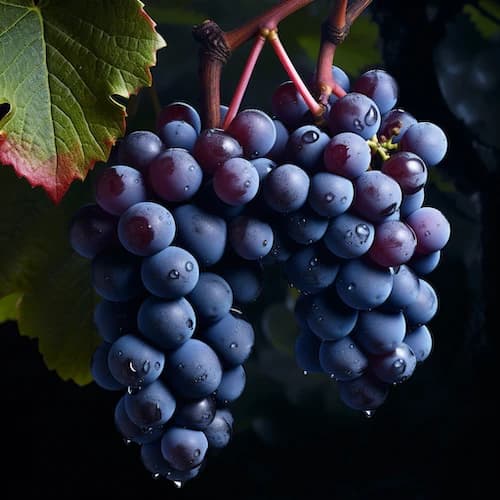


The Rediscovered Elegance of North-West Spain
Mencía is a fascinating Spanish grape variety that long stood in the shadow of great names like Tempranillo and Garnacha, but has experienced an impressive renaissance over the last two decades. This indigenous red wine variety from north-west Spain combines the elegance and freshness of Pinot Noir with the earthy minerality of great Burgundy and an unmistakable Mediterranean character. Mencía wines delight with their vibrant cherry fruit, floral violet notes, and a fine acidity that makes them perfect food companions. What makes this variety especially exciting is its extraordinary terroir sensitivity — few other varieties express the minerality of slate and granite soils as precisely.
Flavour Profile & Character
Mencía presents itself as a distinctly elegant and fresh red wine with an aroma profile that clearly distinguishes it from the more powerful Spanish reds. On the nose a bright, almost Burgundian cherry fruit dominates — predominantly red cherry and sour cherry, accompanied by fresh raspberries and sometimes blackberries. What makes Mencía particularly charming are its floral components: violet and dried rose petals lend the wine an enchanting fragrance reminiscent of the great Nebbiolo wines of Piedmont.
On the palate Mencía shows medium body and a remarkably lively, almost crunchy acidity that gives the wine freshness and drinkability. The tannins are present but fine-grained and silky — they provide structure without becoming intrusive. This tannic structure makes Mencía an excellent food companion, as it provides enough grip for meat dishes without ever becoming too dominant.
Minerality is often the outstanding feature of high-quality Mencía wines. Wines from the characteristic slate soils of Bierzo or the steep granite sites of Ribeira Sacra in particular show an almost salty, stony component that adds fascinating depth and complexity to the fruity profile. This minerality recalls wet stones after a summer rain and is often interwoven with fine herbal notes of thyme, rosemary, and Mediterranean undergrowth.
Compared to Pinot Noir, with which Mencía is often compared, it shows somewhat more structure and spice, but retains the elegant fruitiness and finesse. Unlike the powerful Rioja wines, Mencía is significantly more approachable and less tannic — it is the Spanish answer to modern, pleasurable red wines with terroir expression.
With increasing age, Mencía develops interesting tertiary aromas of dried tobacco, forest floor, mushrooms, and leather, while the fruit becomes riper and more complex. The best Mencía wines from old vines and top sites can comfortably age for five to ten years, gaining considerably in complexity.
Origin & History
The history of Mencía is marked by legends and scientific controversies. For a long time it was suspected that Mencía was related to Cabernet Franc or even identical to Portuguese varieties such as Jaen. Modern DNA analyses have shown, however, that Mencía is an independent Iberian grape variety that has probably been native to north-west Spain for centuries. The name "Mencía" is said to derive from the Romans, who are claimed to have already cultivated the variety, though this has not been historically confirmed.
What is certain is that Mencía was cultivated for centuries in the remote river valleys of Bierzo and Ribeira Sacra, often on extreme steep slopes that cannot be worked with modern machinery. This geographical isolation preserved the variety from the phylloxera disaster of the late 19th century better than many other European varieties. Even today, ungrafted old vines over 100 years old can be found in these regions, delivering extraordinarily concentrated wines.
For a long time Mencía existed as a simple table wine variety. It was only in the 1990s that a young generation of ambitious producers — above all Ricardo Pérez Palacios and Raúl Pérez in Bierzo — began to recognise the enormous quality potential of Mencía and to produce world-class wines using modern cellar techniques and old vineyards. This quality revolution brought Mencía to international attention and established DO Bierzo as one of Spain's most exciting wine regions.
Today Mencía is experiencing a genuine boom. Young producers are rediscovering forgotten steep-slope vineyards, working with minimal intervention in the cellar, and producing wines that place the variety's unique minerality and elegance front and centre. Mencía has become a symbol of the new Spanish wine scene — authentic, terroir-driven, and of the highest quality.
Cultivation & Terroir
Mencía is a variety with clear preferences: it loves cool sites with large day-night temperature swings, poor soils with good drainage, and sheltered positions away from excessive wind. It finds all of these conditions in the river valleys of north-west Spain in perfection.
The most important growing regions are:
Bierzo (DO): The heartland of Mencía with around 4,000 hectares of vineyard. Bierzo is a sheltered valley between the Cantabrian mountains to the north and the Galician mountains to the west. The best sites lie on steep slopes on slate soils, particularly in villages such as Corullón, Valtuille de Abajo, and Villafranca del Bierzo. These slate soils give the wines their characteristic salty minerality and structure. The continental climate with hot days and cool nights ensures full phenolic ripeness at moderate alcohol levels with preserved acidity.
Ribeira Sacra (DO): One of Europe's most spectacular wine regions with extreme steep slopes along the rivers Sil and Miño. The vineyards are often at 45–85% incline and must be worked by hand. Soils are primarily granite and slate. Wines from Ribeira Sacra often show even more minerality and freshness than those from Bierzo, with an almost crunchy acidity and emphatically floral notes. The Atlantic influence ensures a cooler climate and longer ripening periods.
Monterrei (DO) and Valdeorras (DO): Smaller but high-quality growing regions in Galicia where Mencía also delivers excellent results, often with somewhat more body than in Ribeira Sacra.
Portugal: Under the name Jaen, genetically identical Mencía is planted in Dão and other regions, albeit on a smaller scale.
Mencía is a mid-late ripening variety that is typically harvested in October in the cool north-west Spanish sites. It is relatively undemanding in cultivation, tolerates drought well, and is less susceptible to fungal diseases than many other varieties. It does, however, tend towards uneven ripening, which requires selective hand-picking, especially for quality-conscious producers.
The best results come from old vines of 40–100+ years on steep slate sites with south or south-west exposure. These old, deep-rooted vines produce small berries with concentrated aromas and naturally balanced acidity.
Wine Styles & Variants
Mencía is produced in various styles ranging from fresh, fruit-driven everyday wines to complex, age-worthy top wines:
Joven (young): The classic entry-level style — fresh, fruity, and made for immediate enjoyment. These wines are usually aged in stainless steel or large old oak barrels to preserve the crisp fruit and freshness. They show bright cherry and berry fruit with floral notes and are perfect everyday wines.
Crianza and Classic Style: Mencía wines with 6–12 months of barrique ageing show more structure and complexity. Modern producers often use French oak barrels with light toasting to avoid masking the fruit. These wines develop additional aromas of vanilla, spice, and tobacco while retaining the variety's characteristic elegance.
Viñas Viejas (Old Vines): The premium category of Mencía. Wines from old vines at top sites, often from individual parcels (Pagos). These wines show extraordinary concentration and complexity, deep minerality, and impressive ageing potential. They are often vinified with longer maceration, sometimes as whole-cluster fermentation with a proportion of stems, which adds extra structure and spicy notes.
Natural-Style Mencía: A growing movement in Bierzo and Ribeira Sacra produces Mencía with minimal intervention — spontaneous fermentation with native yeasts, no or minimal sulphur addition, often as whole-cluster fermentation. These wines are expressive, lively interpretations with often even more pronounced floral and herbal notes.
Blends: While single-variety Mencía is the norm, it is occasionally blended with local varieties such as Alicante Bouschet or Garnacha Tintorera to gain more colour and body. These blends are less common than single-variety bottlings, however.
Typical Aromas
Primary Aromas (from the grape)
Red Cherry & Sour Cherry: The core aroma of Mencía. A bright, fresh cherry fruit dominates — depending on ripeness more sweet or sour cherry. This fruit often recalls Burgundian Pinot Noir but has a Mediterranean spiciness.
Raspberry & Red Berries: Accompanied by fresh raspberries, sometimes also strawberries and red currants. In cooler sites a fine cranberry note can also appear.
Blackberry: In fully ripe grapes or warmer sites, darker berry notes can appear but generally remain in the red spectrum.
Violet & Floral Notes: A characteristic feature of high-quality Mencía. The violet notes can be very pronounced and are often accompanied by rose petals and lavender-like herbal notes.
Mediterranean Herbs: Thyme, rosemary, dried Provençal herbs — these spicy, herbal notes are especially pronounced in wines from dry, barren sites.
Minerality: The characteristic stony, salty note of slate and granite soils. This minerality can recall wet stones, graphite, or even slightly smoky notes.
Black Pepper: A fine, peppery spice that comes especially to the fore with whole-cluster fermentation.
Secondary Aromas (from winemaking)
Vanilla & Sweet Spices: With barrique ageing, fine vanilla notes, cinnamon, and clove develop, but in modern vinification these remain subtle.
Chocolate & Cocoa: Fine bitter notes of dark chocolate can develop with extended maceration and barrique ageing.
Coffee & Toast: With heavier barrel toasting, roasted aromas can appear, but these are usually avoided by quality-conscious producers to avoid masking the fruit.
Tertiary Aromas (from ageing)
Forest Floor & Undergrowth: After three to five years of ageing, earthy notes of damp forest floor, mushrooms, and autumnal undergrowth develop.
Leather & Tobacco: Older Mencía wines show fine leathery notes and dried tobacco that lend the wine a noble patina.
Dried Herbs: The fresh herbal notes of youth transform into dried Mediterranean herbs with almost balsamic qualities.
Gamey & Meaty Notes: Very old Mencía wines can develop gamey, almost wild notes reminiscent of aged Pinot Noir.
Complex Fruit: The fresh cherry fruit becomes riper and more concentrated, developing notes of cherry compote, preserved fruits, and plum.
Ageing Potential
Most young Mencía wines are made for consumption within two to three years and should show their fresh fruitiness. High-quality wines from old vines and top sites can, however, comfortably age for five to ten years, with top vintages lasting even longer. With ageing, Mencía gains in complexity and develops fascinating tertiary aromas, while retaining its minerality and elegance.
Food Pairing
Perfect Combinations
Grilled Meat & BBQ: The lively acidity and fine tannins of Mencía make it an ideal companion for grilled meat. A Chuletón (Spanish T-bone steak) from the charcoal grill, Galician beef, or grilled lamb chops find a congenial partner in Mencía. The smoky grill aromas harmonise perfectly with the mineral spice of the wine, while the acidity balances the richness of the meat.
Game Dishes: Mencía seems made for game dishes — whether roe deer, venison, or wild boar. A braised venison joint with red wine sauce, juniper berries, and autumnal accompaniments such as pumpkin purée or red cabbage is wonderfully complemented by the earthy, herbal side of Mencía. The floral violet notes of the wine pick up the subtle wild aromas without dominating.
Chorizo, Morcilla & Spanish Sausage Specialities: The spicy, sometimes slightly smoky Spanish sausage specialities are classic partners for Mencía. A plate of various embutidos — air-dried chorizo, blood morcilla, smoked lomo — harmonises perfectly with the fruity spice and structure of the wine. The paprika seasoning of the chorizo finds its echo in the herbal notes of Mencía.
Mushroom Dishes & Autumnal Cuisine: The earthy undertones of Mencía make it the perfect companion for mushroom dishes. Whether sautéed porcini on polenta, a creamy mushroom risotto, or a rustic mushroom stew — Mencía underlines the umami-rich aromas of the mushrooms and brings its own woodland complexity.
Braised Dishes & Stews: Spanish braised dishes such as Caldereta (lamb stew), Rabo de Toro (braised oxtail), or Cocido (chickpea stew with meat) are traditional partners. The medium body of Mencía does not overpower rich but not excessively heavy braises, while its acidity provides freshness.
Cheese: Mencía harmonises excellently with Spanish hard cheeses such as aged Manchego or a robust Idiazábal (smoked sheep's cheese from the Basque Country). It is also a good choice with softer cheeses such as Torta del Casar or French soft cheeses like Camembert — the acidity cuts through the creaminess of the cheese.
Difficult Combinations
The fine tannins and lively acidity make Mencía a very versatile food partner, but with extremely spicy dishes or very delicate fish dishes it can be overpowering. With sweet desserts it is also not a good match — the variety lacks the necessary residual sweetness or body weight.
Conclusion
Mencía is undoubtedly one of the most exciting red wine grape varieties Europe has produced in recent decades — or rather, rediscovered. This north-west Spanish variety unites elegance and structure, fruitiness and minerality, approachability and ageing potential in a way that has no equal in the modern wine world. It is the perfect choice for wine lovers who appreciate Burgundian finesse but are looking for something new and authentic — without paying the high prices associated with Pinot Noir.
Mencía demonstrates impressively that Spain has far more to offer than powerful, tannic Rioja wines or opulent Priorat reds. It stands for a modern, terroir-driven viticultural style that expresses the unique properties of extreme steep-slope vineyards on slate and granite. Anyone in search of elegant, mineral red wines with personality should absolutely give Mencía a chance — this variety is no longer a secret among connoisseurs, but deserves a great deal more international attention.