


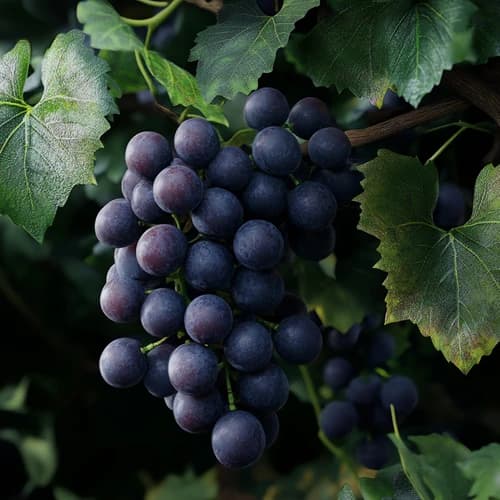


Introduction
St. Laurent is Austria's best-kept red wine secret and is often described as the "Burgundian cousin" of Pinot Noir. This elegant variety combines the fruit-driven freshness of cool climates with velvety tannins and a fascinating mineral depth. What makes St. Laurent so special is its ability to delight both as youthfully fruity and as complex and aged — a genuine all-rounder for wine lovers who appreciate finesse.
Flavor Profile & Character
St. Laurent presents itself with an enticing aromatics of juicy dark cherries and ripe raspberries, accompanied by delicate violet notes and a hint of pepper. On the palate, the variety shows medium to high acidity that harmonizes perfectly with its velvety but present tannins. The body is full-bodied without feeling heavy — a balance that makes St. Laurent an ideal food companion.
Depending on production style and terroir, St. Laurent develops different character traits. In cooler sites of the Thermenregion it appears fresher and more mineral, with pronounced cherry fruit and a fine herbal spiciness. In the warmer Burgenland, the variety brings more density and concentration; the dark berry fruit becomes more intense and notes of sweet tobacco and dried herbs are added.
With increasing age, high-quality St. Laurent wines develop fascinating complexity. The fresh fruit gives way to spicy tertiary aromas of undergrowth, leather, and fine toasty notes. The tannins become even more supple and the wine gains in depth and length. Premium examples can comfortably age 10–15 years, developing a Burgundian elegance that is hard to match.
Origin & History
The precise origin of St. Laurent remains unclear, though most ampelographers suspect a French origin. The name points to a connection to the feast of St. Lawrence (10 August), which alludes to an early ripening. DNA analyses have, however, found no direct relationship to known French varieties, which makes the grape all the more mysterious.
The variety achieved its greatest importance in Austria, where it has been documented since the 19th century. Particularly in the Thermenregion south of Vienna and in Burgenland, St. Laurent found ideal conditions and developed into one of the country's most important autochthonous red wine varieties. In the 1980s and 1990s the variety experienced a renaissance, as Austrian producers began to systematically develop the Burgundian potential of the grape.
Today St. Laurent is cultivated on approximately 1,000 hectares in Austria, with Burgenland providing the largest planted area at around 600 hectares. In Germany, especially in the Pfalz and in Rheinhessen, the variety is gaining increasing importance. Smaller plantings can also be found in the Czech Republic and Slovakia.
Viticulture & Terroir
St. Laurent prefers cooler to moderate climates where the variety can preserve its characteristic acidity and freshness. The early ripening makes it susceptible to late frosts, so sheltered sites are advantageous. At the same time, early ripening allows harvesting before the autumn rains, minimizing the risk of fungal diseases.
The variety makes particular demands on the soil. St. Laurent thrives best on calcareous, clay soils with a good water supply. These soils give the wines their characteristic minerality and finesse. In the Thermenregion it is the lime-rich soils that give St. Laurent its elegant, taut structure. In Burgenland the deep clay soils provide more power and concentration.
Key wine regions for St. Laurent
Austria clearly dominates the quality wine production of St. Laurent. In Burgenland, particularly at the Leithaberg and in the Mittelburgenland, powerful, concentrated wines with aging potential are produced. The Thermenregion is known for elegant, mineral interpretations with Burgundian character. In Lower Austria, especially in the Weinviertel and Carnuntum, the variety is also gaining importance.
In Germany, St. Laurent is grown with growing success primarily in the Pfalz and in Rheinhessen. Producers appreciate the variety for its ability to produce fruity, approachable red wines with character.
Wine Styles & Variants
St. Laurent is produced predominantly as a single-variety wine, with two fundamental styles having established themselves. The classically elegant style largely eschews new wood and relies on the natural fruit and minerality of the variety. These wines are aged in large wooden barrels or used barriques and show a Burgundian finesse with lively acidity and silky tannins.
The modern, barrique-influenced style targets more power, concentration, and international appeal. These wines often undergo a skin maceration period, are aged in new barriques, and show alongside the typical cherry fruit also notes of vanilla, chocolate, and toasty aromas. They are more approachable when young and can still age well.
Regionally there are clear differences: wines from the Thermenregion tend to be tighter, more mineral, and more Burgundian in style. Burgenland St. Laurent presents itself more powerful, with more density and riper fruit. German interpretations tend toward a lighter, fruitier segment.
As a blend partner, St. Laurent is excellent in blends with Blaufränkisch (more structure and spice) or Zweigelt (more fruit and approachability). With Pinot Noir too the variety harmonizes superbly and reinforces the Burgundian character.
Typical Aromas
Primary Aromas (from the grape)
Dark cherry is the leitmotif of St. Laurent — juicy, dark, with a characteristic sweetness that never becomes jammy. In cooler years and sites, red cherries also appear with brighter, crisper fruit.
Raspberry complements the cherry notes with its slightly tart freshness and lends the wines an inviting red-fruit component. In the Thermenregion this raspberry note is particularly prominent.
Violet is the variety's floral signature aroma — delicate, fragrant, unmistakable. This note is reminiscent of Pinot Noir and underlines the Burgundian kinship.
Black pepper brings a spicy component into play that is especially noticeable in wines from warmer sites. This peppery note lends St. Laurent complexity and makes it an ideal food companion.
Earthy notes appear as fine undergrowth, fresh forest floor, or mineral stony character — more or less prominent depending on the terroir. This earthy component gives the wine depth and authenticity.
Fresh herbs such as thyme or sage can occur in cooler sites and give the wine a Mediterranean spiciness.
Secondary Aromas (from winemaking)
Vanilla and chocolate develop in wines aged in new barriques. These aromas should support, not dominate, the primary fruit.
Toasty notes of coffee or espresso can arise with more intensive barrique aging and lend the wine additional complexity.
Butter and brioche appear in wines that have undergone malolactic fermentation — they round out the body and give the wine creaminess.
Tertiary Aromas (from aging)
St. Laurent belongs to Austria's cellar-worthy red wines and develops fascinating tertiary aromas with increasing age.
Leather and tobacco increasingly replace the fresh fruit after 5–8 years and give the wine a noble, mature character.
Undergrowth and forest floor become more intense over time and are reminiscent of old Burgundy wines — a sign of perfect maturation.
Dried herbs and mushrooms round out the aromatic picture of aged St. Laurent and show the complexity this variety can develop.
Aging ability: Simple St. Laurent are best enjoyed after 2–4 years. High-quality, barrique-influenced wines from good vintages can comfortably age 10–15 years, developing a Burgundian elegance that truly captivates wine lovers.
Food Pairing
Perfect Combinations
Braised beef goulash or Wiener Tafelspitz are classic Austrian pairings that harmonize perfectly with the velvety texture and spicy fruit of St. Laurent. The earthy notes in the wine pick up the roasted aromas of the meat, while the acidity balances the richness of the sauce.
Game dishes such as roast venison or venison ragout find an ideal partner in St. Laurent. The wine's cherry fruit complements the dark meat aromas, and the tannins can hold their own against the structure of the game without overwhelming it. An unbeatable combination especially in autumn.
Roast duck with red cabbage is a classic of Austrian cuisine that underscores the Burgundian side of St. Laurent. The fruity sweetness of the red cabbage harmonizes with the cherry and berry notes of the wine, while the acidity balances the fattiness of the duck.
Aged mountain cheese or Gruyère pairs superbly with older, complex St. Laurent wines. The nutty, spicy notes of the cheese find their echo in the tertiary aromas of the wine, and the creaminess of the cheese is perfectly complemented by the supple tannins.