




Introduction
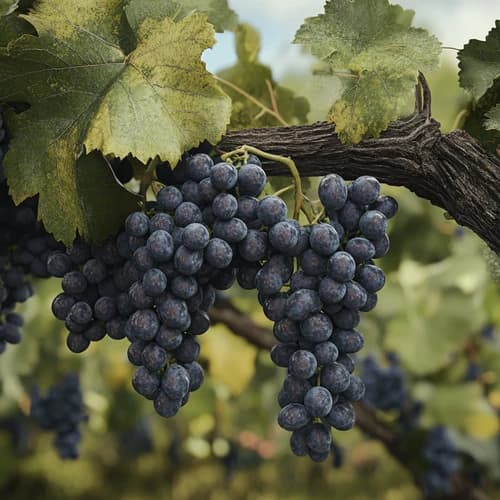
Cabernet Franc is the elegant, often underestimated grape that plays a very special role in the world of wine: it is not only the parent of the famous Cabernet Sauvignon but also an independent personality with a distinctly individual character. While its illustrious offspring impresses with power and structure, Cabernet Franc scores with finesse, freshness and an enchanting scent of violets and red berries. In the Loire Valley in particular, this variety shows what it is truly made of: vibrant wines full of elegance that rank among the most exciting reds in France.
Flavour Profile & Characteristics
Cabernet Franc is the epitome of elegance among red wines. Compared to its muscular offspring Cabernet Sauvignon, Cab Franc – as wine lovers affectionately call it – presents itself as distinctly finer and more approachable. The tannins are softer and silkier, the acidity lively and fresh, and the body sits in the medium range.
What makes Cabernet Franc so unmistakable is its aromatic profile. The characteristic bouquet evokes freshly picked violets, ripe raspberries and juicy red cherries. Spicy herbal notes join in, and – depending on origin and grape ripeness – hints of green pepper or graphite. These green, herbal notes are a typical feature of the variety and are particularly prized by connoisseurs, though they can become too dominant if grapes are under-ripe.
Ageing makes a major difference with Cabernet Franc: fresh, fruity versions from stainless steel tanks, as often produced in the Loire, display the pure fruit and sprightly vivacity of the variety. Wines that mature in barriques develop additional notes of vanilla, tobacco and spice without losing their characteristic freshness.
With increasing age, high-quality Cabernet Franc wines develop impressive complexity. The fruity primary aromas transform towards dried fruits, leather and undergrowth. The green notes become subtler, merging into an elegant spice. The great wines of Chinon in particular, or top-class Bordeaux blends, can comfortably age 10–20 years.
Origin & History
The roots of Cabernet Franc lie in south-west France, probably in the Basque Country or the Bordeaux region. The variety was cultivated in the Loire Valley as early as the 17th century, where it still shows its greatest expressive power today. The name "Franc" may point to the French origin or to the fact that the vines could grow on their own roots ("franc de pied") without being susceptible to disease.
DNA analyses have revealed that Cabernet Franc is a natural cross between Cabernet (an ancient Basque variety) and Sauvignon Blanc – or at least related to these. As the parent variety of Cabernet Sauvignon (arising from a cross with Sauvignon Blanc) and as a genetic relative of Merlot, Cabernet Franc holds a key position in the family tree of many great Bordeaux varieties.
Today Cabernet Franc is grown on over 45,000 hectares worldwide. The most important growing regions remain France (Loire and Bordeaux), followed by Italy, where the variety is prized in Friuli, Tuscany and Veneto. In the New World, the Finger Lakes in New York State and parts of California as well as Ontario in Canada have developed a particular affinity for this grape.
Viticulture & Terroir
Cabernet Franc prefers temperate climates and ripens earlier than Cabernet Sauvignon – a decisive advantage in cooler regions. The variety is robust against frost and cold, which makes it attractive for more northerly wine-growing regions. It is, however, susceptible to powdery mildew and requires good canopy management in the vineyard.
The best results are achieved on well-drained, calcareous soils with loam or gravel content. In the Loire, the difference between tuffeau and gravel is particularly noticeable: wines from tuffeau terroirs in Chinon or Bourgueil develop mineral notes and a taut structure, while gravelly soils yield fruitier, more accessible wines.
In Bordeaux, the variety thrives particularly well on the clay-rich and cooler soils of the Right Bank in Saint-Émilion and Pomerol. Here it brings finesse and freshness to blends with Merlot, lending them elegance and aromatic complexity.
Further important growing regions have established themselves in Italy, where Cabernet Franc produces subtle, herbal wines in Friuli and is increasingly used as a varietal wine or in "Super Tuscans" in Tuscany. Overseas, the Finger Lakes in New York State have found ideal conditions – the cool nights and longer growing season promote the variety's characteristic freshness and aromatic intensity.
Wine Styles & Variants
The range of Cabernet Franc wine styles is impressive, spanning from light, fruit-forward everyday wines to complex, age-worthy bottles.
Loire style: In Chinon, Bourgueil and Saumur-Champigny, classic medium-bodied reds are produced with lively acidity and expressive fruit. These wines are often drunk young but can age 10–15 years in great vintages from top sites. Ageing is traditionally carried out in used wooden casks or stainless steel to preserve the purity of the fruit.
Bordeaux blends: On the Right Bank of Bordeaux, Cabernet Franc plays an important role in the famous blends of Château Cheval Blanc (up to 50%), Château Ausone and many other leading estates. Here the variety is blended with Merlot and sometimes Cabernet Sauvignon, contributing structure, freshness and floral aromas to the assemblage.
Varietal wines: More and more producers worldwide are vinifying Cabernet Franc as a varietal wine. In Italy (especially Friuli), California and the Finger Lakes, expressive wines are produced that emphasise the variety's individuality, often working with modern cellar techniques and targeted barrique ageing.
Rosé: In the Loire, Cabernet Franc is also made into elegant, dry rosé wines that, with their freshness and delicate red fruit, make perfect summer wines.
Typical Aromas
Primary Aromas (from the grape)
Raspberry: The heart of Cabernet Franc's aromatics is juicy, fresh raspberry – sometimes bright red and sweet in warmer sites, sometimes a little more tart and wild-fruited in cooler regions.
Red cherry: Alongside raspberry, notes of fresh red cherries frequently appear, lending the wine an appetising fruitiness.
Violet: The most characteristic and elegant aroma of Cabernet Franc is the scent of fresh violets. This floral note is an infallible hallmark of the variety and becomes more intense with increasing ripeness.
Green pepper: The typical pyrazines of the Cabernet family manifest here as spicy notes of green pepper or green herbs. In cool years or with under-ripe fruit these notes can become dominant, but at optimal ripeness they add an exciting spice to the wine.
Fresh herbs: Complementing the green pepper, hints of Mediterranean herbs such as basil, thyme or oregano lend complexity to the wine.
Graphite: Wines from gravelly soils in particular display a mineral note reminiscent of graphite or wet stones, adding further depth.
Secondary Aromas (from winemaking)
Vanilla and spices: When aged in new barriques, classic vanilla notes develop along with hints of sweet spices such as cinnamon or clove.
Tobacco: Through malolactic fermentation and oak ageing, tobacco notes can develop that lend the wine a noble spice.
Toasty aromas: Depending on the toasting level of the barrels, delicate roasted aromas of coffee or dark chocolate may also appear.
Tertiary Aromas (from ageing)
Leather and undergrowth: With bottle age, earthy notes of fine leather, mushrooms and forest floor develop, lending the wine depth and complexity.
Dried fruits: The fresh berry notes transform into more concentrated aromas of dried cherries and figs.
Tobacco and cedarwood: The spicy notes become more refined over time, evoking the finest tobacco and cedarwood.
Cabernet Franc has medium to good ageing potential. Simpler Loire wines are perfect after 2–4 years, while high-quality single-vineyard Chinon or Bourgueil wines as well as Bordeaux blends can comfortably age 10–20 years, gaining in complexity throughout.
Food Pairing
Perfect Combinations
Rack of lamb with herb crust: The Loire classics harmonise perfectly with pink-roasted lamb. The herbal notes in the wine mirror those in the crust, while the acidity and tannins balance the fattiness of the meat. The fruity aromas of raspberry and cherry complement the delicate lamb flavour ideally.
Grilled vegetables and vegetarian dishes: The green, herbal notes and moderate tannic structure of Cabernet Franc make it the perfect partner for grilled peppers, aubergines or mushroom dishes. It is also an excellent choice alongside ratatouille or vegetarian lasagne – noticeably better than more tannic reds.
Charcuterie and pâtés: With a selection of French cured meats, rillettes or a country terrine from the Loire, a fresh Cabernet Franc from Chinon or Bourgueil is the ideal companion. The acidity cuts through the richness, while the spicy aromas underline the complex flavour notes of the charcuterie.
Tuna steak medium-rare: An unconventional but brilliant pairing: a chilled, young Cabernet Franc from the Loire works wonderfully alongside lightly seared tuna. The wine's lightness and fresh fruit do not overwhelm the fish, while the tannins provide just enough structure for the meaty tuna texture.
The versatility of Cabernet Franc makes it one of the most food-friendly red wines of all. It is neither too heavy nor too light, neither too tannic nor too soft – a genuine all-rounder for the modern, often vegetable-focused kitchen.