



Introduction
Syrah is the queen of spicy red wines and one of the most fascinating grape varieties in the world. With its characteristic black pepper note, intense dark fruit and impressive structure, it has conquered the hearts of wine lovers on every continent. Whether as an elegant Northern Rhône wine or a powerful Australian Shiraz – Syrah reveals entirely different yet always exciting faces depending on its origin.
Flavour Profile & Character
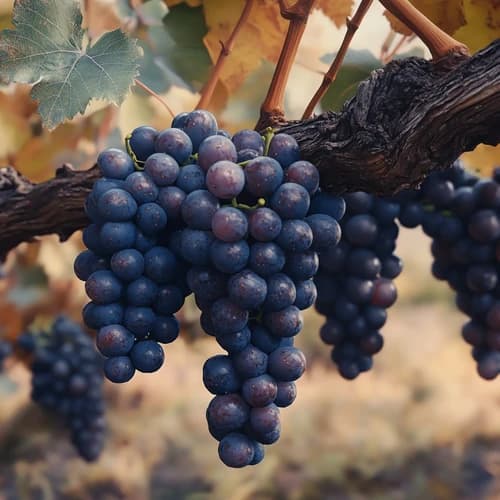
The flavour profile of Syrah is unmistakable: in the glass it reveals a deeply dark, almost opaque wine with violet reflections. The nose is dominated by black pepper – the hallmark of this grape variety – accompanied by juicy blackberries, black cherries and a floral hint of violet. Depending on the ageing method, smoky notes, dark chocolate and Mediterranean herbs join in.
On the palate, Syrah is full-bodied and powerful, yet never heavy. The tannins are present and firm but usually finely integrated. The acidity provides freshness and balance, even though the wine brings considerable power at 13–15% alcohol. The texture is often velvety to silky, especially in wines from cooler sites.
Ageing makes an enormous difference with Syrah: cool-climate regions such as the Northern Rhône produce more elegant, peppery wines with a tight structure and floral notes. Warmer areas like the Barossa Valley yield more opulent, fruit-driven wines with ripe blackberry fruit and chocolatey undertones. With age, fascinating tertiary aromas of leather, tobacco, wild herbs and earthy notes develop, while the tannins become more supple.
Origin & History
The cradle of Syrah lies in the Northern Rhône Valley of France, more precisely around the legendary appellations of Hermitage and Côte-Rôtie. DNA analyses have shown that Syrah is a natural cross between the ancient varieties Dureza and Mondeuse Blanche – both originating from the Rhône-Alpes region. This scientifically disproves the romantic legends of Persian origins (the city of Shiraz).
The documented history of Syrah stretches back to the Middle Ages, with the variety likely having been cultivated by the Romans. In the 19th century, Hermitage wine was so coveted that it was used to blend with Bordeaux wines – a then-legal practice intended to add power and colour.
Today Syrah is found worldwide: in France the Rhône Valley remains the heartland with around 70,000 hectares under vine. Australia has made the variety its flagship under the name "Shiraz" with roughly 40,000 hectares. Other significant growing regions can be found in California (especially Paso Robles and Santa Barbara), Washington State, South Africa (Swartland), Spain and Chile.
Cultivation & Terroir
Syrah is a demanding variety that requires warm to hot climatic conditions for optimal ripeness. It buds relatively late, protecting it from late frosts, but needs a long growing season to develop its characteristic spice and complexity. The grape ripens mid-season and is susceptible to coulure in unfavourable flowering conditions.
Syrah achieves its best results on well-drained soils with moderate nutrient supply. In the Rhône Valley it thrives excellently on granite and slate soils, which promote minerality and elegance. Australian top Syrah often grows on old, iron-rich red soils. In general the variety benefits from hillside sites and good sun exposure.
Climatically Syrah is versatile: in cooler sites such as the Northern Rhône or parts of South Africa, spicier, more structured wines with pronounced pepper notes and floral aromas emerge. Warmer regions like the Barossa Valley, McLaren Vale or California's Central Coast produce more fruit-driven, opulent styles with ripe berry fruit and higher alcohol levels. Wind and cool nights are important for preserving acidity.
Wine Styles & Variants
The range of Syrah wine styles is impressive. In the classic Rhône style, medium to full-bodied wines are produced with a tight tannic structure, often aged in large oak barrels or used barriques. The famous crus of the Northern Rhône – Hermitage, Côte-Rôtie, Cornas, Saint-Joseph – focus on elegance and terroir expression. In Côte-Rôtie, up to 20% Viognier is traditionally blended in, lending the wine floral aromas and a supple texture.
The Australian Shiraz style presents itself considerably more opulent: lush fruit, softer tannins, often clearly perceptible new oak with vanilla and chocolate notes. Iconic wines like Penfolds Grange demonstrate the ageing potential of this style. Modern Australian winemakers are increasingly experimenting with cooler sites and restrained oak for more elegant interpretations.
In the Southern Rhône, Syrah plays an important role in blends, especially in Châteauneuf-du-Pape and Côtes du Rhône, where it is combined with Grenache and Mourvèdre into the classic GSM blend. These assemblages unite Syrah's structure and spice with the fruit of Grenache and the earthiness of Mourvèdre.
California and Washington State produce their own interpretations – often positioned between French elegance and Australian opulence. South Africa is producing increasingly notable Syrah wines with a distinctive character that combines Mediterranean herbal spice with dark fruit.
Typical Aromas
Primary Aromas (from the grape):
The primary aromas of Syrah are intense and multilayered. Foremost is the characteristic black pepper, which gives the variety its unmistakable spice – particularly pronounced in cooler climates. Blackberries and black cherries are added as dominant fruit aromas, ranging from fresh and juicy to concentrated and jammy depending on ripeness.
Another signature aroma is violet, which contributes floral elegance and is especially present in wines from the Northern Rhône. In warmer regions, notes of ripe plums and dark berries also develop. Terroir has an enormous influence: granite soils promote floral and peppery notes, while warmer sites with clay yield more fruit opulence.
Secondary Aromas (through winemaking):
Ageing profoundly shapes Syrah. New oak barrels bring smoky notes, roasted coffee and vanilla into the wine. With longer maceration and extraction, aromas of dark chocolate and cocoa emerge. Many winemakers rely on malolactic fermentation, which lends the wine creamy, buttery nuances. In warm vintages, notes of blackberry jam and cassis can also appear.
Tertiary Aromas (through ageing):
Syrah is among the most age-worthy red wine varieties in the world. After 5–10 years of bottle ageing, complex aromas of tobacco, leather and dried herbs such as thyme and rosemary develop. Older wines show earthy notes, truffle, game and a fascinating depth. The finest Hermitage and Côte-Rôtie can mature for 20–30 years, their peppery spice complemented by sublime tertiary complexity. Premium Australian Shiraz from the Barossa Valley or Eden Valley also demonstrates impressive ageing potential, developing notes of dried meat, balsamic and sweet spices.
Food Pairing
Perfect Combinations:
Braised beef cheeks in red wine sauce – The Syrah classic combination par excellence. The wine's robust tannins and spice harmonise perfectly with the tender, slow-braised meat. The pepper notes in the wine mirror the seasoning of the dish, while the fruit sweetness balances the umami of the meat. Choose a full-bodied Syrah from the Rhône or a mature Australian Shiraz.
Game dishes such as venison or wild boar – The earthy, spicy notes of Syrah and its subtle smokiness pair excellently with robust game. Particularly aged Syrah, with its tertiary aromas of undergrowth and leather, finds ideal partners here. Add root vegetables and lingonberries – an autumn-winter combination that delights.
Provençal roast lamb with herbs de Provence – The Mediterranean connection: Syrah originates from this region and loves the aromas of rosemary, thyme and lavender. Grilled or braised lamb, with its slight fattiness, is perfectly cut by the tannins while the herbal spice of the wine underscores the preparation.
Aged Comté or Manchego – For the cheeseboard, spicy hard cheeses pair excellently with Syrah. The salty, nutty aromas of the cheese bring out the fruit in the wine, while the tannins balance the fat. A robust cheddar or aged gouda also works superbly – especially with an Australian Shiraz and its chocolate note.