




Introduction
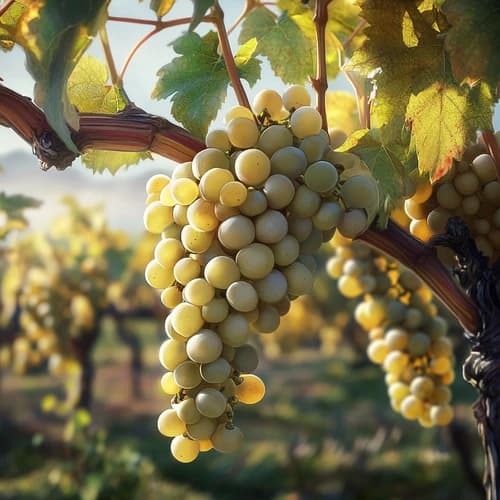
Trebbiano Toscano is the workhorse grape of Italy – and that is meant as anything but a criticism. This variety shapes Italian white wine like few others and is simultaneously one of the most widely planted white grapes in the world. What makes it so special? Its incredible adaptability, its freshness and its ability to produce both simple everyday wines and characterful drops – depending on how much care and attention the winemaker invests.
Flavour Profile & Character
Trebbiano Toscano is not a wine that knocks you off your feet – but that is precisely its charm. In its classic expression the variety yields light, refreshing white wines with a crisp acidity and a lean, uncomplicated character. You will find predominantly delicate citrus aromas, green apple and a subtle mineral note. The alcohol content is usually in the moderate range of 11.5 to 13 per cent, making these wines particularly easy drinking.
The flavour profile depends heavily on yield and winemaking, however. At high yields – which Trebbiano Toscano is easily capable of – neutral, simple wines with little personality result. Here the grape often serves as an inexpensive blending partner. But when winemakers drastically reduce yields and treat the grapes with respect, Trebbiano Toscano shows an entirely different face: the wines become more structured, develop a pleasant almond quality and can show surprising depth.
With age, high-quality Trebbiano wines develop further and take on honeyed notes as well as a certain creaminess, without losing their characteristic freshness. The best examples can easily mature for three to five years, some even longer.
Origin & History
The name already reveals it: Trebbiano Toscano originates from Tuscany in central Italy. The variety has been cultivated there since antiquity and was one of the most important grapes of the region for centuries. Interestingly, Trebbiano Toscano was traditionally also used for the white wine component in the famous Chianti – a practice that has thankfully largely been consigned to history.
Over time the variety spread across all of Italy and beyond. In France, where it is known as Ugni Blanc, it plays a central role in the distillation of Cognac and Armagnac. Its ability to deliver reliable yields even in difficult years made it popular with winemakers – sometimes, however, too popular, as the variety was often planted simply for its productivity rather than its quality.
Today Trebbiano Toscano is found mainly in central and southern Italy, but also in southern France, Argentina, Australia and California. The worldwide planted area is estimated at over 100,000 hectares, making this unassuming variety one of the globally most significant.
Cultivation & Terroir
Trebbiano Toscano is a robust and undemanding variety that copes with a wide range of climatic conditions. It is most at home in warm to hot climates with ample sunshine, though it also tolerates cooler sites. Its late ripening makes it susceptible to autumn rains, so it delivers the best results in regions with a dry late summer.
With soils the variety is similarly undemanding. It thrives equally well on limestone, clay and sandy soils. Indeed, this adaptability is one of the reasons for its widespread presence. The vine buds late, protecting it from late frosts, and also ripens late – in Italy often only in late September or early October.
The most important growing regions in Italy are Tuscany, Emilia-Romagna, Lazio and Abruzzo. Each of these regions produces slightly different wine styles. In Tuscany the more interesting, characterful wines often emerge, while Emilia-Romagna is known for large volumes of simple Trebbiano wines. In France cultivation is concentrated in the Charente region for Cognac production and in Languedoc and Provence.
Wine Styles & Variants
Trebbiano Toscano is a chameleon of the wine world and appears in a wide variety of styles. The most common is the simple, uncomplicated everyday wine – light, fresh, for drinking young and without great ambition. These wines are typically born in stainless steel tanks and bottled shortly after harvest.
However, ambitious winemakers also produce more demanding versions. Through drastic yield reduction, selective hand harvesting and ageing in large wooden barrels or barriques, wines are created with more structure, complexity and ageing potential. Some producers also experiment with extended skin contact, which gives the wines additional texture.
In Tuscany, Trebbiano Toscano is often part of blends – traditionally with Malvasia, Vermentino or Vernaccia. These blends benefit from Trebbiano's high acidity, while the partner varieties contribute more aromatic intensity. In Emilia-Romagna the slightly sparkling Trebbiano di Romagna DOC is produced from the variety – it is particularly refreshing.
Outside Italy the grape is used primarily for distillation. As Ugni Blanc it provides the ideal base for Cognac and Armagnac: neutral in flavour, high acidity, low alcohol – perfect conditions for distillation and long barrel ageing.
Typical Aromas
Primary Aromas (from the grape)
The primary aromas of Trebbiano Toscano are discreet and restrained. Citrus notes often dominate the bouquet – mainly lemon and general citrus fruit without much sweetness. Green apple joins in, lending the wine a crisp, almost tart freshness. Depending on ripeness and terroir, almond and hazelnut can also shimmer through, particularly with riper grapes.
A pronounced mineral note, reminiscent of wet stone or chalk, is also typical. In cooler sites or with early harvesting, grassy or herbal nuances sometimes appear. In very warm regions the grapes develop more ripeness and yield subtle notes of pear or ripe apple.
Secondary Aromas (through winemaking)
Trebbiano Toscano is typically aged in stainless steel tanks to preserve freshness. This produces almost no additional aromas. In wines stored on the lees, however, a light yeastiness develops with notes of brioche or butter, lending the wine more creaminess and substance.
In the few Trebbiano wines aged in wood, subtle vanilla and toast notes are added. These wines are rare, however, as oak can quickly overwhelm the delicate fruit notes.
Tertiary Aromas (through ageing)
Most Trebbiano wines are intended for prompt consumption and develop no noteworthy tertiary aromas. High-quality examples with low yields can, however, certainly age. After three to five years of bottle ageing, honey notes develop, along with a certain waxiness and sometimes roasted almond aromas.
The high acidity protects these wines from oxidation and ensures that they can still taste fresh after several years. The ageing capacity remains limited overall, however – Trebbiano Toscano is more a wine of youth than a great keeper.
Food Pairing
Perfect Combinations
Fritto Misto di Mare: The classic combination from Italian cuisine. The high acidity of Trebbiano cuts perfectly through the fattiness of fried seafood, while the citrus notes underscore the freshness of the fish. A young, crisp Trebbiano from Lazio is ideal here.
Pasta with lemon and herbs: Think pasta al limone or spaghetti aglio e olio – light, oil-based pasta dishes with plenty of citrus and fresh herbs. The wine's acidity harmonises perfectly with the lemon, while the discreet aromas do not overwhelm the herbs. An uncomplicated Trebbiano from Emilia-Romagna fits superbly.
Grilled fish with a herb crust: Whether sea bass, sea bream or trout – lightly grilled fish with Mediterranean herbs and lemon is made for Trebbiano Toscano. The wine's mineral notes complement the fish, while the acidity refreshes the palate between bites.
Summer salads with goat's cheese: The combination of fresh salad, creamy goat's cheese and a light vinaigrette finds its perfect companion in Trebbiano. The wine's freshness suits the salad, while the subtle creaminess of more mature Trebbiano wines complements the cheese without overpowering it.


