




Introduction
Touriga Franca is the aromatic soul of Portuguese red wines and one of the most important grape varieties in the legendary Douro Valley. While its more famous sibling Touriga Nacional often takes centre stage, Touriga Franca is the unsung hero that refines both Port wine and dry reds with its fruity elegance and floral finesse. What makes this variety so special? Its unique balance of intense blackberry and cherry notes, an intoxicating violet fragrance and a lively acidity that makes every sip a pleasure.
Flavour Profile & Character
Touriga Franca delights with an expressive yet elegant flavour profile that sets it apart from many other Portuguese varieties. In the glass it presents intense aromas of juicy blackberries and dark cherries, accompanied by a seductive floral note – violets and roses seem to float out of the glass. This floral component is a true hallmark of the variety and makes it unmistakable.
What particularly distinguishes Touriga Franca is its lively acidity, which gives the wines freshness and drinkability. The tannins are moderate and silky – noticeably softer than the powerful Touriga Nacional – making the wines accessible even in their youth. Spicy notes of black pepper and dried Mediterranean herbs add complexity and depth.
Depending on climate and terroir, the character varies: in cooler Douro sites, Touriga Franca develops more elegance and floral finesse, while in warmer areas it becomes fuller and more fruit-driven. Traditional ageing in large wooden barrels keeps the fruit aromas at the forefront, while ageing in new barriques adds spicy vanilla and cedarwood notes.
With age, the wines develop beautifully: the fresh berry notes transform into dried plums and figs, the floral aromas become potpourri, and fine tertiary notes of tobacco, leather and earthy nuances emerge.
Origin & History
Touriga Franca originates from the Douro Valley in northern Portugal, one of the oldest demarcated wine regions in the world. While its precise origin is not fully documented, the variety is believed to have been cultivated in this region for centuries. For a long time it was known under the name "Touriga Francesa", suggesting a possible French descent – genetic research has, however, refuted this theory. It is a thoroughly Portuguese variety.
Its importance for Port wine was recognised as early as the 18th century, when the Douro vineyards were classified for Port production. Alongside Touriga Nacional, Tinta Roriz, Tinta Barroca and Tinto Cão, Touriga Franca is one of the five recommended principal varieties for traditional Port wine.
Today Touriga Franca is one of the most widely planted red varieties in the Douro Valley and has also established itself in other Portuguese regions. In the Dão, Beira Interior and even the Alentejo, increasingly high-quality wines from Touriga Franca are being produced. Internationally the variety is still largely unknown, though individual winemakers in Australia, South Africa and the USA are experimenting with it.
Cultivation & Terroir
Touriga Franca thrives best in warm, dry climates with hot summers and cool nights – precisely the conditions the Douro Valley offers. The variety is well adapted to the extreme conditions of this region, where summer temperatures exceeding 40°C are not uncommon. The cool nights ensure that the grapes retain their natural acidity, which is decisive for the freshness and balance of the wines.
The vine prefers schist soils, as predominate in the Douro. These sparse, mineral-rich soils force roots to grow deep into the subsoil to find water and nutrients. The result is concentrated, mineral wines with a pronounced terroir character. On granite soils Touriga Franca also performs well, yielding somewhat more elegant wines with more floral notes.
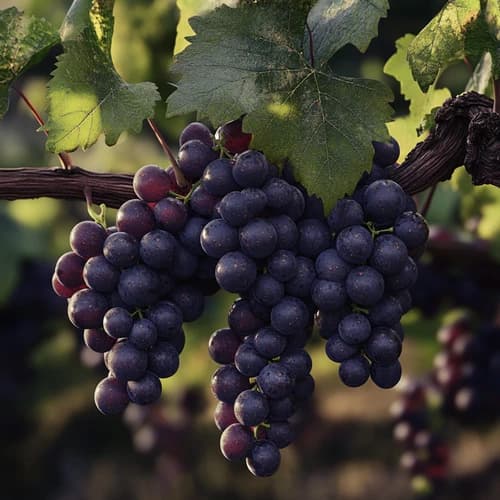
In the vineyard, Touriga Franca is more robust than Touriga Nacional and less susceptible to disease. It yields relatively consistent crops and ripens mid-season, typically about two weeks before Touriga Nacional. The berries are small and thick-skinned, resulting in a favourable skin-to-juice ratio and delivering intense colour and concentrated aromas.
The most important growing areas are the Douro Valley (Baixo Corgo, Cima Corgo and Douro Superior), the Dão and increasingly the Alentejo. In each region the variety shows slightly different facets but retains its characteristic aromatics and structure.
Wine Styles & Variants
Touriga Franca shines in various wine styles, excelling both as a single variety and in blends:
Port wine: Here Touriga Franca plays a central role. It brings fruitiness, freshness and floral notes to the assemblage and balances the powerful tannins of Touriga Nacional or the sweetness of Tinta Roriz. It is indispensable in Vintage Ports and premium Tawnies.
Dry Douro reds: Produced as a varietal or as the main component of a blend, these are elegant to powerful reds with 12.5–14% alcohol. Ageing typically takes place in large wooden barrels (balseiros) or used barriques to avoid overwhelming the fruit. Modern winemakers also experiment with new barriques for additional structure and vanilla aromas.
Reserva and Grande Reserva wines: Premium releases with ageing potential of 8–15 years. Here Touriga Franca demonstrates its capacity for development, becoming more complex and velvety over time.
Rosé wines: Some progressive producers create fresh, aromatic rosés from Touriga Franca, which show off the variety's floral and berry notes particularly beautifully.
As a blending partner, Touriga Franca pairs perfectly with Touriga Nacional (more structure and tannic power), Tinta Roriz (more fruit and alcohol) and Tinta Barroca (more richness). These combinations are classic for Douro wines and create complex, balanced wines.
Typical Aromas
Primary Aromas (from the grape)
The primary aromas of Touriga Franca are intense and unmistakable. Blackberry is often the dominant fruit aroma – juicy, ripe and with a slight wildness. Black cherry joins in and adds a darker, more concentrated fruit note. The floral side is expressed above all through violet, which lends the wine an almost perfumed elegance. In cooler sites, notes of raspberries and red cherries can also appear.
A particular feature is the Mediterranean herbal spice (dried herbs such as thyme and rosemary) that results from the hot, dry climate of the Douro. These aromas give the wine an additional dimension and connect fruit with earthy, garrigue-like notes. Depending on terroir, mineral notes of schist can also be present, lending structure and depth to the wines.
Secondary Aromas (through winemaking)
During fermentation and ageing, further aroma layers develop. Black pepper and other spice notes emerge through malolactic fermentation and yeast contact. When aged in new barriques, vanilla, cedarwood and sweet spices such as cinnamon are added. Traditional Douro wines matured in large old barrels or concrete tanks, by contrast, preserve the pure fruit aromas and develop only subtle spicy notes.
Maceration time influences the tannin structure and colour: longer maceration leads to darker, more tannic wines, while shorter contact times yield more elegant, readily accessible wines.
Tertiary Aromas (through ageing)
Touriga Franca has good ageing potential, especially at Reserva quality and in Port wine. After 5–10 years of bottle ageing, the fresh berry fruits develop into dried fruits such as prunes and figs. The floral notes become potpourri and dried petals. Complex tertiary aromas of tobacco, leather and undergrowth emerge.
In aged Port wines, additional notes of caramel, nuts and chocolate appear. The acidity of Touriga Franca preserves freshness even after long ageing, preventing wines from seeming flat or oxidative. Well-made wines can mature for 15–20 years or longer, gaining complexity and elegance in the process.
Food Pairing
Perfect Combinations
Braised beef with Port wine jus: The classic pairing par excellence. The fruity blackberry and cherry notes of Touriga Franca complement the savoury meat wonderfully, while the wine's acidity cuts through the richness of the sauce. A red wine with Touriga Franca mirrors the Port aromas in the dish and creates a harmonious flavour connection.
Rack of lamb with herbs de Provence: The Mediterranean herb notes in the wine (thyme, rosemary) find their perfect counterpart in the herb crust of the lamb. The moderate tannins of Touriga Franca harmonise with the tender lamb without overwhelming it, and the acidity provides freshness.
Aged Manchego or Serra da Estrela: Portuguese and Spanish sheep's cheeses pair excellently with Touriga Franca. The creamy, nutty texture of the cheese is caressed by the wine's fruit notes, while the saltiness of the cheese enhances the spice and floral notes of the wine.
Wild boar goulash with mushrooms: The earthy mushroom aromas and the intense game meat call for a wine with character. Touriga Franca delivers sufficient fruit and structure to keep pace with the robust dish, while its elegance prevents the combination from becoming too heavy. The black pepper spice notes in the wine complement the seasoning of the goulash perfectly.
In general: Touriga Franca loves hearty, spicy cuisine with a Mediterranean or Portuguese character. It is also a delight with dark chocolate (70% cocoa) with sea salt – the wine's fruity and spicy notes harmonise wonderfully with the bittersweet chocolate.