


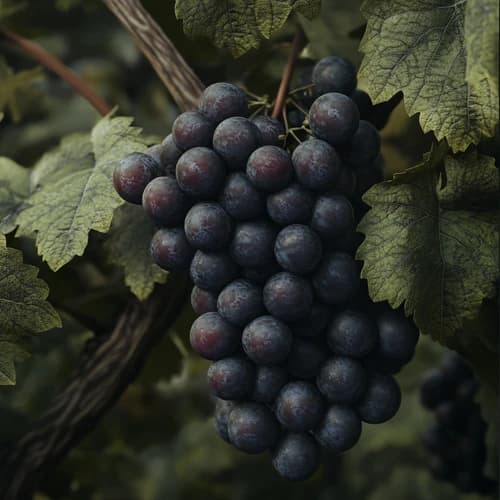


Sangiovese is the undisputed queen among Italy's red wine grapes and the heart of some of the world's most famous wines. From the gentle hills of Tuscany to the vineyards of Emilia-Romagna, this versatile variety has shaped Italian wine culture for centuries. What makes Sangiovese so special is its unique combination of vibrant acidity, elegant tannins, and an aromatic spectrum ranging from fresh red cherries to spicy herb notes.
Flavor Profile & Character
Sangiovese shows its most charming side with a bouquet of juicy red cherries reminiscent of freshly picked sour cherries. This fruitiness is elegantly framed by a herbal spiciness that evokes Mediterranean scrubland, dried thyme, and sage. Violet notes lend the wine a floral elegance, while subtle hints of black tea and tobacco provide complexity.
What truly distinguishes Sangiovese is its pronounced acid structure. This vibrant acidity makes the wines incredibly food-friendly and ensures they never feel heavy or tiring. The tannins are present and grippy, yet silky and elegant with good ripeness. The body varies from elegant-medium to powerful and concentrated depending on the growing area and production method.
Depending on climate and terroir, Sangiovese shows different facets. In cooler sites such as the Chianti area, vibrant, acidity-driven wines with crisp cherry fruit and herbal freshness are produced. In warmer regions such as Montalcino, fuller, more concentrated wines develop with riper fruit aromas of dark cherries and plums.
With increasing age, Sangiovese wines develop fascinating tertiary aromas. The fresh cherry fruit transforms into notes of dried cherries and cooked fruits. Complex hints of leather, tobacco, forest floor, and truffle emerge. The tannins integrate fully and leave a silky, long finish.
Origin & History
The roots of Sangiovese reach deep into Italian history. The name most likely derives from the Latin "Sanguis Jovis" — blood of Jupiter. The Etruscans and Romans probably already cultivated ancestors of this variety in Tuscany. The first documented mention under the name Sangiovese dates from the 16th century.
The variety most likely originated in Tuscany, where it has formed the backbone of local wine production for centuries. In the 19th century, Baron Bettino Ricasoli developed the classic Chianti formula in which Sangiovese plays the leading role. This recipe laid the foundation for the international success of Tuscan wines.
Today, with over 70,000 hectares under vine, Sangiovese is Italy's most planted red wine grape. Tuscany remains the heartland with legendary appellations such as Chianti Classico, Brunello di Montalcino, and Vino Nobile di Montepulciano. Significant growing areas can also be found in Emilia-Romagna, the Marche, Umbria, and increasingly in the New World, particularly in California and Argentina.
Viticulture & Terroir
Sangiovese is a demanding diva among grape varieties. It prefers warm, sunny sites with good drainage and is sensitive to excessive moisture. The variety ripens late and requires a long growing season to develop its full aromatic complexity. In overly cool years the acidity can become dominant, while excessively hot climates impair the characteristic elegance.
The best Sangiovese wines arise on calcareous, clay- or marl-rich soils with a high proportion of galestro — the typical schist-limestone of Tuscany. These soils provide optimal drainage and lend the wines their mineral complexity and pronounced structure. In Montalcino, Sangiovese benefits from the calcareous, well-drained hillsides, which yield fuller, more concentrated wines.
Altitude plays a decisive role in quality. Sangiovese thrives especially well at elevations between 200 and 500 metres, where cool nights preserve acidity and warm days encourage ripening. Tuscany with its rolling hills offers ideal conditions. Further important growing areas include Emilia-Romagna around Bologna, Umbria with its DOCG wines from Montefalco and Torgiano, and the Marche on the Adriatic coast.
Wine Styles & Variants
Sangiovese shows remarkable versatility in winemaking. The classic approach involves large Slavonian oak casks, the traditional botti, which give the wine structure without overwhelming it with obtrusive wood aromas. This method is found primarily in traditional Chianti Classico and Brunello di Montalcino. The result is elegant wines focused on fruit and terroir.
More modern production methods employ smaller French barriques, which lend the Sangiovese additional vanilla, chocolate, and toast notes. This style, popularized by the Super Tuscans in the 1970s, produces fuller, internationally oriented wines with softer tannins. Many top producers today skillfully combine both methods.
Regionally, Sangiovese shows clear differences. Chianti Classico presents itself as an elegant, acidity-driven wine with lively cherry fruit. Brunello di Montalcino — pure Sangiovese under the local name "Sangiovese Grosso" — is more powerful, concentrated, and age-worthy. Vino Nobile di Montepulciano offers a middle ground with elegant structure and good aging capacity.
As a blend partner, Sangiovese harmonizes superbly with international varieties. The classic Chianti blend traditionally contains small proportions of Canaiolo and Colorino. The famous Super Tuscans combine Sangiovese with Cabernet Sauvignon, Merlot, or Syrah, adding additional structure, color, and international appeal.
Typical Aromas
Primary Aromas (from the grape)
Sour cherry and red berries: The heart of the Sangiovese profile is the radiant red cherry fruit, ranging from fresh to cooked cherries. In cooler climates, bright, crisp cherry notes dominate, while warmer sites produce riper, darker cherry hints.
Mediterranean herbs: Characteristic aromas of dried Italian herbs such as thyme, oregano, and sage. This spicy component is especially pronounced in wines from Tuscany and lends them their typically Mediterranean identity.
Violet and floral notes: Elegant violet fragrances and delicate floral aromas give Sangiovese a feminine, perfumed quality that is especially perceptible in young to middle-aged wines.
Earthy notes: Hints of forest floor, undergrowth, and damp earth reflect the terroir and intensify with age. This earthy component is particularly characteristic of Sangiovese from Chianti Classico.
Secondary Aromas (from winemaking)
Vanilla and spices: When aged in new barriques, aromas of vanilla, cinnamon, and sweet spices develop. These notes are subtler when the traditional large cask method is used.
Tobacco and leather: Through extended wood aging, spicy tobacco and leather notes develop, lending the wine additional complexity.
Tertiary Aromas (from aging)
Dried fruits: With bottle aging, notes of dried cherries, plums, and figs develop. The fresh fruit transforms into concentrated, compote-like aromas.
Balsamic notes: Aged Sangiovese wines show fascinating balsamic hints, truffle notes, and a profound spiciness. Top Brunello can comfortably age 20–30 years, developing extraordinary complexity. Classic Chianti Classico Riserva shows its optimum after 8–15 years, while simpler Chianti should be enjoyed young.
Food Pairing
Perfect Combinations
Classic pasta dishes: Sangiovese and Italian pasta are a match made in heaven. The wine's high acidity cuts through rich tomato sauces and fatty meat ragùs. A Chianti Classico with pappardelle al cinghiale (wide ribbon pasta with wild boar ragù) or tagliatelle al ragù Bolognese is a timeless combination. The herb notes in the wine harmonize perfectly with Mediterranean seasonings such as rosemary and sage.
Bistecca alla Fiorentina: The famous Tuscan T-bone steak from Chianina cattle is the classic partner for a powerful Brunello or Chianti Classico Riserva. The firm tannins of the wine harmonize with the fat of the meat, while the acidity balances the richness. Season the steak with only salt and high-quality olive oil to showcase the pure aromas of both wine and meat.
Aged hard cheese: Pecorino Toscano or Parmigiano Reggiano with 24–36 months of aging are ideal companions for mature Sangiovese. The salty, umami-rich cheese notes complement the earthy, balsamic aromas of the wine, while the texture of the cheese softens the tannins.
Mushroom dishes: The earthy notes in Sangiovese find their perfect partner in mushroom dishes. Risotto ai funghi porcini (porcini risotto) or tagliatelle with mixed wild mushrooms and truffle oil harmonize wonderfully with the spicy, earthy complexity of mature Sangiovese wines. The creamy texture of the risotto is perfectly balanced by the acidity of the wine.