


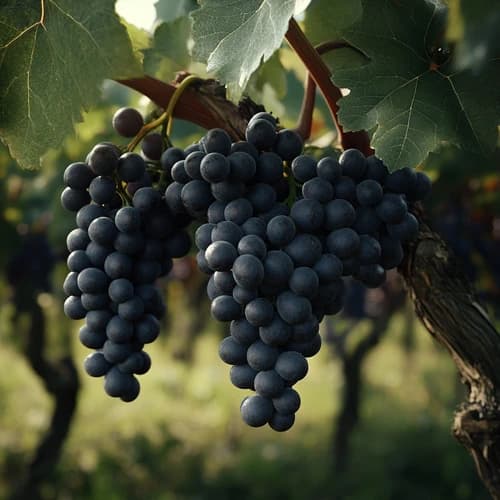


The Soul of Amarone
Corvina is the undisputed queen of the Veneto and the heart of some of Italy's most famous red wines. If you have ever enjoyed an Amarone della Valpolicella, you have already made the acquaintance of this fascinating variety. With its perfect balance of vibrant fruit, elegant structure and Mediterranean character, Corvina embodies the full diversity of northern Italian winemaking – from fresh, light-footed everyday wines to powerful, concentrated masterpieces.
Flavour Profile & Characteristics
Corvina captivates with a distinctive aroma spectrum that moves elegantly between fruity freshness and spicy complexity. In the glass the variety typically presents a bright ruby red with violet reflections, transitioning to garnet with age.
The typical flavour is dominated by juicy cherry fruit – think fresh red cherries and sour cherries, accompanied depending on ageing by floral violet notes and a hint of bitter almond. This characteristic bitter almond nuance in the finish is a hallmark of good Corvina wines and lends them a special depth.
Acidity is the backbone of Corvina: present and refreshing but never shrill or dominant. The tannins are moderate and fine-grained, making the wines approachable and harmonious. The body varies considerably depending on the production method – from medium to very full-bodied.
With classic vinification as Valpolicella, lively, fruit-forward wines are produced with moderate alcohol (12–13%). However, when the grapes are dried on straw mats or in ventilated drying lofts after harvest (Appassimento), sugar, aromas and extract concentrate dramatically. The result is powerful Amarone wines with 15–16% alcohol and a richness reminiscent of dried fruits, chocolate and spice.
With age, tertiary aromas of tobacco, leather, dried herbs and earthy nuances develop. High-quality Amarone wines can comfortably age 20 years and beyond, gaining in complexity and silkiness throughout.
Origin & History
Corvina is an indigenous variety of the Veneto and has been cultivated for centuries in the region around Verona. The name may derive from the Latin "corvus" (raven) – possibly because of the dark berry skins or because ravens particularly prized the sweet, ripe grapes.
The first written records extend back to the Middle Ages, but Corvina's great flourishing came in the 20th century when the Valpolicella region gained international recognition. The success of Amarone from the 1950s onwards in particular made Corvina world-famous.
Today Corvina is virtually synonymous with the Valpolicella zone between Verona and Lake Garda. Here, in the gentle hills with a view of the Alps, the variety finds ideal conditions. The most important growing areas are Valpolicella Classico, Valpantena and the eastern zones. Smaller plantings can also be found in the Bardolino area on Lake Garda.
Outside Italy, Corvina is scarcely represented – the variety remains firmly tied to its Venetian homeland and is the dominant red variety there with over 7,000 hectares.
Viticulture & Terroir
Corvina is a relatively demanding variety that prefers warm but not overly hot sites. The continental climate of the Veneto with mild summers and cool autumn nights provides ideal conditions. The cooling winds from Lake Garda and elevations between 150 and 450 metres ensure a slow, even ripening.
The soils of the Valpolicella are extremely varied: limestone, volcanic rock, clay and alluvial soils alternate. Corvina proves adaptable, but prefers permeable, calcareous soils with good drainage. The classic zone (Classico) with its steep slopes and limestone-rich soils is regarded as the premium area.
The variety ripens late – usually from late September to early October. For Amarone, the grapes are harvested even later, when they are overripe. The thick skin makes Corvina relatively resistant to rot, which enables the long ripening time and subsequent drying. However, the variety tends towards vigorous growth and high yields, making strict yield reduction essential for quality wines.
Wine Styles & Variants
The versatility of Corvina is shown in its impressive range of wine styles:
Valpolicella Classico is the entry point: a fresh, fruit-forward red wine with lively acidity and moderate tannins. Perfect for everyday enjoyment, to be drunk young and wonderfully uncomplicated. Alcohol usually 11.5–12.5%.
Valpolicella Superiore and Ripasso represent the middle tier: in the Ripasso process, young Valpolicella is re-fermented over the pomace of the Amarone, by which it gains additional aromas, body and structure. The result is a wine between classic Valpolicella and Amarone – with more depth but without the opulence of the great sibling.
Amarone della Valpolicella is the superstar: here the grapes are dried for 3–4 months after harvest, losing up to 40% of their weight and concentrating sugar and aromas dramatically. Fermentation proceeds slowly; the wine is often aged in large wooden casks or barriques. The result: a powerful, complex wine with 15–16% alcohol, notes of dried plums, chocolate, tobacco and enormous ageing potential.
Recioto della Valpolicella uses the same Appassimento technique but arrests fermentation early, producing a sweet, velvety red wine of around 12–14% alcohol – perfect with chocolate desserts.
Corvina is traditionally blended with Rondinella (20–40%) and often some Molinara, sometimes also with Corvinone, an independent variety. Modern producers also experiment with small proportions of international varieties such as Cabernet or Merlot.
Typical Aromas
Primary Aromas (from the grape)
Red cherry is the leitmotif: fresh, juicy sour cherry dominates in young wines, especially in classic Valpolicella. This fruitiness is bright, transparent and carried by a lively acidity.
Violet lends an elegant floral note that emerges particularly in cooler sites and with careful vinification. This aroma gives Corvina wines a feminine, perfumed component.
Dried herbs from the Mediterranean scrubland – thyme, sage, oregano – appear especially in wines from warm, exposed sites. They add spice and complexity.
Bitter almond in the finish is the signature aroma of Corvina. This slightly bitter, nutty note is characteristic and distinguishes the variety from other reds.
Secondary Aromas (from winemaking)
Dried cherries and plums arise through the Appassimento method. The drying of the grapes concentrates the fruit and transforms it into compote-like, intense aromas.
Cocoa and chocolate develop in Amarone through the combination of concentration, malolactic fermentation and partial barrique ageing. These notes lend depth and opulence.
Sweet spices such as vanilla, cinnamon and clove emerge in wines with oak ageing. They blend harmoniously with the fruit and create a fuller flavour impression.
Tertiary Aromas (from ageing)
Tobacco and leather develop in aged Amarone wines after 5–10 years of bottle ageing. The fruit becomes more nuanced; tertiary spice moves to the fore.
Forest floor and dried mushrooms appear in very old wines (15+ years) and lend them an earthy, complex depth.
Corvina wines vary considerably in ageing capacity: simple Valpolicella should be drunk young (1–3 years), while high-quality Amarone can age 10–20 years and beyond, gaining elegance and complexity throughout.
Food Pairing
Perfect Combinations
Ossobuco alla Milanese is the classic pairing with Amarone: this braised veal shank dish, with its rich, velvety meat and intense sauce, harmonises perfectly with the power and spice of the wine. The acidity cuts through the fat while the dried fruit aromas complement the dish's aromatics.
Risotto all'Amarone is the ultimate regional combination: the wine is incorporated directly into the risotto, creating an incredible depth of flavour. The creaminess of the risotto is supported by the structure of the wine – serve alongside the same Amarone you used in the cooking.
Hard cheese such as Parmigiano Reggiano or Monte Veronese are ideal partners, especially with aged Amarone. The saltiness and umami notes of the cheese highlight the fruity and spicy components of the wine, while the nutty aromas correspond to the bitter almond note.
Bistecca alla Fiorentina or grilled beef pair excellently with Valpolicella Ripasso: the powerful meat demands a wine with structure, but the acidity of Corvina keeps the pairing fresh and prevents it from becoming too heavy. The grill notes harmonise with the spicy elements of the wine.
With lighter Valpolicella Classico, reach for pizza, pasta with tomato sauce or grilled vegetables – here the fresh fruit and lively acidity of the variety truly shine.