

Chardonnay
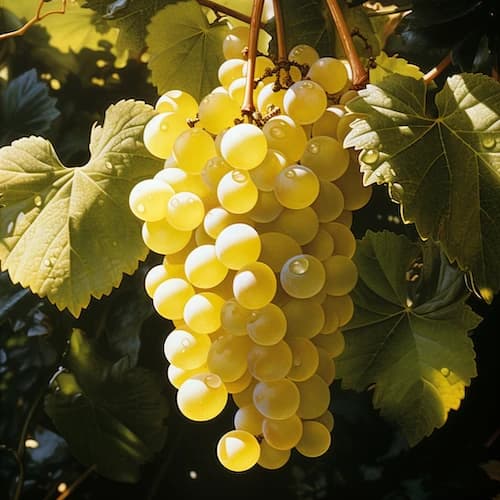
Chardonnay – the queen of white wines. Discover the flavour, aromas and perfect food pairings of the world's most versatile white grape variety.
- Säure
- moderate Säure
- Süße
- trocken
- Körper
- vollmundiger Körper
- Tannine
- keine Tannine
- Alkohol
- 12.5-14.5 % Alk.
Typische Aromen
Grüner Apfel
Zitrone
Butter
Vanille
Mineralisch
Chardonnay Charakteristik: moderate Säure, trocken,vollmundiger Körper, keine Tannine, Alkoholgehalt 12.5-14.5%. Typische Aromen: green-apple, lemon, butter, vanilla, minerals.
Introduction
Chardonnay is the undisputed queen of white grape varieties and a true citizen of the world. From the cool slopes of Chablis across the legendary sites of Burgundy to the sun-drenched vineyards of California and Australia – Chardonnay feels at home everywhere and shows a thousand different faces. What makes this variety so special? Its incredible versatility: it can present itself as fresh and mineral as a crystal-clear mountain lake, or as creamy and buttery as a French croissant. No wonder Chardonnay delights beginners and wine connoisseurs alike.
At a Glance
- Origin: Burgundy, France – the cradle of the world's finest Chardonnays
- Planted area: Over 200,000 hectares worldwide, making it one of the most widely planted varieties
- Characteristics: Ranging from mineral-fresh to creamy-opulent depending on terroir and ageing
- Standout feature: The perfect canvas for winemakers – reflects terroir and ageing methods like no other variety
- Classic styles: Chablis (mineral, steel-bright), Meursault (buttery, nutty), California (fruit-forward, opulent)
- Ageing potential: Simple wines 2–3 years; premium Chardonnays from Burgundy 10–20+ years
Flavour Profile & Characteristics
Chardonnay is a true chameleon among grape varieties. The flavour varies dramatically depending on where the grapes grow and how the winemaker works with them. In cool regions like Chablis or Champagne, Chardonnay shows a brilliant acidity with aromas of green apple, lemon and a distinctive mineral note reminiscent of wet flint. These wines are taut, elegant and refreshing.
The warmer the climate, the more opulent the wine becomes. In California, Australia or the southern reaches of Burgundy, Chardonnay develops tropical fruit aromas such as ripe peach, pineapple and sometimes even mango. The body becomes fuller, the acidity milder, and the alcohol content rises.
The ageing method then makes another decisive difference: vinified in stainless steel, Chardonnay remains clear, fruit-forward and fresh. Once oak casks enter the picture, creamy butter notes, vanilla, roasted hazelnuts and a hint of brioche develop. Malolactic fermentation amplifies this butter effect further. Particularly interesting: many top winemakers combine both approaches by ageing only a portion of the wine in barrique.
With age, great Chardonnays develop a fascinating complexity. The fresh fruit gives way to aromas of honey, roasted almonds, dried blossoms and a delicate petrol note. Premium Burgundy wines can comfortably age 20 years and longer.
Origin & History
Chardonnay's home is in the French region of Burgundy, specifically in the village of Chardonnay in the Mâconnais. Genetic studies have shown that Chardonnay arose from a natural cross between Pinot Noir and the now nearly forgotten Gouais Blanc – a surprising kinship that explains the proximity to Pinot in Burgundy.
As early as the Middle Ages, Cistercian monks cultivated the variety in Burgundy's legendary vineyards. They recognised early how sensitively Chardonnay responds to different soils and thus laid the foundation for the Burgundian vineyard classification system. The global expansion of Chardonnay did not truly gather pace until the 20th century.
Today Chardonnay is a global variety. France, with Burgundy and Champagne, remains the qualitative centre, but the USA (especially California), Australia, New Zealand, Chile, South Africa and even Italy produce excellent Chardonnays. You can find Chardonnay vineyards in almost every wine country in the world today.
Viticulture & Terroir
Chardonnay is an early-budding variety, which makes it susceptible to late frosts. It prefers calcareous soils – the famous Kimmeridge limestone of Chablis or the limestone slopes of the Côte d'Or are perfect examples. On such soils Chardonnay develops its characteristic minerality and elegance.
The variety is relatively adaptable, which explains its worldwide success. In cool climates such as Chablis, Champagne or parts of New Zealand, the grapes ripen slowly and retain a lively acidity. The result is taut, mineral wines with restrained fruit. In temperate zones like Burgundy or Sonoma, Chardonnay finds the perfect balance between acidity and ripeness.
In warm regions such as the Napa Valley, the Barossa Valley or parts of Chile, Chardonnay achieves high physiological ripeness with lush fruit aromas and higher alcohol. Here, good water management in the vineyard is essential to avoid losing acidity.
Important wine regions for Chardonnay include Chablis and the Côte d'Or in Burgundy, Champagne (as a base for Champagne), Carneros and Russian River Valley in California, Margaret River in Australia, Marlborough in New Zealand and the Casablanca Valley in Chile.
Wine Styles & Variants
The stylistic range of Chardonnay wines is extraordinarily wide. The Chablis style stands for pure, unadorned Chardonnay: mineral, steel-bright, with a crisp acidity and restrained fruit. Ageing is usually in stainless steel or large, neutral wooden casks.
The Burgundian style varies by subregion: in Meursault or Puligny-Montrachet, opulent, buttery wines are produced with intensive barrique use, malolactic fermentation and ageing on the lees (bâtonnage). In Corton-Charlemagne you find powerful, mineral Chardonnays with enormous ageing potential.
The New World style from California or Australia is often more fruit-forward and approachable. Intense tropical fruit meets pronounced oak notes, creamy texture and a full-bodied structure. Modern producers, however, are increasingly moving towards more restraint and elegance.
Sparkling wines: Chardonnay is one of the three main grape varieties in Champagne. As Blanc de Blancs (100% Chardonnay) the most elegant, fine Champagnes with great ageing potential are produced. Chardonnay is also a key variety in other sparkling wine regions worldwide.
As a blending partner, Chardonnay harmonises well with other white Burgundy varieties, but is usually vinified as a varietal. In Champagne it is traditionally blended with Pinot Noir and Pinot Meunier.
Typical Aromas
Primary Aromas (from the grape)
Green apple: In cool climates, green apple is the leitmotif – crisp, fresh and slightly tart. Particularly pronounced in Chablis and Champagne.
Lemon: The range extends from lemon zest to lemon juice. Chablis often shows an almost saline citrus note, while warmer regions offer riper, juicier lemon aromas.
Minerality: On calcareous soils Chardonnay develops this typical stony, sometimes flinty note. It gives the wine structure and length and is the centrepiece of great Chablis and Burgundian terroir wines.
Peach: In temperate to warm climates, ripe white peach dominates. This velvety fruit lends the wine body and accessibility.
Pear: Common in balanced Chardonnays from temperate sites. Pear brings a subtle sweetness without dominating.
Secondary Aromas (from winemaking)
Butter: Perhaps the most widely known Chardonnay marker, arising from malolactic fermentation. Particularly pronounced in Californian and Burgundian wines with oak ageing. This creamy texture makes the wine approachable and opulent.
Vanilla: Comes directly from new oak casks, primarily French or American oak. American oak gives more intense vanilla notes; French oak is more subtle.
Brioche: Through lees ageing and bâtonnage (stirring the lees), these brioche-like, yeasty notes develop. Characteristic of high-quality Burgundian Chardonnays and Champagne.
Tertiary Aromas (from ageing)
Honey: With bottle ageing, great Chardonnays develop honey aromas – from acacia to chestnut honey. A sign of increasing complexity.
Roasted hazelnuts: In aged wines the fruit recedes and makes way for nutty aromas. Particularly beautiful in older Meursaults or Californian reserve wines.
Chardonnay is a very age-worthy variety, though ageing capacity depends strongly on the style. Simple, fruit-forward Chardonnays should be drunk within 2–3 years. High-quality Burgundian Grand Crus or Californian reserve wines can comfortably age 10–20 years, developing fascinating tertiary aromas along the way.
Food Pairing
Perfect Combinations
Lobster with butter: The classic pairing! A buttery Meursault or an opulent Californian Chardonnay with barrique ageing harmonises perfectly with the sweet lobster meat and the butter. The creamy texture of the wine is mirrored in the dish, while the acidity balances the rich fat.
Chicken in cream sauce: A medium-weight Chardonnay from the Mâconnais or Sonoma County is the ideal companion for this classic. The creaminess of the sauce finds its counterpart in the wine without either overwhelming the other.
Grilled fish: A Chardonnay with moderate oak works beautifully alongside grilled salmon or tuna. The light toasty aromas from the barrique complement the grill notes perfectly, while the fruit of the wine holds its own against the richness of the fish.
Mushroom risotto: The earthy notes of an aged Chardonnay harmonise wonderfully with porcini or truffles. A Burgundian Chardonnay with a few years of bottle age is the best choice here – its nutty tertiary aromas merge with the creamy risotto.
Conclusion
Chardonnay is more than just a grape variety – it is a journey through terroirs, styles and philosophies. Whether you prefer the steel-bright minerality of a Chablis, the buttery opulence of a Meursault or the sun-kissed fruit of a Californian Chardonnay: this variety has something to offer for every palate. That is precisely what makes it perhaps the most versatile white grape variety in the world.
You might also be interested in
Burgundy
Discover Burgundy: The legendary French wine region for Pinot Noir and Chardonnay. Everything about Climat, Grand Cru, and terroir expression.
Chablis - The Purest Expression of Chardonnay
Everything about Chablis: Mineral Chardonnays, Kimmeridge limestone, 7 Grand Crus, top wineries, and insider tips.
Napa Valley - California's Wine Legend
Napa Valley: World-class Cabernet Sauvignon from California. 16 AVAs, legendary wineries like Opus One, Mediterranean climate. Discover the USA's premium wine region.
Sonoma County - California's Diverse Wine Paradise
Sonoma County: 19 AVAs, diverse microclimates from Pacific coast to warm valleys. World-class Pinot Noir, Chardonnay, Zinfandel. Discover California's most authentic wine region.
Central Coast - California's Hidden Wine Gem
Discover the Central Coast: California's coolest wine region between San Francisco and LA with world-class Pinot Noir and Chardonnay.
Yarra Valley - Australia's Elegant Wine Region
The Yarra Valley near Melbourne is Australia's coolest wine region: elegant Pinot Noirs, world-class Chardonnays, and spectacular sparkling wines.
Gisborne - New Zealand's Chardonnay Capital
Gisborne is New Zealand's sunniest wine region and the Chardonnay Capital: tropical fruit, creamy texture and pioneering spirit on the East Coast.
England - Champagne's Rising Rival
England is the rising sparkling-wine region: chalk soils like Champagne, elegant sparkling wines and world-class producers in Sussex and Kent.
Marlborough - Sauvignon Blanc Perfection from New Zealand
Marlborough: New Zealand's largest wine region and world capital of Sauvignon Blanc. Intense aromas, pure freshness, maritime elegance. Discover the success story.
Central Otago - Pinot Noir at the End of the World
Central Otago: The world's southernmost wine region with spectacular Pinot Noir. Extreme climates, alpine landscape, Burgundian quality. Discover New Zealand's premium region.
Martinborough - New Zealand's Pinot Noir Jewel in Wairarapa
Everything about Martinborough: World-class Pinot Noir, Burgundian elegance, Ata Rangi & Escarpment plus wine tourism tips in New Zealand's premium region.
Hawke's Bay - New Zealand's Médoc and Bordeaux Blend Heartland
Everything about Hawke's Bay: world-class Bordeaux Blends, Gimblett Gravels terroir, Te Mata & Craggy Range plus wine tourism in New Zealand's oldest wine region.
Neuchâtel - Chasselas and Pinot Noir on Switzerland's Jura Lake
The Neuchâtel wine region on Lake Neuchâtel produces elegant Chasselas and fruity Pinot Noir across 600 hectares. Discover the Swiss Non-Filtré tradition.
Stellenbosch - South Africa's Wine Capital
Discover Stellenbosch: South Africa's most important wine region with over 800 estates, Cabernet Sauvignon, Pinotage and world-class Bordeaux blends.
Paarl - The Red Route at the Cape
Paarl - South Africa's Red Route with powerful red wines. Discover Pinotage, Shiraz, and legendary estates such as Nederburg and KWV.
Constantia - The Cradle of South African Winemaking
Constantia - South Africa's oldest and coolest wine region. Discover world-class Sauvignon Blancs and the legendary Vin de Constance sweet wine.
Swartland - Revolution at the Cape
Swartland - South Africa's avant-garde region with old Chenin Blanc vines, innovative winemakers and the natural wine movement. Discover the revolution!
Wagram - Grüner Veltliner on Loess Terraces
The Wagram wine region in Lower Austria is renowned for its spicy Grüner Veltliner grown on ice-age loess soils. Discover 2,700 hectares of premium white wines.
Walker Bay - South Africa's Cool Climate Gem
Walker Bay - South Africa's coolest wine region with world-class Pinot Noir and Chardonnay. Discover the Burgundian terroir at the Cape with ocean views.
Barossa Valley - Australia's Shiraz Icon
Barossa Valley: Australia's most famous wine region with legendary Shiraz. Old vines since 1843, powerful wines, Penfolds Grange. Discover the heart of Australian winemaking.
Margaret River - Australia's Premium Wine Region on the Indian Ocean
Everything about Margaret River: Premium Cabernet Sauvignon, elegant Chardonnays, top wineries like Leeuwin Estate and Vasse Felix plus visitor tips.
McLaren Vale - Shiraz Paradise in South Australia
Everything about McLaren Vale: Powerful Shiraz wines, Mediterranean Grenache, d'Arenberg & Clarendon Hills plus visitor tips to the cradle of South Australian viticulture.
Romania - Rediscovering a Great Wine Tradition
Romania is an emerging wine country with 180,000 hectares under vine. Discover Fetească Neagră, Dealu Mare, Murfatlar and indigenous treasures.
Bulgaria - Ancient Wine Tradition in a Modern Guise
Bulgaria is one of the oldest wine countries in the world with 60,000 hectares of vineyard area. Discover Mavrud, Melnik, Thrace, and the Bulgarian wine renaissance.
Hunter Valley - Australia's Cradle of Winemaking and Semillon Stronghold
Everything about Hunter Valley: world-class Semillon, elegant Shiraz, Tyrrell's & Brokenwood plus culinary experiences in Australia's oldest wine region.
Meursault - Burgundy's Chardonnay Olympus
Meursault: Burgundy's most celebrated white wine village. Top wineries, nutty Chardonnays and the finest Premier Crus for wine lovers.
Mâcon - Southern Burgundy for Wine Lovers
Mâconnais: Burgundy's most accessible white wine area with Pouilly-Fuissé. Top wineries, Chardonnay diversity and best-value picks.
Côte Chalonnaise - Burgundy's Hidden Gem
Côte Chalonnaise: Underrated Burgundy region with Mercurey, Givry, Rully. Excellent Pinot Noir & Chardonnay at fair prices.
Jura - Vin Jaune and Oxidative Winemaking Artistry
Everything about the Jura wine region: Vin Jaune, Savagnin, oxidative style, Château-Chalon, natural wine pioneers and the best wineries.
Sicily - Volcanic Wine Paradise in the Mediterranean
Sicily: Italy's largest wine region with Nero d'Avola, Nerello Mascalese from Etna, Marsala and volcanic terroir. The best wineries and insider tips.
Savoie - Alpine Mountain Wines with Minerality
Everything about Savoie: Jacquère, Altesse, Mondeuse, alpine mountain wines, Gringet, Ayze, high-altitude wines plus top wineries and natural wine pioneers.
Valais - Switzerland's Wine Paradise at the Foot of the Alps
Discover the Valais wine region: indigenous varieties such as Petite Arvine, top estates, and Swiss wine culture in a spectacular Alpine setting.
Thermenregion - Home of Indigenous White Wine Rarities
The Thermenregion south of Vienna is famous for its indigenous varieties Zierfandler and Rotgipfler, Pannonian climate and first-class wineries.
Vaud - UNESCO World Heritage and Chasselas Paradise
Discover the Vaud wine region with the UNESCO World Heritage site Lavaux, world-class Chasselas wines and spectacular terraced vineyards on Lake Geneva.
Styria - World-Class White Wines from Europe's Steepest Vineyards
Styria is Austria's white wine wonderland with the world's finest Sauvignon Blancs, Europe's steepest vineyards and three DAC regions.
La Mancha - The World's Largest Wine Region
Discover La Mancha: the world's largest wine region with 152,500 hectares, powerful Tempranillo wines and the robust Airén grape.
Mendoza - Argentina's Malbec Mecca in the Andes
Everything about Mendoza: Argentina's largest wine region with world-class Malbec, high-altitude vineyards up to 1,700m, top wineries like Catena Zapata, and practical visitor tips.
Patagonia - The World's Most Southerly Wine Region
Discover Patagonia: Argentina's most southerly wine region with world-class Pinot Noir, cool climate, spectacular landscapes, and innovative winemakers.
Maipo Valley - Chile's Cabernet Paradise on the Doorstep of Santiago
Discover the Maipo Valley: Chile's most prestigious wine region with world-class Cabernet Sauvignon, Andean terroir and iconic wineries such as Concha y Toro and Almaviva.
Colchagua Valley - Chile's Carmenère Paradise and Red Wine Powerhouse
Discover the Colchagua Valley: Chile's spectacular red wine region with world-class Carmenère, the legendary Apalta terroir, and iconic wineries like Montes and Casa Lapostolle.
Casablanca Valley - Chile's Cool-Climate White Wine Paradise
The Casablanca Valley is Chile's leading cool-climate region for first-class white wines. Discover Sauvignon Blanc, Chardonnay, Pinot Noir, and top wineries.