


Introduction
Parellada is Catalonia's quiet elegance in a glass. This white grape variety from north-eastern Spain rarely takes the spotlight, yet it is one of the three classic grapes of Cava – alongside Macabeo and Xarel·lo. While other varieties impress with power and fruit, Parellada convinces through restraint: a slim body, low alcohol, high freshness and a fragrant, floral character. From the higher, cooler vineyards of the Penedès it produces wines of fine delicacy that are unobtrusive in the very best sense.
Flavour Profile & Characteristics
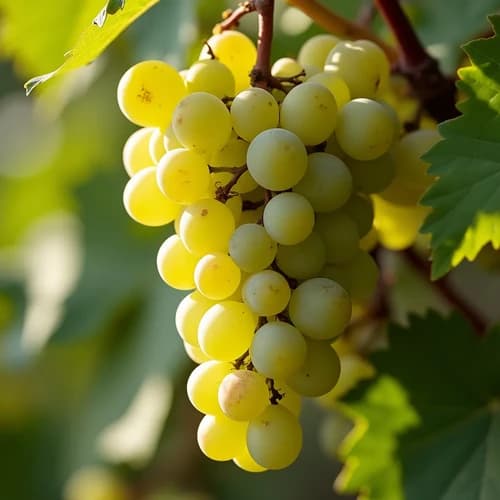
Parellada is a wine of subtle notes. In the glass it appears pale straw-yellow with greenish reflections, already announcing its freshness. The first impression on the palate is shaped by a lively, clear acidity that gives the wine tension and drinkability without feeling aggressive. The body is notably slim and the alcohol content, at just 10.5 to 11.5% by volume, is remarkably low – making Parellada one of the lightest and most easy-drinking white wines in Spain.
The aroma profile is carried by bright, fresh notes: green apple and ripe pear take the lead, complemented by a fine citrus freshness. Above these float delicate floral aromas of white blossom, joined by subtle hints of white peach, a light aniseed or fennel note and a touch of almond. The minerality is discreet but present, giving the wine a cool, fresh finish.
What makes Parellada so valuable is precisely its restraint. It never imposes itself but offers finesse, freshness and a fragrant elegance. In single-varietal still wines it seems almost filigree, almost transparent – a wine that refreshes rather than impresses.
Origin & History
The home of Parellada lies in Catalonia, in north-eastern Spain, and here above all in the Penedès south-west of Barcelona. This region is closely tied to the history of Cava, that traditional bottle-fermented sparkling wine developed from the late 19th century after the model of Champagne. Parellada belonged from the start to the classic trio of Cava grapes and helped shape its style.
Unlike many other Spanish varieties, Parellada does not prefer the warmth of the plain but rather the cooler, higher-altitude vineyards of the inland Penedès. There, in airy sites, the late-ripening grape can preserve its acidity and its fine fragrance. This preference for altitude and freshness has secured it a firm place in the finest Cava blends for generations.
Today Parellada is grown almost exclusively in Catalonia. It is closely interwoven with the regional identity and is considered the most delicate of the three traditional Cava varieties. Outside Spain it plays hardly any role, which underlines its character as a quintessentially Catalan speciality.
Viticulture & Terroir
Parellada is a late-ripening variety that prefers cooler conditions. In sites that are too hot and low-lying it quickly loses its acidity and floral charm, which is why it is traditionally grown in the higher vineyards of the Penedès, often at 300 to 500 metres or more. The cooler nights and the longer growing season at these altitudes are decisive in allowing the grape to develop its freshness and elegance.
The vine is vigorous and delivers good yields, which makes it attractive for Cava production. At the same time it demands careful site selection: only where the climate is cool enough and the soils are well-drained does Parellada reach its potential. Limestone-rich and stony soils underline the mineral, fresh style of the wine.
Because Parellada ripens late, it is usually one of the last varieties to be harvested. The right picking time is delicate: harvest too early and the fruit lacks ripeness; wait too long and the precious acidity drops. For Cava production an early harvest with high acidity and moderate sugar is ideal, since the base wine should be slim and fresh.
Wine Styles & Variants
Parellada appears in two main roles. Its most important stage is Cava: in the traditional blend it forms the classic trio together with Macabeo and Xarel·lo. While Macabeo contributes fruit and suppleness and Xarel·lo provides body, structure and the necessary acidic backbone, Parellada supplies finesse, floral aromatics and freshness. It is the elegant, light-footed component that lends the sparkling wines fragrance and aromatic freshness.
Cava is produced by bottle fermentation – the same elaborate method also used for Champagne and for Crémant. The second fermentation, which generates the carbon dioxide, takes place directly in the bottle. Parellada's fresh acidity and low alcohol make it the ideal building block for such base wines, which are meant to be elegant and not too heavy.
Alongside this, Parellada is also made into dry still wine, often as a single varietal. These wines are pale, light and decidedly fresh – uncomplicated, mineral summer wines with moderate alcohol. They are usually vinified in stainless steel to preserve the delicate fruit and floral aromatics, and are intended for early enjoyment. Oak ageing is rare, as it would easily mask the fine character of the grape.
Typical Aromas
Primary Aromas (from the grape)
Green apple & pear: The aromatic heart of Parellada. Crisp notes of green apple and juicy pear give the wine its fresh, youthful fruit and carry the slim body.
Citrus: A fine lemon and lime note reinforces the fresh impression and lends liveliness on the palate. This citrus freshness is closely tied to the variety's high acidity.
White flowers: Delicate floral aromas – reminiscent of acacia or apple blossom – float above the fruit and give the wine its characteristic fragrant elegance. This floral lift is one of Parellada's hallmarks.
Aniseed & herbs: Subtle hints of aniseed, fennel and fresh green herbs give the wine a fine, savoury depth without compromising its lightness.
Secondary Aromas (from winemaking)
Almond: A delicate note of fresh almond and fine nuttiness shows itself especially in carefully vinified still wines and in Cava that has had some lees ageing behind it.
Brioche & yeast: In Cava, through ageing on the fine lees, Parellada develops fine notes of fresh baked goods and bread dough that lend the sparkling wine additional complexity and texture.
Tertiary Aromas (from ageing)
Parellada is fundamentally designed for early enjoyment. As a still wine it should be drunk within the first one to two years, while its freshness and floral aromatics still shine. With increasing age it quickly loses its tension, which is why aged versions are the exception. In Cava, however, protected by the carbon dioxide and the ageing on the lees, the variety as part of the blend can last somewhat longer and develop fine, lightly nutty maturity notes.
Food Pairing
Perfect Combinations
Shellfish & oysters: The high acidity and the slim, mineral nature of Parellada make it an ideal companion for fresh shellfish. Oysters, prawns, mussels or grilled gambas harmonise wonderfully with the wine's fresh fruit.
Fried fish: A classic of Catalan cuisine. Parellada's crisp acidity cuts through the fat of fried small fish, squid rings or a pescaíto frito and refreshes the palate with every bite.
Tapas & light starters: Whether as Cava or still wine, Parellada is a perfect aperitif and tapas wine. It pairs with patatas bravas, tortilla, young cheese and all manner of small bites without overpowering their flavours.
Fresh salads & vegetables: The floral, light nature of the wine complements crisp summer salads, grilled vegetables and dishes with fresh herbs. Even with asparagus, often difficult to pair, the fresh acidity works excellently.
Parellada is a variety that proves greatness does not always have to be loud. With its finesse, freshness and floral elegance it forms the fragrant backbone of Cava, and bottled as a single varietal it yields one of the most refreshing white wines of Catalonia. Well chilled with shellfish or a selection of tapas, it shows why it holds a firm place at the heart of the Catalan wine tradition.