


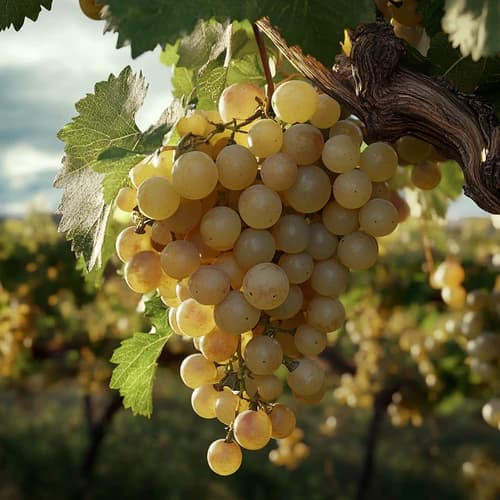


Spain's Underrated White Wine Star
While the world raves about Albariño, Spain has long been harbouring another white wine champion: Verdejo from Rueda. This indigenous variety combines refreshing citrus aromas with an unmistakable herbal spice and mineral depth, making it one of the most exciting Mediterranean white wines. Verdejo is the perfect proof that great white wines do not have to come only from cool climates.
Flavour Profile & Character
Verdejo is an aromatic marvel with a multilayered personality. In the glass the variety presents a radiant pale yellow to greenish-tinged hue – a visual promise of freshness that it also delivers on the palate.
The first sip reveals a lively, crisp acidity that refreshes immediately without being aggressive. Citrus notes dominate: lime and grapefruit set the tone, accompanied by the gentle sweetness of white peach. What truly makes Verdejo unique, however, is the characteristic fennel aroma – a slightly anise-like, herbal note that lends the wine complexity and distinctiveness.
Texture varies considerably depending on ageing. Simpler Verdejo wines are lean and direct – perfect thirst-quenchers for hot summer days. Higher-quality examples aged sur lie (on the lees) develop a creamy, almost buttery texture that gives the wine more weight and mouthfeel without losing the characteristic freshness.
The mineral component is another hallmark. The gravel and clay soils of Rueda produce a subtle, stony note – often described as wet slate – which gives the wine depth and drinkability.
With age, premium Verdejo wines develop a nutty complexity and honey-like notes, though they often lose their youthful vibrancy in the process. For this reason most Verdejo wines are drunk young, within 1–2 years of harvest.
Origin & History
The origins of Verdejo probably lie in North Africa. Through Moorish influence the variety likely arrived on the Iberian Peninsula in the 11th century, possibly via Mozarabic settlers along the Duero river. Some ampelographers even suspect a kinship with North African varieties, which would support the historical connection.
The heartland of Verdejo is and remains the D.O. Rueda in Castilla y León, approximately 150 kilometres north-west of Madrid. Here, on the high plains between 600 and 800 metres above sea level, the variety found its ideal home. For centuries Verdejo in Rueda was used primarily for oxidative, sherry-like wines – a tradition that has now virtually disappeared.
The modern Verdejo as we know it is a success story of the 1970s and 1980s. The Marqués de Riscal, known for its Rioja wines, recognised the variety's potential for fresh, modern white wines. With French know-how and temperature-controlled fermentation, Verdejo was reinvented. In 1980 Rueda gained D.O. status and the upturn began.
Today Rueda is practically synonymous with Verdejo. Over 80% of the worldwide approximately 15,000 hectares of Verdejo plantings are located in this region. Smaller plantings exist in other Spanish regions such as Castilla-La Mancha, and also in Portugal (where the variety is called Verdello) as well as in experimental projects in California and Australia.
Cultivation & Terroir
Verdejo thrives best in continental climates with hot, dry summers and cold winters. The high-altitude sites of Rueda offer precisely these conditions: daytime temperatures in summer often exceed 30°C, while nights cool down dramatically. These large day-to-night temperature swings are decisive for the development of aromas while preserving acidity.
The soils in Rueda are predominantly gravelly-clay with a high limestone content. These lean, well-drained soils force the vines to root deeply, leading to more concentrated aromas and the characteristic minerality. Water availability is limited, which is why many vineyards require irrigation – a controversial issue in a region increasingly battling drought.
Verdejo buds early, making it susceptible to late frosts. The grapes ripen mid-season, approximately two weeks after Viura, which typically places harvest time in Rueda in September. To preserve the fresh acidity and primary aromas, grapes are often harvested at night or in the early morning hours when temperatures are coolest.
The variety is relatively robust against disease but shows a tendency towards coulure (flower drop), which can lead to uneven yields. Modern clonal selections have, however, helped to minimise this problem.
Besides Rueda, Verdejo is also found in Toro, Cigales and sporadically in La Mancha, where the wines tend to be fuller and less acidity-driven. Internationally, experimental plantings exist in climatically similar regions, but none has yet achieved the quality and identity of Rueda.
Wine Styles & Variants
The classic Verdejo is a single-variety, stainless steel-aged white wine – fresh, aromatic and intended for immediate enjoyment. These wines are mostly produced without malolactic fermentation to preserve the crisp acidity, and showcase Verdejo in its purest, most fruit-forward form.
A more elaborate variant is Verdejo sur lie (on the lees), where the wine remains on the fine lees for months after fermentation and is regularly stirred (bâtonnage). This technique gives the wine a creamier texture, more complexity and a subtle brioche note without masking the characteristic freshness. Such wines are more age-worthy and often somewhat more expensive.
Some producers experiment with barrel ageing, usually in used French barriques. The result is more powerful, more structured wines with vanilla notes that divide opinion: purists miss the typical Verdejo freshness, while others appreciate the additional dimension.
In Rueda, Verdejo may also be blended with Sauvignon Blanc and the local variety Viura (Macabeo). Such blends draw on the vivacity of Sauvignon Blanc or the neutral structure of Viura to complement Verdejo. Some of the finest Rueda wines are in fact blends with 85–90% Verdejo and a small proportion of Sauvignon Blanc for additional freshness.
Historically, Verdejo was used for oxidative, sherry-like wines – a style that is now almost extinct but is still produced in very small quantities by a few tradition-conscious producers.
Typical Aromas
Primary Aromas (from the grape)
The primary aromas of Verdejo are intense and unmistakable. Lime often takes centre stage – a juicy, fresh citrus note that immediately enlivens the wine. Depending on the timing of harvest this can range from almost green-tart to ripe lime zest. Grapefruit joins in, often with a slightly bitter note from the pith that gives the wine complexity and structure.
White peach brings the stone fruit component into play – soft, aromatic and slightly sweet in perception, even though the wines are almost always dry. This peach note is especially pronounced in ripe grapes from higher-elevation vineyards.
The signature aroma is, however, fennel – an anise-like, slightly sweet-spicy herbal note that distinguishes Verdejo from other white wines. This aroma recalls fresh fennel with its slightly liquorice-green nuance and gives the wine a Mediterranean, herbal identity. In cooler vintages or with early harvesting this note can recall green herbs and freshly cut grass.
The mineral component, reminiscent of wet slate, is also a primary aroma that comes directly from the terroir. This stony, almost saline note gives the wine an earthy depth and makes it particularly food-friendly.
Secondary Aromas (through winemaking)
In wines with lees ageing (sur lie), creamy, buttery notes develop – a gentle, almost milky texture on the palate, accompanied by aromas recalling fresh bread or brioche. This is the result of autolysis, during which yeast cells release aromatic compounds.
Wines with malolactic fermentation (rare for Verdejo) show a more buttery texture and somewhat lower acidity, leading to a rounder, more approachable style.
With barrel ageing come vanilla and lightly smoky notes that make the wine more voluminous but also less typical.
Tertiary Aromas (through ageing)
Verdejo is fundamentally a variety for young enjoyment. Most wines should be drunk within 1–2 years to preserve their freshness. High-quality examples with good acid structure and lees ageing can, however, mature 3–5 years and develop interesting tertiary aromas.
With bottle age, nutty notes emerge – almond and hazelnut – lending the wine a warm, ripe complexity. The citrus aromas shift from fresh to candied, and the minerality becomes less crisp and integrates more seamlessly.
Some wines also develop honey tones and a slightly oxidative note reminiscent of ripe apples. This evolution is a matter of taste: some appreciate the complexity, while others miss the youthful vibrancy. As a general rule: Verdejo lives from its freshness – only the very best wines are worth extended cellaring.
Food Pairing
Perfect Combinations
Seafood and fish: Verdejo is made for the Spanish coastal kitchen. The lively acidity and mineral notes harmonise perfectly with grilled calamari, gambas al ajillo (garlic prawns) or pan-fried sea bream. The wine's herbal notes complement the traditional Spanish seasonings, while the citrus freshness brings the sea breeze virtually into the glass. Particularly fascinating is the pairing with pulpo a la gallega (Galician octopus) – Verdejo's acidity cuts through the olive oil, while the mineral notes underscore the briny quality of the octopus.
Goat's cheese and mild cheeses: The fennel aroma and medium texture of Verdejo make it the ideal partner for creamy goat's cheese or young Manchego. The acidity balances the fat of the cheese, while the herbal notes play with the slightly nutty aromas of aged cheese. A sur lie Verdejo with its creamier texture can also accompany more robust cheeses such as aged Manchego.
Vegetable-based Mediterranean cuisine: Verdejo shines alongside roasted asparagus with lemon, stuffed courgette blossoms or a paella valenciana (with vegetables and chicken, no seafood). The wine's herbal notes amplify the aromas of fennel, basil and other Mediterranean herbs in the food. With dishes featuring saffron a magical combination arises – the wine's slightly bitter herbal spice and the earthy sweetness of the saffron complement each other perfectly.
Light poultry dishes: A Verdejo with more body (sur lie or with light oak influence) pairs superbly with chicken in a lemon-herb marinade or turkey in a creamy mustard sauce. The acidity cuts through the cream, while the wine's structure stands up to the meat. Verdejo is also an unconventional but brilliant choice with Thai or Vietnamese dishes featuring lemongrass and coriander – the herbal notes find their perfect sparring partner here.