




Introduction
Merlot is the soul of many great red wines and at the same time one of the most approachable grape varieties for wine newcomers. With its velvety texture, lush fruit aromas, and gentle tannins, it has secured a firm place in the hearts of wine lovers worldwide. From the prestigious chateaux of Bordeaux to the sun-drenched vineyards of California, Merlot shows its charming, versatile character everywhere.
Flavor Profile & Characteristics
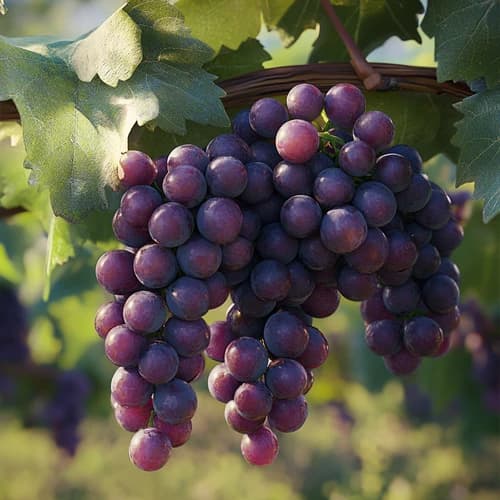
Merlot captivates with a special softness and roundness that clearly distinguishes it from other Bordeaux varieties. In the glass, a typical Merlot presents a deep ruby-red to purple color. The nose is dominated by lush aromas of dark fruits – ripe black plums and juicy cherries take center stage, accompanied by nuances of dark chocolate and a hint of dried herbs.
On the palate, Merlot shows its true strength: the tannins are present but never aggressive or drying. Instead, they caress the palate with a velvety texture that makes Merlot an extremely easy-drinking wine. The body is full and powerful without being heavy. The moderate acidity provides a balanced flavor profile and makes the wine an excellent food companion.
In cooler climates such as the Right Bank of Bordeaux, Merlot develops more elegant, spicier notes with pronounced herbal aromas and a firmer tannin structure. In warmer regions like California or Australia, the wines become more opulent and fruit-forward, with riper plum and berry notes and often a higher alcohol content. With age, high-quality Merlots develop complex tertiary aromas of leather, tobacco, truffle, and forest floor, while the fruit evolves into dried fruits.
Origin & History
Merlot originally hails from the Bordeaux region in southwestern France, where the grape variety was first mentioned in writing in the 18th century. The name likely derives from the French word "merle" (blackbird) – either because the birds particularly loved the early-ripening, sweet grapes, or because the dark color of the berries resembled the blackbird's plumage.
DNA analyses have shown that Merlot is a natural cross between Cabernet Franc and a now-extinct grape variety called Magdeleine Noire des Charentes. This lineage explains its kinship with other Bordeaux varieties and its ability to form harmonious blends.
Today, Merlot is the second most widely planted red wine variety in the world. Beyond Bordeaux, where it dominates the Right Bank in Pomerol and Saint-Emilion, the grape has also gained great importance in Italy (especially in Tuscany and Veneto), the USA (California, Washington State), Chile, Australia, and South Africa. Each region produces its own interpretation of this versatile variety.
Cultivation & Terroir
Merlot is an early-budding and early-ripening grape variety, which is both a blessing and a challenge for winemakers. The early ripening enables cultivation even in cooler regions, but makes the grapes susceptible to late spring frosts. The thin-skinned berry is also sensitive to rot in wet weather during harvest.
The grape variety prefers cooler, clay-rich soils that retain moisture well. The famous "blue clays" of Pomerol are considered the ideal terroir for Merlot, producing wines of extraordinary concentration and elegance. On too-fertile or too-warm sites, Merlot tends to be over-productive, leading to diluted wines with little character. Yield management is therefore crucial for quality.
In Bordeaux, especially in Pomerol, Saint-Emilion, and Fronsac, Merlot shows its finest expression on calcareous and clay soils. In Italy, it is successfully grown in Tuscany (for "Super Tuscans") and Friuli. Napa Valley and Sonoma in California, as well as the Columbia Valley in Washington State, have established themselves as premium New World sites. Chile also produces excellent Merlots with distinctive freshness from its coastal vineyards.
Wine Styles & Variants
Merlot shows a remarkable diversity of styles depending on winemaking and origin. Classic Bordeaux Merlots are often aged in barrique, where French oak barrels give the wine structure, vanilla and toast notes, and longevity. The maceration time varies according to the desired style – longer maceration phases extract more tannins and color, while shorter contact times produce fruitier, more accessible wines.
In the New World, especially California, Merlots are often made in a more opulent, fruit-forward style with pronounced oak influence and higher alcohol concentration. These wines are usually immediately approachable and show ripe, almost jammy fruitiness. Italian Merlots, especially from Tuscany, often combine European elegance with New World power.
As a blend partner, Merlot is unbeatable. In classic Bordeaux blends, Merlot complements the structure and tannin power of Cabernet Sauvignon with softness, richness, and fruit. The combination with Cabernet Franc adds additional aromatic complexity and spice. In Tuscany, Merlot is successfully blended with Sangiovese, resulting in the famous "Super Tuscans." Single-varietal Merlots, especially from Pomerol (Chateau Petrus is nearly 100% Merlot), can also achieve absolute world-class status.
Typical Aromas
Primary Aromas (from the grape)
The dominant primary aromas of Merlot are black plums and black cherries, which give the wine its characteristic, juicy fruitiness. In cooler climates, notes of red cherries and red plums emerge, lending the wine freshness and elegance. Warm regions develop more intense aromas of overripe plums, sometimes approaching plum compote.
Beyond the fruit, dried herbs are typical of Merlot from traditional growing regions – thyme, rosemary, and Mediterranean herbs add complexity to the wine. In mineral-rich terroirs like the clay soils of Pomerol, earthy notes and fine minerality can also shine through. At full ripeness, hints of black olives and undergrowth sometimes appear.
Secondary Aromas (from winemaking)
Oak aging significantly shapes modern Merlots. Chocolate and cocoa are classic aromas created by the toasting of the oak barrels and the marriage of wood and fruit. Vanilla and caramel come from the wood tannins and add sweetness and complexity to the wine.
With longer maceration and malolactic fermentation, Merlot develops a particularly creamy texture and aromas of butter and cream, adding richness on the palate. Through aging on the lees (sur lie), bread-like or brioche notes can develop, increasing complexity.
Tertiary Aromas (from aging)
High-quality Merlots, especially from great Bordeaux sites, develop fascinating tertiary aromas with bottle age. Cedarwood is a classic aging aroma that develops from the evolution of wood tannins. Tobacco and sweet tobacco are further typical signs of maturity, lending the wine nobility.
With increasing age, the fresh fruit aromas transform into dried fruits and plum compote. Leather aromas, truffle, mushroom, and forest floor notes complete the bouquet of mature Merlots. Aging potential varies greatly: simple Merlots are ready to drink after 2-4 years, while top wines from Pomerol or Saint-Emilion can easily age 20-30 years and longer. The tannins become increasingly silky over time, and the individual aromatic components merge into a harmonious whole.
Food Pairing
Perfect Combinations
Beef tenderloin with red wine sauce is the classic combination with Merlot. The wine's velvety tannins perfectly complement the tenderness of the meat, while the fruit underscores the spice of the sauce. The medium tannin structure is robust enough for the meat but not as dominant as Cabernet Sauvignon.
Duck breast with cherry sauce takes advantage of Merlot's natural affinity for stone fruit. The wine's fruit aromas harmonize wonderfully with the sweetness of the cherries, while the tannins balance the fat of the duck. The earthy notes in the wine also pair excellently with the savory duck.
Mushroom risotto or truffle pasta are excellent vegetarian pairings. The earthy aromas of mushrooms and truffles find their echo in the tertiary notes of mature Merlots. The creamy texture of the risotto mirrors the softness of the wine, and umami-rich dishes are perfectly complemented by Merlot's moderate acidity.
Aged hard cheese such as Comte, Gruyere, or aged Gouda is another outstanding combination. The nutty aromas of the cheese harmonize with the toasty notes in the wine, while the salty component emphasizes the fruit. With very tannic Merlots, a sharp Cheddar can beautifully tame the tannins and make the wine even more approachable.