


Introduction
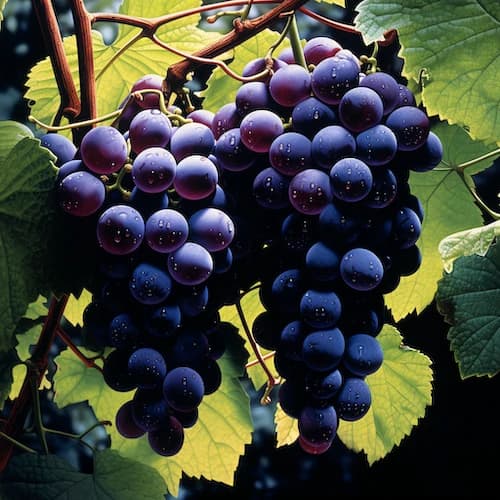
Cabernet Sauvignon is the world's most widely planted red grape variety and is regarded as the undisputed queen among red varieties. With its powerful structure, intense aromas of blackcurrant and enormous ageing potential, it has conquered the wine world – from the legendary châteaux of Bordeaux to the iconic hillsides of the Napa Valley. What makes this variety so special is its ability to express terroir with precision while simultaneously retaining an unmistakable personality: full-bodied, tannic and complex.
Flavour Profile & Characteristics
Cabernet Sauvignon presents a powerful experience in the glass. The defining feature is the intense, almost jammy aromas of blackcurrant, accompanied by notes of dark cherry, blackberry and plum. The tannins are marked and give the wine a firm, grippy structure – young Cabernets can be quite astringent and need either time in the glass or years in the cellar to open up fully.
In cooler climates, Cabernet Sauvignon develops additional herbal notes and the characteristic aroma of green pepper, which is linked to pyrazines. These herbaceous characteristics are either appreciated or criticised by wine lovers – they indicate that the grapes have not reached full phenolic ripeness. In warmer regions, by contrast, ripe, sweet fruit aromas dominate and the wine appears more opulent and velvety.
Ageing in barrique lends Cabernet Sauvignon additional complexity: notes of cedarwood, vanilla, tobacco and sweet spices merge with the fruit to create a multi-layered flavour picture. With increasing age, tertiary aromas such as leather, truffle, dried herbs and forest floor develop. The acidity remains present enough to support the structure while the tannins become softer and silkier.
Origin & History
Cabernet Sauvignon has its roots in the French Bordeaux, where it likely arose in the 17th century through a natural cross of Cabernet Franc and Sauvignon Blanc. This genetic parentage was not conclusively confirmed until 1997, through DNA analysis. From its parent varieties, Cabernet Sauvignon inherited the structure and tannic power of Cabernet Franc as well as the aromatic freshness and acidity of Sauvignon Blanc.
In the Médoc and Graves, the most prestigious appellations of Bordeaux, Cabernet Sauvignon became the dominant variety. Famous châteaux such as Latour, Mouton Rothschild and Margaux build their legendary wines on the foundation of Cabernet Sauvignon, usually in blends with Merlot, Cabernet Franc and other Bordeaux varieties.
In the 19th and 20th centuries Cabernet Sauvignon embarked on its global conquest. It established itself above all in California, where it produces iconic cult wines in the Napa Valley, as well as in Chile, Argentina, Australia and South Africa. Today the variety is grown on all continents and, with over 340,000 hectares, is the world's most important noble red variety.
Viticulture & Terroir
Cabernet Sauvignon is a late-ripening variety that prefers warm to hot conditions in order to fully ripen its thick skins. The small, blue-black berries have an exceptionally favourable skin-to-juice ratio, which leads to the intense colours, tannins and aromas. This characteristic makes the variety robust against disease and pests.
Well-drained soils with gravel, stones or calcareous rock – as found in the Médoc or the Napa Valley – are ideal. These lean soils force the vines to root deeply and produce concentrated grapes with intense aromas. In overly fertile soils, Cabernet Sauvignon tends to produce excessive leaf growth, leading to under-ripe, green notes.
Key growing regions:
- Bordeaux (Médoc, Graves): The historic heartland with a cool maritime climate
- Napa Valley, California: Warm climate, opulent, fruit-forward wines
- Maipo Valley, Chile: Perfect conditions between the Andes and the coastal range
- Coonawarra, Australia: Cool climate, elegant wines on Terra Rossa soils
- Bolgheri, Tuscany: The "Super Tuscans" demonstrate the variety's potential in Italy
Wine Styles & Variants
Cabernet Sauvignon is produced in various styles depending on the region, vintage and the producer's philosophy. In Bordeaux, the classic, restrained style dominates: Cabernet is here almost always blended with Merlot, Cabernet Franc and sometimes Petit Verdot. These blends are elegant, structured and designed for long ageing.
In the New World, especially in California and Australia, the focus is often on varietal wines or blends with a high Cabernet content. Ageing is frequently in new French or American barriques, leading to more powerful, oak-forward wines with higher alcohol content. Californian Cabernets are known for their opulence, richness of fruit and sweetness.
Chile produces excellent, affordable Cabernets with clear fruit and balanced structure, while Australia impresses with intense, concentrated wines. In Tuscany, Cabernet Sauvignon has achieved cult status as part of the "Super Tuscan" movement – wines like Sassicaia or Ornellaia show how brilliantly the variety functions in the Mediterranean climate.
Cabernet Sauvignon also plays an important role in organic and biodynamic winemaking. Many leading estates rely on minimal intervention and long maceration times to bring out the authentic terroir characteristics.
Typical Aromas
Primary Aromas (from the grape)
Blackcurrant (Cassis): The signature aroma of Cabernet Sauvignon – intense, dark and slightly tart. In Bordeaux rather restrained, in California often jam-like and concentrated.
Black cherry: Accompanies the cassis notes with sweet, dark fruit. In warmer climates more dominant, sometimes cooked or compote-like.
Blackberry: Adds a wild, slightly earthy berry character. Particularly pronounced in Australian Cabernets.
Green pepper: Typical of cooler vintages or sites. Arises from methoxypyrazines and is valued by some as a terroir marker, criticised by others as a sign of insufficient ripeness.
Eucalyptus and mint: In certain regions such as Coonawarra or Napa, herbal, mentholated notes develop through interaction with eucalyptus trees or specific terroir characteristics.
Secondary Aromas (from winemaking)
Cedarwood: A classic aroma arising from ageing in French oak barriques. Lends elegance and depth.
Vanilla and sweet spices: Particularly pronounced with American oak. Brings warmth and sweetness to the wine.
Tobacco: Develops through toasting of barriques and long maceration time. A sign of complexity and maturity.
Tertiary Aromas (from ageing)
Leather and truffle: After 10–15 years of bottle ageing, these animalistic, earthy notes develop, lifting the wine to another dimension.
Dried herbs and forest floor: The fruit recedes; tertiary complexity dominates. The wine becomes layered and contemplative.
Cedar box: A classic tertiary note in aged Bordeaux wines – dry, spicy and noble.
Cabernet Sauvignon is among the most age-worthy of all reds. Simpler qualities can age 5–10 years, while Grand Cru Classés from Bordeaux or cult wines from Napa are capable of developing for 20–50 years and beyond.
Food Pairing
Perfect Combinations
Dry-aged ribeye steak: The classic pairing par excellence. The powerful tannins of Cabernet Sauvignon cut through the fat of the meat, while the roasted aromas of the steak harmonise with the barrique notes of the wine. The umami-rich, aged beef complements the dark fruit aromas perfectly.
Leg of lamb with herb crust: Lamb in particular has a natural affinity with Cabernet Sauvignon. The slightly wild, earthy notes of the lamb correspond to the tertiary aromas of aged Cabernets, while rosemary and thyme pick up on the herbal notes in the wine.
Aged Comté or Manchego: Hard cheeses with pronounced character can stand up to the powerful tannins. The salt and umami component of aged cheese softens the astringency and makes the fruit aromas shine. Ideal as the close of a multi-course menu.
Braised beef shoulder in red wine: The long braising time renders the meat meltingly tender, while the sauce echoes the aromas of the Cabernet. A perfect mirror of wine and dish, especially with root vegetables and porcini mushrooms as accompaniments.
General Recommendation
Cabernet Sauvignon needs substance on the plate. Red meat, game, hearty stews and aged hard cheeses are ideal partners. Avoid excessive acidity or heat, as these can make the tannins taste bitter.