

Botrytis (Noble Rot)

Botrytis cinerea transforms ripe grapes into precious sweet-wine delicacies. Find out how a mould becomes liquid gold.
Typical Aromas
- Noble Rot
- Honey
- Dried Apricot
- Saffron
- Candied Orange Peel
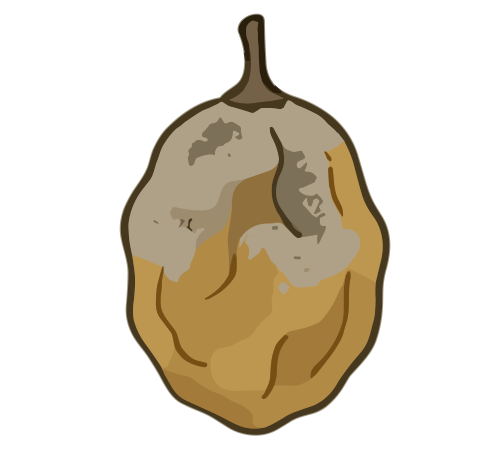
Aromatic profile may vary depending on climate, soil and winemaking.
What is Botrytis?
Botrytis cinerea is a fungus that, under specific climatic conditions, attacks wine grapes and triggers a fascinating transformation. While the fungus can wreak devastating damage as "grey rot" in humid conditions, under ideal circumstances it develops into so-called noble rot (French: pourriture noble) – the key to the world's most precious sweet wines.
How Does Noble Rot Develop?
The development of Botrytis into noble rot requires a specific microclimate:
Ideal conditions
- Morning mist or humidity: Allows the fungus to adhere to and grow on the grapes
- Warm, dry afternoons: Cause the berry skins to shrivel and concentrate the grape juice
- Late autumn: Fully ripe grapes with high sugar content
- Alternating humid and dry conditions: Prevents aggressive grey rot
These conditions are found particularly along riverbanks (e.g. the Mosel, Sauternes on the Garonne) or in regions with morning mist and afternoon sunshine.
The Transformation Process
The Botrytis fungus penetrates the berry skin with microscopic hyphae (fungal threads) and triggers several chemical changes:
- Water evaporation: The berries lose up to 80% of their water and shrivel into raisin-like forms
- Sugar concentration: The remaining juice becomes extremely concentrated, with sugar levels of 30–40% (normal: 15–25%)
- Acid reduction: Natural acidity is partially broken down, which contributes to the balance
- Aroma development: New, complex aromas emerge – honey, dried apricots, botrytis notes
The result: a highly concentrated, aromatically complex must that is vinified into exceptional sweet wines.
Famous Botrytis Wines
Sauternes & Barsac (Bordeaux)
The sweet wines of Sauternes, above all Château d'Yquem, are the ultimate expression of noble-rot wines. The primary grape Sémillon is particularly susceptible to Botrytis and develops intense honey, apricot, and saffron aromas.
Trockenbeerenauslese (Germany)
German Riesling Trockenbeerenauslesen are among the rarest and most expensive wines in the world. These concentrated, nobly sweet wines from the Mosel, Rheingau, or Pfalz combine extreme sweetness with vibrant acidity.
Tokaji Aszú (Hungary)
The legendary Tokaji from Hungary is made from noble-rot-affected Furmint and Hárslevelű grapes. The Aszú berries are harvested separately and added to the base wine – the more Puttonyos, the sweeter the wine.
Vendanges Tardives & SGN (Alsace)
Extraordinary sweet wines are produced in Alsace from noble-rot-affected Gewürztraminer, Riesling, and Pinot Gris. The Sélection de Grains Nobles (SGN) is the Alsatian equivalent of the German Trockenbeerenauslese.
Harvest & Winemaking
Harvesting botrytis-affected grapes is extremely labour-intensive:
- Selective hand harvesting: Only fully noble-rot-affected berries are picked
- Multiple passes through the vineyard: As noble rot sets in unevenly, 3–6 passes are required
- Low yields: From 100 kg of grapes, often only 5–10 litres of wine are produced (normal: 60–70 litres)
- Slow fermentation: The high sugar content impedes fermentation, which can take months
This demanding production process explains the high prices of Botrytis wines.
Flavour Profile
Wines made from noble-rot-affected grapes display a unique aromatic profile:
Primary aromas
- Dried apricots and peaches
- Honey and beeswax
- Raisins and candied fruit
Secondary aromas
- Orange marmalade
- Saffron and exotic spices
- Nuttiness (almonds, hazelnuts)
Botrytis note
A characteristic, hard-to-describe scent – often described as "noblely fungal", "waxy", or "honey-wax-like". This typical Botrytis note makes the wines unmistakable.
Grey Rot vs. Noble Rot
Not every Botrytis infection is desirable:
Grey rot (Botrytis rot)
- Occurs in persistently humid weather
- Destroys the grapes completely
- Leads to musty, unpleasant aromas
- Causes crop loss
Noble rot (Botrytis noble)
- Develops in an ideal alternation of humid and dry conditions
- Concentrates sugar and aromas
- Creates complex, honeyed notes
- The foundation for world-class sweet wines
Winemakers must monitor the weather closely to walk the narrow line between noble rot and grey rot.
Ageing Potential
Botrytis wines are among the longest-lived wines in the world:
- 20–30 years: Trockenbeerenauslesen, Sauternes
- 50–100+ years: Château d'Yquem, top Riesling TBA
- Development: With age, the wines darken (amber to mahogany) and develop complex tertiary aromas such as caramel, nuts, and dried fruit
The high concentration of sugar, acidity, and extract preserves the wines naturally.
Conclusion
Botrytis cinerea is a fascinating example of how nature can turn a potential pest into an enrichment. Noble rot transforms ordinary grapes into liquid gold and enables sweet wines of unrivalled complexity and elegance. Every sip of a noble-rot wine is a gift from nature – rare, precious, and unforgettable.
Frequently asked questions
What is botrytis?
Botrytis cinerea is a mould that attacks wine grapes. Under damp conditions it causes damage as "grey rot", but under ideal conditions it develops into noble rot (French pourriture noble) – the key to the world's most precious sweet wines.
What is the difference between grey rot and noble rot?
Grey rot occurs in persistently wet weather, destroys the grapes completely and leads to musty aromas. Noble rot arises with the ideal alternation of damp and dry, concentrates sugar and aromas and creates complex, honeyed notes – the basis for top sweet wines.
How does botrytis transform the grapes?
The fungus penetrates the berry skin and causes several changes: the berries lose up to 80% of their water and shrivel like raisins, the sugar content rises to 30-40% (normally 15-25%), the acidity is partly broken down and new aromas such as honey and dried apricots emerge.
Which wines are made from botrytised grapes?
Among the most famous botrytis wines are Sauternes and Barsac from Bordeaux (above all Château d'Yquem), German Riesling Trockenbeerenauslesen, the Hungarian Tokaji Aszú, as well as the Sélection de Grains Nobles (SGN) from Alsace.
What do wines from noble-rotted grapes taste like?
They show a unique aroma profile of dried apricots, honey and beeswax, raisins and candied fruit, plus orange marmalade, saffron and nuttiness. Characteristic is the hard-to-describe botrytis note, often described as "noble-fungal" or "waxy".
Understand Botrytis (Noble Rot) – your wine glossary to go
With the Grape Guru app, you always have your personal wine encyclopedia in your pocket - plus AI scanner and food pairing.
You might also be interested in
Noble Sweetness
Noble sweet wines combine intense sweetness with complex aromas. From Spaetlese to Trockenbeerenauslese -- the pinnacle of winemaking.
Riesling
What does Riesling taste like? From bone-dry to nobly sweet: citrus and peach aromas, the famous petrol note – and which foods pair perfectly with it.
Gewürztraminer
What does Gewürztraminer taste like? Intensely aromatic white with rose, lychee and ginger – full-bodied, often off-dry, ideal with Asian cuisine and cheese.
Bordeaux
Everything about Bordeaux: Left Bank and Right Bank, the 1855 Classification, grape varieties, and why these wines are legendary.
Chenin Blanc
Chenin Blanc explained: how the Loire and South African grape tastes – from crisp and dry to nobly sweet – plus its wine styles and best food matches.
Ausbruch
Ausbruch is an Austrian sweet wine speciality from Burgenland. Learn everything about its traditional production, noble rot, and its quality ranking between Beerenauslese and TBA.
Beerenauslese
What is a Beerenauslese? Discover the fourth Prädikat level – made from overripe, noble-rot berries. Everything about the production of this nobly sweet rarity.
Eiswein (Ice Wine)
Eiswein is a rare Praedikat wine specialty made from frozen grapes. Learn about the elaborate production process, intense flavors, and the best vintages.
Hand Harvesting
Hand harvesting is the gold standard in quality winemaking. Find out why picking by hand yields better wines and when it is absolutely essential.