




Introduction
Carménère is the long-lost grape variety that found a second home in Chile and rose to national fame there. With its characteristic profile of dark berries, spicy pepper notes and velvety-smooth tannins, it has captured the hearts of wine lovers worldwide. This fascinating variety combines French elegance with Chilean opulence and tells one of the most compelling stories in the modern wine world.
Flavour Profile & Characteristics
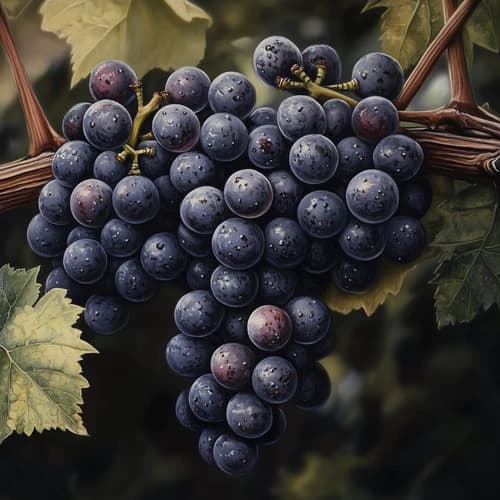
Carménère presents itself as a profound, full-bodied red wine with a fascinating palette of aromas. In the glass it shows an intense, almost impenetrable deep-violet to black-red colour that already hints at its concentration.
The flavour profile is dominated by ripe dark berries – black cherries and blackberries take centre stage, accompanied by plums and cassis. What makes Carménère unmistakable, however, is its characteristic green note: fresh green pepper, sometimes jalapeño or green olives, lend the wine a piquant spice that harmonises perfectly with the fruit.
The tannins are powerful but noticeably softer and silkier than those of Cabernet Sauvignon. This makes Carménère more approachable and smoother on the palate. The body is full and lush, with a pleasing density that makes the wine feel almost creamy.
Depending on ageing method and terroir, Carménère reveals different facets: in cooler regions or with early harvesting, the green, vegetal notes are more prominent. In warmer areas with optimal ripeness, more dark fruit and chocolate unfold, while the pepper note remains subtly in the background. Oak ageing brings vanilla, toasty aromas and an additional spice of black pepper and clove.
With age the wines develop beautifully: the green notes become more complex and reminiscent of tobacco and leather, while the fruit grows more concentrated. Tertiary aromas of cocoa, truffle and earthy notes emerge.
Origin & History
The story of Carménère reads like a wine thriller. The variety originally comes from the Médoc in Bordeaux, where it was one of the six classic red Bordeaux varieties until the phylloxera plague of the late 19th century. The name derives from the French word "carmin," referring to the brilliantly crimson autumn colouring of the leaves.
After the phylloxera catastrophe, Carménère was virtually abandoned in France – it was considered too late-ripening and too demanding for the Bordeaux climate. The variety was regarded as nearly extinct.
The sensational turning point came in 1994: French ampelographer Jean-Michel Boursiquot discovered that a large proportion of the supposed "Merlot" vines in Chile were in fact Carménère! For more than 150 years Chilean producers had unknowingly been cultivating this lost variety. The vines had arrived in Chile before phylloxera and had simply been confused with Merlot – the two varieties look remarkably similar.
Today Chile, with over 10,000 hectares, is by far the most important growing region for Carménère. The variety became Chile's signature grape and a symbol of the country's distinct wine identity. Smaller stocks exist in northern Italy (Friuli, Veneto) and sporadically in California and China.
Viticulture & Terroir
Carménère is a demanding diva that requires specific conditions to reveal its full potential. It is a late-ripening variety – often the last to be harvested in the vineyard – and needs a long, warm growing season.
The climate must be warm and dry, with long hours of sunshine in autumn. Harvesting too early leads to the unwanted green, vegetal notes reminiscent of unripe peppers. Only at full physiological ripeness does Carménère develop its optimal aromatic profile with sweet, ripe fruit and balanced spice.
Chile provides ideal conditions: the Mediterranean climate with hot, dry summers and cool nights, combined with irrigation from Andean melt water, allows perfect ripening. The Andes to the east and the cold Humboldt Current in the Pacific create large diurnal temperature fluctuations that promote aroma concentration.
Carménère prefers deep, well-drained soils. In Chile it thrives particularly well on loam and clay soils with good water-holding capacity, but also on alluvial soils and stony terraces.
The most important growing regions in Chile are:
- Colchagua Valley: The heartland, producing complex, structured wines
- Rapel Valley: Powerful, concentrated Carménère
- Maipo Valley: More elegant wines with greater finesse
- Cachapoal Valley: Balanced, fruit-forward styles
Wine Styles & Variants
Carménère is produced predominantly as a varietal red wine but can also shine in blends. The ageing philosophy varies greatly and profoundly influences the character of the wine.
Varietal Carménère makes up the lion's share. Entry-level wines are often aged in stainless steel or with minimal oak, in order to emphasise the fresh fruit and characteristic spice. These wines are accessible when young and show the typical pepper note clearly.
Premium Carménère, on the other hand, ages 12–18 months in French barriques, often with a proportion of new casks. The oak ageing lends the wine additional complexity, structure and ageing potential. Vanilla, toasty aromas and a gentle spice complement the dark fruit perfectly.
In blends, Carménère plays an interesting role. Classically it is combined with Cabernet Sauvignon – a homage to its Bordeaux origins. The Cabernet provides structure and firmness while Carménère contributes body and roundness. Blends with Merlot, Syrah or Petit Verdot are also popular.
Some Chilean producers experiment with old vines (over 50 years old) that yield particularly concentrated, complex wines. These "Carménère Viejo" or "Old Vine Carménère" belong to the elite and can hold their own against the finest reds in the world.
Regionally, there are clear stylistic differences: wines from the cooler Leyda Valley or Casablanca Valley show more freshness and elegance, while the hot valleys of the Central Valley produce opulent, powerful wines with higher alcohol.
Typical Aromas
Primary Aromas (from the grape)
Black cherry: The core aroma of ripe Carménère – juicy, sweet and concentrated. In cooler years it leans toward sour cherry; in hot vintages it is almost candied.
Blackberry: Ripe, sometimes almost jammy blackberries complement the cherry notes and give the wine its dark fruit depth.
Green pepper: The signature aroma! This characteristic vegetal note can range from fresh green pepper to dried herbs. At optimal ripeness it is subtle and complex; with under-ripe fruit it can become dominant.
Black pepper: A spicy, peppery note runs through many Carménère wines and gives them their particular piquancy and vivacity.
Cassis: Blackcurrant, with its concentrated, slightly tart fruit, rounds off the aroma profile and adds further depth.
Secondary Aromas (from winemaking)
Chocolate: Particularly with barrique ageing, a fine aroma of dark chocolate or cocoa develops that harmonises beautifully with the dark fruit.
Vanilla: French oak brings sweet vanilla notes that make the wine creamier and more approachable.
Toasty aromas: Depending on the toast level of the casks, roasted aromas of espresso, toasted nuts or even mocha can develop.
Tertiary Aromas (from ageing)
Tobacco: With 5–10 years of bottle age, noble tobacco notes develop – sweet cigar tobacco or dried tobacco leaves.
Leather: Fine, supple leather notes complement the aged wines and lend them elegance and complexity.
Truffle and undergrowth: With longer ageing, earthy, mushroomy notes arise reminiscent of truffle and damp forest floor.
Carménère ages well – high-quality wines can comfortably age 10–15 years, and top wines even 20 years and beyond. Over time the green notes become more complex and integrated, the fruit grows more concentrated and the tertiary aromas gain in importance.
Food Pairing
Perfect Combinations
Grilled beef and Asado: The classic Chilean combination! A juicy ribeye steak or traditional Asado (spit-roasted beef) harmonises perfectly with Carménère. The roasted aromas from the grill are mirrored in the wood notes of the wine, while the tannins cut through the fat of the meat. The wine's spicy pepper note complements chimichurri sauce ideally.
Lamb with herb crust: The spicy, slightly vegetal notes of Carménère pair beautifully with pink-roasted rack of lamb coated in rosemary, thyme and garlic. The tannins harmonise with the intense meat, while the herbal notes of the wine pick up the herbs of the dish.
Chilli con carne: A classic that almost announces itself by name! The smoky heat of the chilli, the beans and the tomatoes find an ideal partner in Carménère. The pepper note in the wine plays with the chillies in the dish, while the fruitiness mellows the heat.
Aged cheese and dark chocolate: For dessert lovers: a powerful Manchego or aged Cheddar with dark chocolate (70%+ cocoa) alongside Carménère creates a wonderful flavour symphony. The chocolate aromas in the wine reinforce the dessert, while the tannins balance the richness of the cheese.