


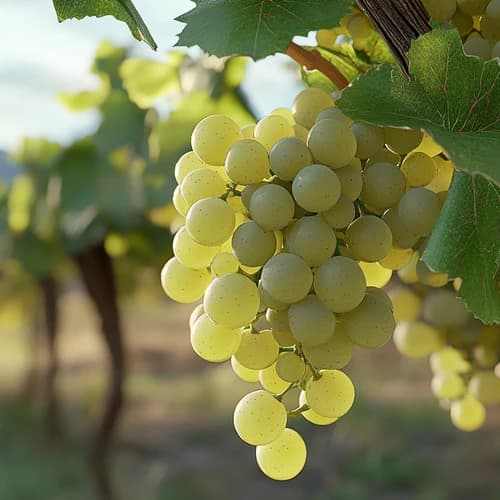


Pinot Blanc, known in Germany and Austria as Weißburgunder, is the charming all-rounder of the Burgundy family. This versatile variety produces elegant, fresh white wines that, with their refined fruit and understated character, pair perfectly with modern cuisine. Whether as an uncomplicated terrace wine or matured in barrique as a sophisticated food companion – Pinot Blanc wins over with its adaptable personality.
Flavour Profile & Character
Pinot Blanc presents itself as the discreet gentleman of white wines. In the glass it shows a pale, straw-yellow colour with greenish reflections that underscores its freshness. The flavour profile is characterised by an elegant restraint that never becomes boring.
The fruit aromas range from green apple and juicy pear, complemented by delicate nuances of white peach. Unlike its more expressive cousin Chardonnay, Pinot Blanc does not rely on drama but wins through finesse and harmony. The acidity is present yet never intrusive – it provides the necessary freshness and makes the wine an ideal food companion.
In the cool climate of Germany or Alsace, Pinot Blanc develops a crisp acid structure with pronounced apple and citrus notes. In the warmer sites of South Tyrol or Austria it shows itself riper and fuller-bodied, with more yellow fruit and sometimes a hint of honey. Ageing in stainless steel tanks preserves the vibrant freshness, while maturation in oak gives the wine more structure, creaminess and nutty aromas.
With increasing age, Pinot Blanc develops a pleasant honey note and nutty complexity. The better examples, especially those from barrique, can readily mature for three to five years, gaining depth and finesse along the way.
Origin & History
The story of Pinot Blanc begins in French Burgundy, where it emerged as a natural mutation from Pinot Noir. The variety was already cultivated in this legendary wine region during the Middle Ages before it made its way across Europe.
Over the centuries Pinot Blanc found its way to Germany, where it discovered a new home particularly in Baden and the Pfalz. German winemakers recognised its potential early and crafted it with great care. In neighbouring Alsace, where it is known as Pinot Blanc, a long tradition of growing the variety also developed.
Today Pinot Blanc is one of Germany's most successful grape varieties. In Italy, particularly in South Tyrol, it is called Pinot Bianco and is valued as an important part of the local wine culture. Austria has also firmly integrated the variety into its portfolio, where it achieves excellent quality in Styria and Burgenland.
Cultivation & Terroir
Pinot Blanc is a demanding variety that prefers cool to temperate climates. It needs sufficient warmth for ripeness but simultaneously benefits from cool nights that preserve the grape's characteristic freshness. Excessively high temperatures cause acidity to drop rapidly, leading to flat, one-dimensional wines.
The best results are achieved on calcareous soils, which give the wine its typical minerality. Loess soils, such as those found in the Pfalz, are also excellent, producing elegant, highly drinkable wines. In South Tyrol the vine thrives on alluvial soils in the valleys and on porphyry or limestone weathering soils on the hillsides.
The most important growing regions for Pinot Blanc are:
Germany: With over 5,000 hectares, Germany is the most important producing country. Baden leads with the largest share, followed by Pfalz and Rheinhessen. Here both fresh everyday wines and ambitious single-vineyard wines are produced.
Alsace (France): As Pinot Blanc it is an important component of the Alsatian grape variety spectrum. The wines are often somewhat fuller-bodied and more powerful than their German counterparts.
Italy: In South Tyrol (Alto Adige), Pinot Bianco is one of the top varieties. The altitude and alpine climate lend the wines a particular elegance and freshness.
Austria: Particularly in Styria, mineral, precise Pinot Blancs with a pronounced terroir character are produced.
Wine Styles & Variants
The versatility of Pinot Blanc is reflected in the different ageing approaches, ranging from lean and fresh to complex and age-worthy.
Classic stainless steel ageing: This is the most common style and preserves the primary fruit and freshness of the grape. These wines are best young, showing crisp apple and pear notes and pairing perfectly with light summer cuisine. They are uncomplicated, refreshing and win through their sheer drinkability.
Barrique ageing: Ambitious winemakers give their Pinot Blanc time in oak, often combined with lees ageing. The result is complex, full-bodied wines with a creamy texture, nutty notes and increased ageing potential. These wines need a little time to come together but can then be truly impressive.
Sekt and Crémant: In Alsace and Germany, Pinot Blanc is often used for sparkling wine production. The moderate acidity and fine aromatic profile yield elegant base wines for traditional bottle fermentation. Crémant d'Alsace often contains a high proportion of Pinot Blanc.
As a blend partner Pinot Blanc is also talented. In Alsace it is frequently blended with Auxerrois or other Burgundy varieties. In Germany it is sometimes found in blends with Chardonnay or Pinot Gris, which increases complexity and combines different facets.
Typical Aromas
Primary Aromas (from the grape)
Green apple: The leitmotif of Pinot Blanc, particularly pronounced in cooler climates. This fresh, crisp fruit gives the wine its characteristic vitality and makes it so versatile at table.
Pear: Ripe, juicy pear notes complement the apple and become more noticeable in warmer years or in more southerly growing regions. They provide an elegant sweetness without the wine seeming sweet.
White peach: In warm sites and ripe years, a subtle peach note is added, giving the wine extra depth. These aromas are particularly typical of Italian and Austrian Pinot Blanc.
Minerality: On calcareous soils Pinot Blanc develops a pronounced mineral note, reminiscent of wet stones or flint. This component lends the wine elegance and length on the palate.
Aroma intensity varies depending on terroir: on light loess soils Pinot Blanc shows a more delicate character with more citrus freshness, while heavy limestone soils produce more powerful wines with a distinct minerality.
Secondary Aromas (through winemaking)
Almond: Through contact with the yeast during ageing, many Pinot Blancs develop a delicate almond note. This nutty component is enhanced by lees ageing or malolactic fermentation and lends the wine additional complexity.
Butter and brioche: With extended lees ageing and malolactic fermentation, buttery and brioche-like notes can develop, especially in barrique wines. These aromas recall fine baked goods and give the wine a creamy, luxurious texture.
Tertiary Aromas (through ageing)
Honey: With bottle ageing, premium Pinot Blancs develop a fine honey note that rounds out the fruit without dominating it. This development makes well-aged examples with three to five years of bottle age particularly interesting.
Nut: Aged Pinot Blancs, especially those from oak, increasingly show nutty aromas in old age, recalling hazelnut or walnut. This development is a sign of quality and good craftsmanship.
Pinot Blanc is moderately age-worthy. Simple, stainless steel-aged wines should be drunk within two to three years. High-quality single-vineyard wines or barrique-aged examples can readily mature for five to seven years, gaining in complexity and harmony along the way.
Food Pairing
The versatility of Pinot Blanc makes it one of the best food wines of all. Its moderate acidity and medium body harmonise with a wide range of dishes.
Perfect Combinations
Poultry and white meat: A classic Pinot Blanc is the ideal partner for roast chicken, turkey escalope or veal medallions with a cream sauce. The wine's subtle fruit and medium structure complement the tender meat perfectly without overwhelming it. Barrique-aged versions pair superbly with braised poultry or veal roast.
Fish and seafood: Pinot Blanc loves fish – whether pan-fried trout, pike-perch in butter sauce or grilled salmon. The wine's acidity cuts through the fattiness of the fish, while the fruity notes underscore the aromas of the sea. A full-bodied Pinot Blanc is also an excellent choice with scallops or lobster.
Pasta with cream sauces: The creamy texture of an aged Pinot Blanc harmonises wonderfully with pasta in cream or cheese sauce. Tagliatelle with mushrooms, ricotta-filled ravioli or spaghetti carbonara are perfectly rounded off by the wine's nutty notes.
Asparagus: One of the few wines that truly pairs well with asparagus! The green apple notes and minerality of Pinot Blanc complement the earthy, slightly bitter notes of asparagus. Whether with hollandaise sauce or simply with melted butter – a fresh Pinot Blanc from Baden is the perfect choice.
As a general rule: the leaner and fresher the Pinot Blanc, the lighter the dish should be. Barrique wines can handle more robust preparations with rich sauces. The serving temperature of 9–11°C is important – served too cold, the fine aromas close up.