




Introduction
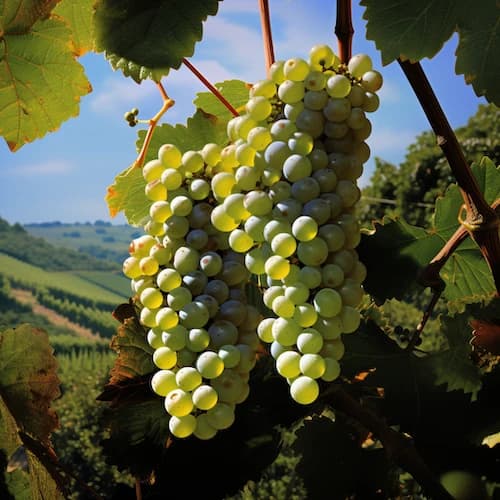
Rkatsiteli is one of the oldest cultivated grape varieties in the world and the white flagship of Georgia, the birthplace of winemaking. This adaptable grape combines crystalline acidity with complex aromas and forms the foundation for both classic Georgian white wines and the fascinating orange wines produced in traditional Qvevri clay vessels. What makes Rkatsiteli so special is its ability to produce both fresh, vibrant everyday wines and structured, age-worthy bottlings that make Georgia's millennia-old wine culture tangible in every sip.
Flavor Profile & Character
Rkatsiteli presents itself as a grape variety with a distinctive personality and remarkable versatility. At its core it is defined by a taut, vibrant acidity that lends the wines freshness and structure. The flavor profile is dominated by bright citrus notes, green apple, and the characteristic quince that gives Rkatsiteli wines their unmistakable signature. This is accompanied by a pronounced minerality reminiscent of damp stone and chalk.
The winemaking approach makes an enormous difference with Rkatsiteli. Modern wines fermented and aged in stainless steel tanks appear lean and crisp with lively acidity and clean fruit aromas. They resemble a more elegant Riesling with greater body. The traditional Georgian method in Qvevri clay vessels with skin contact, however, transforms the grape entirely: orange wines from Rkatsiteli develop an amber hue, more body, gentle tannins, and complex aromas of dried fruits, nuts, and honey.
In cool years or at altitude, Rkatsiteli emphasizes its citrus freshness and minerality. In warm regions with long growing seasons, the grapes ripen fully and develop aromas of white peach, apricot, and a gentle, almost oily texture. With age, high-quality Rkatsiteli wines gain in complexity: the primary fruit aromas give way to notes of honey, beeswax, dried fruits, and a fascinating nutty spice.
Origin & History
Rkatsiteli originates from Georgia, more precisely from the Kakheti region in the east of the country, and is one of the oldest cultivated grape varieties in human history. DNA analyses and archaeological finds confirm that Georgians were making wine over 8,000 years ago, and Rkatsiteli is likely among the first domesticated varieties. The name translates as "red stem" and refers to the characteristic reddish coloring of the shoots and stalks.
For thousands of years, Rkatsiteli was the most important white wine grape in Georgia and throughout the Caucasus. The variety survived numerous historical upheavals, from Persian invasions through the Tsarist era to the Soviet period. During the USSR era, Rkatsiteli was planted extensively in Ukraine, Russia, Moldova, and other Soviet republics to meet the enormous demand for wine, temporarily making it one of the most widely planted white grape varieties in the world.
Today Rkatsiteli is experiencing a renaissance. In Georgia, producers are rediscovering traditional Qvevri methods and producing world-class orange wines that are gaining international recognition. The variety is also now being grown on a smaller, experimental scale in the USA (Finger Lakes, New York), Australia, and Western Europe. With the growing popularity of Georgian wines and natural winemaking methods, Rkatsiteli is conquering the wine lists of discerning restaurants worldwide.
Viticulture & Terroir
Rkatsiteli is a robust and adaptable grape variety that finds ideal conditions in Georgia's continental climate. It prefers hot, dry summers with plenty of sunshine for complete grape ripening and cold winters for the necessary dormancy period. The variety has a late budbreak, which protects it against late frosts, and a medium to late ripening period, typically in October.
The soils in Kakheti, Rkatsiteli's homeland, are diverse: from alluvial flood-plain soils in the river valleys, through clay, to calcareous soils at higher elevations. Rkatsiteli thrives best on well-drained, mineral-rich soils and develops its characteristic minerality there. At elevations between 400 and 800 metres, the variety produces wines with particularly lively acidity and elegant aromatics.
The most important growing areas are in Georgia's Kakheti wine region (especially the micro-regions Kvareli, Tsinandali, and Telavi), Kartli, and Imereti. Outside Georgia, significant plantings can be found in Ukraine (Crimea), Russia (Krasnodar), the USA (Finger Lakes, New York), and experimental plots in California and Australia. The variety is drought-resistant but susceptible to powdery mildew, making careful canopy management important.
Wine Styles & Variants
Rkatsiteli is one of the most versatile grape varieties of all and is produced in the widest variety of styles. The classic modern style is fermented and aged in stainless steel tanks or neutral wood. These wines are bright, fresh, and crisp with lively acidity, clean fruit aromas, and moderate alcohol. They represent the most approachable style and work excellently as food wines.
The traditional Georgian style in Qvevri clay vessels is the historic heart of Rkatsiteli. The grapes are fermented with skins, seeds, and sometimes even stems in large clay amphorae buried in the ground, where they mature for months on the pomace. The result is orange wines with amber to copper-red color, more body, fine tannins, and a complex aromatics ranging from dried fruits and nuts to honey and spices.
Sweet wines from Rkatsiteli are also produced in Kakheti, often through air-drying of the grapes or through botrytis. These sweet wines show concentrated aromas of honey, dried apricot, and quince paste with balanced acidity. In addition, Rkatsiteli is used for Georgian sparkling wines and frequently serves as a blending partner for other varieties in the former Soviet Union. In blends, Rkatsiteli contributes structure, acidity, and freshness, harmonizing well with other Georgian varieties such as Mtsvane or international varieties such as Chardonnay.
Typical Aromas
Primary Aromas (from the grape)
Quince is the signature aroma of Rkatsiteli and gives the wines their unmistakable identity. Intensity varies depending on terroir and ripeness, from fresh, almost green quince in cooler sites to ripe, aromatic quince paste in warm regions.
Citrus fruits dominate the nose of many Rkatsiteli wines, especially in the modern style. Lemon zest, lime, and sometimes grapefruit lend the wines their characteristic freshness and vibrancy.
Green apple delivers crisp fruitiness and underlines the fresh, almost austere character of young Rkatsiteli wines. At cool higher elevations this apple note can be especially pronounced.
White peach develops in fully ripe grapes, especially in warm vintages. This softer fruit component rounds out the flavor profile and makes the wine more approachable.
Minerality is a cornerstone of the Rkatsiteli character. Notes of damp stone, chalk, and wet slate characterize wines from calcareous soils and high-altitude sites in particular.
Herbs and white blossoms subtly complement the aromatic profile, from delicate chamomile flowers to fresh herbs, adding additional complexity to the wine.
Secondary Aromas (from winemaking)
Yeast notes and brioche develop in wines aged on their lees (sur lie). This lends the wine more creaminess and body.
Nutty tones (almond, hazelnut) arise especially during Qvevri aging through contact with skins and seeds. These aromas give orange wines their characteristic complexity.
Honey and beeswax appear with extended barrel aging or oxidative production and give the wine a warm, sweet component without actual residual sugar.
Tertiary Aromas (from aging)
Dried fruits such as apricot, fig, and raisin develop with bottle aging, especially in traditionally produced Qvevri wines.
Tobacco and leather emerge in aged orange wines and lend these wines astonishing depth and complexity.
Petrol notes can develop in old, high-quality Rkatsiteli wines, similar to aged Riesling, underscoring the kinship between the two varieties in terms of aromatic profile.
Rkatsiteli possesses considerable aging potential. Modern white wines evolve positively over 2–5 years, while traditional Qvevri wines can age comfortably for 10–20 years and longer. The high acidity acts as a natural preservative and guarantees a slow, elegant development.
Food Pairing
Perfect Combinations
Grilled fish with a herb crust is the classic combination for modern Rkatsiteli wines. The high acidity cuts through the richness of the fish, while the citrus and herb aromas of the wine complement the fresh herbs in the dish. Sea bass, bream, or trout are particularly harmonious partners.
Georgian cuisine with khinkali and khachapuri forms the traditional pairing, especially with orange wines from Qvevri. The robust, skin-fermented wines can stand up to the spiced meat dumplings and cheese-filled flatbreads. The tannins and body of a Qvevri Rkatsiteli complement the rich Georgian cuisine perfectly.
Roast chicken with lemon and olives benefits from the versatility of Rkatsiteli. The citrus components in the wine mirror the lemon in the dish, while the minerality balances the salty olives. A semi-dry or lightly aged Rkatsiteli is ideal here.
Aged hard cheese such as old Gouda, Comté, or Parmigiano Reggiano harmonizes wonderfully with aged Rkatsiteli wines, especially orange wines. The nutty aromas in the wine find an echo in the complex cheese aromas, while the acidity cuts through the creaminess.
The versatility of Rkatsiteli makes it an excellent companion for Mediterranean and Middle Eastern cuisine, from Lebanese mezze to Turkish dishes to Italian antipasti. The variety proves that white wines can indeed stand up to bold, spicy foods — you just need to choose the right style.