

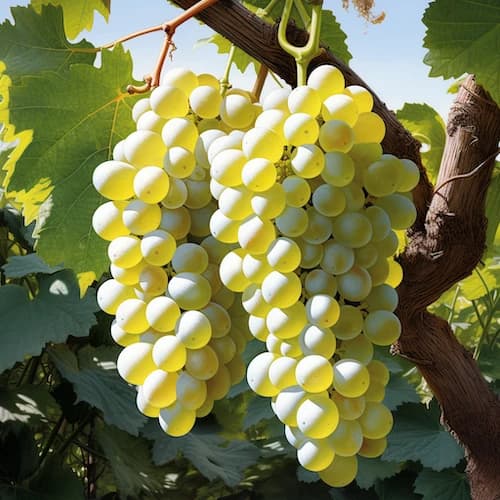


Sémillon – The Underrated Star from Bordeaux
Sémillon is among the most fascinating white wine grape varieties in the world, even if it often stands in the shadow of its more prominent relatives. In Bordeaux it is the lead player in the legendary sweet wines of Sauternes, but as a dry white wine Sémillon also shows impressive quality. With its unique waxy texture, full-bodied character, and astonishing aging potential, this variety is winning the hearts of wine lovers worldwide — from the classic vineyards of France to the sun-drenched slopes of Australia.
Flavor Profile & Character
Sémillon is a true chameleon among white wines. In the glass the variety presents with a golden to straw-yellow color that intensifies with age. What makes Sémillon so special is its velvety, almost oily texture and full-bodied character, which gives it a unique presence on the palate.
Young, dry Sémillons show fresh citrus aromas of lime and lemon, accompanied by green fruits such as melon and a characteristic waxy note. Unlike the zesty Sauvignon Blanc, Sémillon possesses a more restrained acidity that gives the wine a creamy roundness. Over time a fascinating aromatic profile develops: honey notes emerge, paired with dried figs, apricot, and a complex blend of beeswax and nutty hints.
In warm climates such as Australia, Sémillon presents itself somewhat more opulent and fruit-driven, while French examples are often tauter and more mineral. The true magic, however, unfolds in the sweet styles: when the grapes are affected by Botrytis cinerea, concentrated nectar-wines result with intense aromas of honey, candied fruits, and a perfect balance between sweetness and acidity.
Origin & History
The roots of Sémillon lie deep in the Bordelais, where the variety has likely been cultivated since the 18th century. The name is said to derive from the Latin word "semen" (seed), possibly due to the notably large pips of the berries. In Bordeaux Sémillon quickly established itself as one of the most important white varieties, particularly in the appellations of Sauternes and Barsac, where it still forms the basis for the world-famous sweet wines to this day.
In the 19th century Sémillon found its way to Australia, where French immigrants planted the vines in the Hunter Valley north of Sydney. Here a completely distinct style evolved: Australian producers created dry Sémillons of exceptional quality and longevity that differ markedly from their French models. Today the Hunter Valley is known for some of the world's finest dry Sémillon wines.
In South Africa, Chile, and the USA (primarily Washington State), Sémillon has also established itself, though it often remains an insider tip among connoisseurs. Approximately 30,000 hectares worldwide are planted with Sémillon, with France and Australia holding the largest areas.
Viticulture & Terroir
Sémillon is an undemanding and robust variety that can adapt to various climates. It prefers moderate to warm conditions, however, and benefits from a long, dry autumn. The thin-skinned berry is particularly susceptible to Botrytis cinerea — a characteristic that becomes a blessing in Sauternes, but elsewhere requires careful vineyard management.
In Bordeaux, Sémillon thrives best on gravelly and clay soils with good drainage. The proximity to rivers such as the Garonne creates the morning mists that are essential for the development of noble rot. In the Hunter Valley, the variety benefits from volcanic soils and a unique microclimate that provides sufficient humidity despite the heat.
Margaret River in Western Australia has established itself as another premier region for Sémillon. Here producers create both single-variety wines and excellent blends with Sauvignon Blanc in the Bordeaux style. The cooler coastal influences and calcareous soils lend the wines freshness and minerality.
The variety ripens relatively early, allowing producers to choose harvest timing flexibly: early harvest for fresher, more acidity-driven wines, or late harvest for richer, higher-alcohol variants. For sweet wines, harvesting takes place selectively over several passes to pick only the optimally botrytis-affected grapes.
Wine Styles & Variants
The versatility of Sémillon is reflected in the impressive range of wine styles. Dry Sémillons are produced in two main variants: drunk young with fresh fruit aromas, or as age-worthy reserve wines. The unadorned Hunter Valley Sémillons in particular are often bottled without fining and without oak aging, yet develop astonishing complexity in the bottle.
With barrique aging, Sémillon gains additional dimensions: vanilla, butter, and nutty notes complement the fruity aromas. These variants are reminiscent of great white Burgundy wines and are ideal for lovers of rich whites. In Margaret River this style is particularly common.
The nobly sweet Sémillons from Sauternes and Barsac are legendary. Botrytis infection concentrates the sugars and aromas enormously while the acidity is retained. The result is nectar-like wines with perfect balance, capable of aging for decades. Château d'Yquem, the most famous Sauternes, consists of approximately 80% Sémillon.
As a blend partner, Sémillon shines especially with Sauvignon Blanc — a combination that has been practiced in Bordeaux for centuries. While Sauvignon Blanc contributes freshness and aromatic intensity, Sémillon brings body, texture, and aging potential. Blends with Chardonnay or Muscadelle are also found.
Typical Aromas
Primary Aromas (from the grape)
Citrus fruits: Fresh lemon and lime notes dominate young Sémillons, particularly in cooler climates. These aromas are delicate and elegant, less penetrating than in Sauvignon Blanc.
Melon: The characteristic honeydew melon aroma is a signature of Sémillon. It gives the wine its typical drinkability and soft fruitiness.
Stone fruit: Apricot and sometimes peach join in, especially with grapes from warmer sites. These aromas become more intense with increasing ripeness.
Green herbs: Subtle herbaceous notes, similar to freshly cut grass, give the wine freshness without being intrusive.
Minerality: Flint and wet slate aromas stand out particularly in wines from calcareous or gravelly soils and give the wine structure.
Secondary Aromas (from winemaking)
Beeswax: This characteristic, almost oily aroma develops through fermentation and is a typical hallmark of aged Sémillons.
Butter and brioche: In wines with barrique aging or malolactic fermentation, creamy, buttery notes develop that are reminiscent of fresh pastry.
Nutty aromas: Almond and hazelnut notes appear with extended lees contact (sur lie) and lend the wine additional complexity.
Tertiary Aromas (from aging)
Honey: With bottle aging an intense honey aroma develops, particularly pronounced in sweet styles but also distinctive in dry Sémillons.
Dried figs: These concentrated dried-fruit notes are typical of aged wines and attest to excellent quality.
Toast and caramel: In aged Sémillons with oak aging, the toasty aromas from the barrel blend with the fruit aromas into a harmonious whole.
Sémillon is among the most cellar-worthy of all white wines. High-quality dry Sémillons from the Hunter Valley can comfortably age 15–20 years, some even 30 years and longer. Nobly sweet Sauternes are known for 50–100 years of aging potential. Unlike many other white wines that fade with time, Sémillon gains in complexity and depth over the years.
Food Pairing
Perfect Combinations
Poultry in cream sauce: The full-bodied character and creamy texture of a barrel-aged Sémillon harmonize perfectly with chicken or poularde in a cream sauce. The buttery notes of the wine complement the sauce, while the acidity balances the dish. Preparations with mushrooms or tarragon are especially recommended.
Seafood and crustaceans: A young, fresh Sémillon without oak aging is the ideal companion for oysters, scallops, or lobster. The restrained acidity and mineral notes underscore the oceanic character without masking the delicate aromas. A classic from Bordeaux!
Asian cuisine: The slightly waxy texture and fruitiness of Sémillon pair superbly with Thai or Vietnamese dishes with coconut milk. The wine can keep pace with the complex spices and softens the heat of chili.
Blue cheese and sweet wines: The ultimate classic: nobly sweet Sauternes with Roquefort or Stilton. The saltiness and creaminess of the cheese contrasts perfectly with the sweetness of the wine, while both components elevate each other to a higher level. With foie gras too, a Sauternes is unbeatable — a traditional French pairing without equal.