

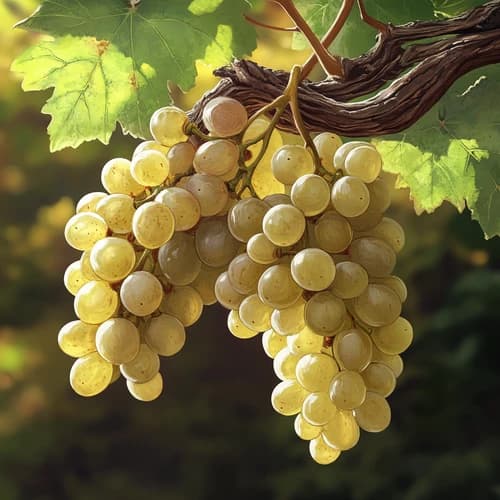


Introduction
Macabeo is Spain's chameleonic white grape variety, showing completely different faces depending on how it is vinified. In Catalonia it forms the backbone of Cava as the principal variety, lending the sparkling wine its fine mousse and freshness, while in Rioja under the name Viura it produces both crisp, fruity and complex, creamy white wines. This versatility makes Macabeo one of the most exciting — and underrated — Mediterranean grape varieties.
Flavour Profile & Character
Macabeo reveals itself as a genuine all-rounder with impressive stylistic range. In its simplest expression the variety is refreshingly neutral with clear citrus notes, green apple, and subtle florality. The acidity is moderate and balanced — enough for freshness, but never intrusive or sharp. Body sits in the medium range with a pleasant, almost creamy texture that makes the wine more approachable than many other white wines.
In cooler climates or with early harvesting, Macabeo develops crisp, lively character with notes of green apple, lemon zest, and white blossoms. These wines feel youthful, vibrant, and refreshing — perfect for uncomplicated enjoyment. In warmer sites or with fuller ripeness, more full-bodied wines emerge with aromas of white peach, ripe pear, and a subtle almond note.
Macabeo's true magic, however, is revealed in barrique. The variety possesses a natural oxidative stability that allows it to age in oak without the wine oxidising quickly. Oak-aged Macabeos develop buttery, nutty characters with notes of vanilla, toasted almonds, and a creamy texture that can recall great white Burgundy. These complex Rioja Reservas can undergo remarkable development and be age-worthy for a decade or more.
Origin & History
The precise origin of Macabeo is lost in the mists of history, but most ampelographers place its origin in north-east Spain, probably in Catalonia or Aragón. The name may derive from the Jewish Maccabee dynasty, suggesting medieval roots. Early written mentions of the variety date to the 18th century, though it was probably cultivated for centuries before that.
Historically, Macabeo played an important role in the traditional wine production of north-east Spain. In the 19th century it spread to Rioja, where it became known by the synonym Viura and established itself as the perfect complement or alternative to the more delicate Malvasía. The variety's oxidative stability made it particularly valuable in times before modern cellar technology.
Its great international breakthrough came in the 20th century with the rise of Cava. As one of the three main grape varieties (alongside Parellada and Xarel·lo) for the Catalan sparkling wine speciality, Macabeo became an export success. Today it covers over 40,000 hectares worldwide, making it one of Spain's most important white varieties, and it is also found in southern France (Roussillon, Languedoc) under the name Maccabeu.
Cultivation & Terroir
Macabeo is a robust and adaptable grape variety that tolerates a wide range of climates and soils. It does, however, prefer warm, dry conditions with adequate sunshine. The vine is late budding and late ripening, making it less susceptible to late frosts — a significant advantage in continental climates such as Rioja.
The variety thrives on widely differing soils, from calcareous clay-marl soils in Catalonia, through iron-rich clay-limestone soils of Rioja Alavesa, to granite and slate soils at higher elevations. On poorer, well-drained soils Macabeo produces more concentrated wines with greater structure, while richer soils tend to yield higher volumes and lighter wines.
In Rioja, Macabeo is frequently found at higher elevations up to 700 metres, where cooler night temperatures preserve acidity. In Penedès the vines are grown both near the coast and in the cooler hinterland. The variety tolerates drought well but benefits from moderate water supply during the ripening phase. It is relatively disease-resistant, but can produce dilute wines at high yields, making yield reduction crucial for quality.
Wine Styles & Variants
Macabeo is produced in an impressive range of styles. The most classic and volumetrically significant is Cava, the traditional Catalan sparkling wine. Here Macabeo forms the basis alongside Xarel·lo and Parellada, contributing freshness, citrus aromas, and elegant floral notes. The second fermentation in the bottle by traditional method gives these sparkling wines brioche notes and a fine mousse.
In still wines there are two main directions: vinified young and fresh, Macabeo presents itself as an uncomplicated, fruit-driven summer wine. These stainless-steel-aged wines from Rioja (as Viura) or Catalonia show the pure fruit side with citrus, green apple, and floral notes. They are drunk within one to two years of harvest.
The second direction is oak-aged, complex Rioja Blancos. These wines undergo barrel ageing and sometimes malolactic fermentation, which lends them fullness, creaminess, and nutty complexity. Rioja Blanco Reservas or Gran Reservas that age for several years in bottle can recall great white Burgundies and develop impressive ageing potential.
Macabeo is rarely produced as a single variety but is frequently blended with other grapes. In Rioja, Chardonnay, Sauvignon Blanc, or Verdejo are popular partners. In Catalonia it is complemented by Xarel·lo and Parellada. In southern France it is often found in blends with Grenache Blanc and Roussanne.
Typical Aromas
Primary Aromas (from the grape)
The primary aromas of Macabeo are elegant and restrained, never overbearing. Citrus fruits frequently dominate with notes of lemon zest, lime, and occasionally grapefruit, especially in cooler examples or Cava. This citrus freshness gives the wines their characteristic vibrancy.
Green apple is the second core aroma, lending Macabeo a crisp, juicy quality. In cooler years or with earlier harvesting this note can be especially pronounced, recalling Granny Smith apples. White peach appears in warmer climates or at fuller ripeness, bringing a softer, rounder fruitiness.
Floral notes — particularly white blossoms such as orange blossom, elderflower, or acacia flowers — give Macabeo an aromatic elegance. This floral component is subtle but characteristic and contributes to complexity. In wines from higher elevations or cooler microclimates these notes are especially delicately expressed.
Almond often appears as a fine, green almond or marzipan note that gives the wine a slightly nutty yet fresh component. This note harmonises well with the fruitiness and already hints at the potential for oak ageing.
Secondary Aromas (from winemaking)
In Cava and other traditionally sparkling Macabeos, typical brioche and yeast notes develop through the second fermentation and lees ageing. These give the sparkling wine a creamy, bread-like complexity that is especially pronounced in longer lees-aged Cavas (Reserva, Gran Reserva).
With barrel ageing, vanilla and butterscotch notes emerge. The variety's oxidative stability allows for pronounced oak use that lends the wine spice, creaminess, and depth without smothering the fruit. Malolactic fermentation can additionally bring buttery notes and a smoother texture.
Tertiary Aromas (from ageing)
Macabeo is among the more age-worthy white varieties, particularly in oak-aged examples. With bottle ageing, honey and wax notes develop, lending the wine a ripe, complex sweetness without any actual residual sugar.
Toasted almonds and hazelnuts become increasingly prominent with age and in well-made Rioja Reservas can recall oxidatively aged sherries, albeit in a considerably more subtle form. These nutty tertiary aromas blend harmoniously with the primary aromas to form a complex whole.
Well-made, oak-aged Macabeos can age for 10–15 years or even longer, developing impressive complexity with petrol nuances (similar to Riesling), dried fruits, and a waxy texture. Freshly vinified Macabeos should, however, be drunk within two to three years.
Food Pairing
Perfect Combinations
Paella and Seafood: Fresh, young Macabeo is the classic companion to Catalan paella or seafood dishes. The moderate acidity and citrus freshness cut through the richness of saffron rice and crustaceans, while the restrained aromatics do not overpower the delicate sea flavours. Cava in particular harmonises perfectly with Gambas al Ajillo or fried calamares.
Grilled Fish with Almonds: The almond notes in Macabeo create a natural bridge to fish dishes prepared with almonds — a classic of Catalan cuisine. A stainless-steel-aged Macabeo alongside sea bream with an almond crust or hake in almond sauce is a heavenly combination, where wine and food reinforce each other.
Aged Cheese and Oak-Aged Macabeos: This is where oak-aged Rioja Blancos come into their own. The nutty, buttery notes of these wines harmonise beautifully with aged Manchego, Idiazábal, or creamy cheeses. The creaminess and complexity of the wine can match that of the cheese without being overwhelmed by intense flavours.
Asparagus and Artichokes: Notoriously difficult vegetables to pair find an ideal partner in Macabeo. The moderate acidity, medium body, and herbaceous undertones of the wine complement the earthy, slightly bitter notes of white asparagus or braised artichokes perfectly. A classic of Rioja cuisine!