




Introduction
Gewürztraminer is the diva among white wines – intense, seductive and unmistakable. With its explosive bouquet of roses, lychees and exotic spices, it ranks among the most aromatic grape varieties in the world. Whether as a dry food companion or as a rare, nobly sweet dessert wine, Gewürztraminer polarises and fascinates in equal measure.
Flavour Profile & Characteristics
Gewürztraminer is an aromatic wonder that captivates from the very first moment. Even at the first sniff, a bewitching bouquet of rose blossoms and fresh lychees unfolds. On the palate the wine shows itself opulent and full-bodied, with an oily, almost creamy texture that clearly sets it apart from other white wines.
The name says it all: "Gewürz" (spice) stands for the characteristic spicy notes that recall ginger, cinnamon and exotic spices. The low acidity makes the wine soft and approachable, though in warm vintages it can also lead to a certain heaviness. The alcohol content often exceeds 13.5% by volume, further underlining the full-bodied character.
Depending on the style, the flavour profile varies considerably: dry Gewürztraminers from Alsace or the Pfalz show an impressive balance between spice and freshness. Off-dry variants emphasise the fruity components with peach and apricot. Nobly sweet late-harvest and berry-selection wines develop intense honey notes and candied fruits, carried perfectly by the noble sweetness.
With increasing age, Gewürztraminer develops fascinating tertiary aromas: honeycomb, orange marmalade and spicy notes intensify while the fresh fruit aromas recede.
Origin & History
The home of Gewürztraminer lies in South Tyrol, more precisely in the picturesque village of Tramin on the Wine Road. The variety was already cultivated here in the Middle Ages and was originally simply called "Traminer." The prefix "Gewürz" was added later due to its particularly intense, spicy aromatic profile that distinguishes it from other Traminer variants.
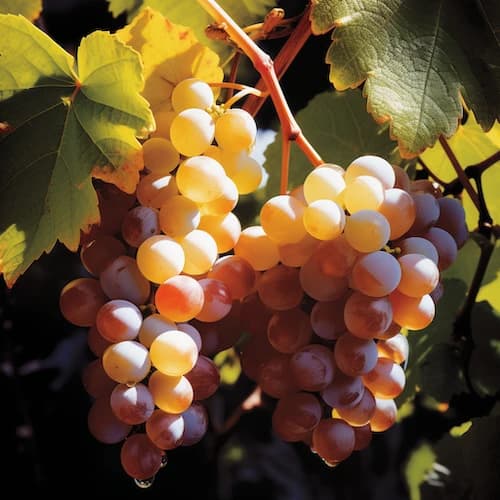
Genetic studies confirm that Gewürztraminer is a mutation of Roter Traminer, which in turn descends from Weißer Traminer. The pink to copper-coloured berries are the visible sign of this genetic peculiarity and make the variety visually unmistakable as well.
From South Tyrol, the variety spread across Europe, but nowhere did it find conditions as ideal as in French Alsace. Since the 19th century, Alsace has become the undisputed world capital of Gewürztraminer. Today the variety is planted on around 3,000 hectares and counts among the four Grand Cru varieties of the region.
Germany cultivates Gewürztraminer mainly in the Pfalz and in Baden, where the variety covers around 1,000 hectares. Further significant growing regions are found in northern Italy (Alto Adige), Austria, New Zealand, Australia and California.
Viticulture & Terroir
Gewürztraminer places high demands on climate and soil. The variety prefers cool to temperate climates in which it can fully develop its aromatics. Sites that are too warm lead to a loss of acidity and can make the wine feel cumbersome. Regions that are too cold, on the other hand, prevent full ripening and thereby the development of the characteristic spice notes.
Alsace offers ideal conditions with its sheltered hillside sites at the foot of the Vosges. The calcareous soils and dry, sunny microclimate promote concentration and aromatic development. In particular, the Grand Cru sites on granite soils (such as the Rangen) or limestone formations (such as the Hengst) produce exceptional Gewürztraminers.
In Germany, the variety thrives especially on the shell-limestone soils of the Pfalz and the volcanic weathering soils of the Kaiserstuhl in Baden. These mineral-rich soils lend the wine additional complexity and a distinctive terroir character.
Cultivation is not without its challenges: Gewürztraminer tends toward irregular yields and is susceptible to powdery mildew. The grapes must be harvested at the optimal moment of ripeness – too early and the characteristic spice notes are absent; too late and the wine loses its freshness. Many top producers practise hand harvesting with selection to pick only perfectly ripe berries.
Wine Styles & Variants
Gewürztraminer is produced in various styles, each emphasising different facets of the variety:
Dry Gewürztraminer is the classic Alsatian variant. With a maximum of 9 grams of residual sugar per litre, it presents itself as spicy-elegant and is an outstanding food companion. German growers are increasingly vinifying dry variants as well, which benefit from cooler climates to show a better acid structure.
Off-dry and semi-sweet Gewürztraminers emphasise the fruity components and are particularly approachable. With their discreet residual sweetness they pair perfectly with Asian cuisine and spiced dishes.
Vendanges Tardives (late harvest) from Alsace are concentrated, usually nobly sweet wines from overripe grapes. They develop intense honey and dried-fruit notes and can age for decades.
Sélection de Grains Nobles (berry selection) are produced from botrytised grapes affected by noble rot. These rare and precious wines belong among the sweetest and most complex dessert wines in the world.
As a cuvée partner, Gewürztraminer is rather seldom found due to its dominant character. In some regions it is blended with Riesling or Pinot Blanc to achieve better balance.
Typical Aromas
Primary Aromas (from the grape)
Rose: The leitmotif of Gewürztraminer. Intense rose blossom notes dominate the bouquet and recall a stroll through a blooming rose garden. In cooler sites the rose aroma appears fresher and more elegant; in warm regions it can seem almost perfumed.
Lychee: The exotic fruit is the second hallmark of the variety. Fresh and sweet at once, it lends the wine its characteristic exoticism. Particularly pronounced in wines from Alsace and South Tyrol.
Peach: Juicy peach notes, often combined with apricot, appear especially with fully ripe grapes. In off-dry variants, the stone fruit comes through particularly clearly.
Ginger: Spicy ginger notes are the namesake of "Gewürz"-Traminer. They lend the wine its piquant quality and make it the perfect partner for spiced cuisine. In older wines the ginger character becomes more intense and complex.
Orange-Blossom: Delicate orange blossom notes complement the floral spectrum and add a lightly bitter, fragrant component.
Secondary Aromas (from winemaking)
Honey: Through spontaneous fermentation and extended lees ageing, honeyed tones develop that add further fullness and complexity to the wine. Particularly pronounced in Vendanges Tardives.
Brioche: Ageing on the fine lees (sur lie) can produce buttery, yeasty notes that make the wine creamier and more multi-layered.
Tertiary Aromas (from ageing)
Beeswax: With increasing age, high-quality Gewürztraminers develop beeswax notes that recall honeycombs and lend the wine a waxy, almost oily texture.
Dried Fig: Older, nobly sweet Gewürztraminers show intense fig compote and dried-fruit notes.
Potpourri: The rose aroma transforms over time into dried petals and potpourri – complex, spicy and multi-layered.
Gewürztraminer is generally very approachable when young, but high-quality dry wines and especially late-harvest styles can comfortably age for 10–15 years. Sélection de Grains Nobles are even capable of ageing for several decades, developing a fascinating complexity in the process.
Food Pairing
Perfect Combinations
Asian cuisine: Gewürztraminer is the ideal partner for Thai, Vietnamese and Chinese dishes. The spicy aromas and moderate sweetness of off-dry variants pair perfectly with coconut milk, chilli, ginger and lemongrass. A classic pairing is roast duck with hoisin sauce or a red Thai curry – the residual sweetness tempers the heat while the spice notes of the wine complement the complex flavours of the food.
Alsatian specialities: In its homeland, Gewürztraminer is traditionally served with Munster cheese – an intense washed-rind soft cheese. The piquant character of the cheese and the spicy aromatics of the wine create a surprisingly harmonious combination. Gewürztraminer is also a classic with tarte flambée with onions and bacon or with choucroute (sauerkraut with sausage).
Foie gras: The delicacy from Alsace demands a wine with personality. Gewürztraminer Vendanges Tardives offers the necessary sweetness and complexity to stand up to the rich goose liver. The spicy and honeyed notes create a luxurious flavour symphony.
Indian cuisine: Tandoori dishes, curries with coconut milk and spiced lentil dishes (dhal) benefit from the aromatics of Gewürztraminer. An off-dry wine from the Pfalz harmonises wonderfully with medium-spiced curries and brings the multi-layered spices to the fore without being overwhelmed by the heat.
Conclusion
Gewürztraminer is not simply a wine – it is an experience. Its unmistakable aromatics make it the perfect companion for adventurous wine lovers who seek the extraordinary. Whether as a dry food pairing with exotic cuisine or as a nobly sweet rarity with dessert, Gewürztraminer always leaves a lasting impression.