




Introduction
Dornfelder is Germany's answer to the great red wines of the world – dark, powerful and surprisingly versatile. In less than 70 years, this young variety has evolved from a breeding success into Germany's most popular red grape, proving impressively that German winemakers are capable of far more than just Riesling. With its deep-dark colour, soft tannins and full-bodied character, Dornfelder is winning over the hearts of German wine lovers while also making waves internationally.
Flavour Profile & Characteristics
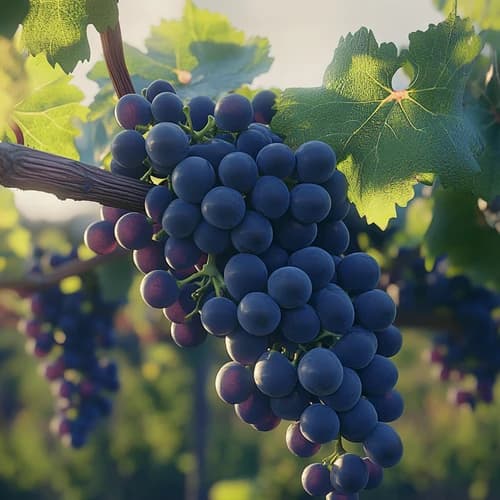
Dornfelder captivates with a powerful, fruit-driven character that sets it apart from many classic German red wines. In the glass it presents an impressive deep red to purple – a colour intensity rarely found in German reds. On the nose it treats you to juicy aromas of black cherry, ripe blackberry and plum, often accompanied by a hint of dark chocolate.
On the palate, Dornfelder is full-bodied and velvety. The tannins are present but pleasantly soft and well-integrated – not as firm as a Cabernet Sauvignon, yet noticeably more structured than a Spätburgunder. The acidity is moderate and harmoniously balanced, giving the wine an accessible, rounded structure. Depending on how it is aged, Dornfelder can reveal very different facets: fresh, fruit-forward versions matured in stainless steel are lively and uncomplicated, while barrique-aged variants develop additional notes of vanilla, coffee and spicy roasted nuances.
As it ages, a high-quality Dornfelder develops further complexity. The fresh fruit aromas step back, making room for spicier, earthier notes. The tannins become even more velvety and the wine gains depth. Well-made barrique Dornfelders can age effortlessly for 5–8 years, developing an impressive multi-layered quality that makes them serious alternatives to international red wines.
Origin & History
The story of Dornfelder is relatively recent and perfectly documented. The variety was bred in 1955 by August Herold at the State Teaching and Research Institute for Viticulture and Horticulture in Weinsberg. Herold crossed the varieties Helfensteiner (itself a cross of Frühburgunder and Trollinger) and Heroldrebe (a cross of Portugieser and Lemberger) in order to create a colour-intensive, high-yielding red variety suited to the German climate.
The variety was named after Immanuel Dornfeld, the founder of the Weinsberg viticultural school. What began as an attempt to make German red wines more colour-intense and structured developed into a remarkable success story. Commercial cultivation began in the 1970s and 1980s, and Dornfelder quickly conquered German vineyards.
Today, with over 7,700 hectares under vine, Dornfelder is the second most important red variety in Germany after Spätburgunder. The main growing regions are the Pfalz (over 2,700 ha), Rheinhessen (over 2,500 ha) and Württemberg (approx. 800 ha). Smaller but qualitatively significant plantings are also found in Baden, the Nahe and Franconia.
Viticulture & Terroir
Dornfelder is a relatively undemanding variety that adapts well to various sites. It prefers warm to temperate climates and thrives under German viticultural conditions. The variety buds relatively late, protecting it against late frosts, and ripens mid-early to late – ideal for the longer growing seasons in the more southerly German wine regions.
In terms of soils, Dornfelder is flexible. It flourishes on loess and clay soils as well as on calcareous subsoil. Particularly good results come from deep, well-drained soils with a good water supply. In the Pfalz it benefits from warm, sun-drenched sites, while in Rheinhessen it appreciates the fertile loess soils. Württemberg Dornfelders from Keuper soils often develop a distinctive mineral quality.
Yields must be strictly controlled to produce high-quality wines. Dornfelder tends toward high yields – economically attractive, but potentially at the expense of concentration and complexity. Ambitious growers reduce yields through summer thinning to 60–80 hectolitres per hectare in order to produce more concentrated, age-worthy wines.
The most important growing regions for Dornfelder are the Pfalz with its warm, sheltered sites along the German Wine Route, Rheinhessen as Germany's largest wine region with ideal conditions for fully ripe grapes, and Württemberg, where the variety has its home and often grows in traditionally small, parcelled vineyards.
Wine Styles & Variants
Dornfelder offers a remarkable stylistic range, from light, fruity everyday wines to complex, age-worthy top growths.
Classic Dornfelder is aged in stainless steel or large wooden barrels, emphasising the variety's fresh fruitiness. These wines are accessible, uncomplicated and perfect for daily enjoyment. They show clear berry fruit, moderate tannins and a pleasant freshness.
Barrique Dornfelder represents the ambitious side of the variety. Maturation in new or used oak barrels lends the wine additional complexity, structure and ageing potential. Aromas of vanilla, chocolate, coffee and roasted notes complement the fruit, and the tannins are integrated even more velvety. These wines can age comfortably for 5–10 years.
Dornfelder Weißherbst is a rarity – a rosé wine from Dornfelder grapes where the juice has only brief skin contact. The result is a boldly coloured, fruity rosé with more structure than typical German rosé wines.
In cuvées, Dornfelder frequently plays the role of colour-giver and structural contributor. Popular combinations include Dornfelder with Spätburgunder (for more elegance), with Portugieser (for more fruit and drinkability) or with international varieties such as Merlot or Cabernet Sauvignon for complex, internationally oriented red wines.
Typical Aromas
Primary Aromas (from the grape)
Black cherry is the leitmotif of Dornfelder – juicy, ripe and intense. In cooler years or at earlier harvest, the cherry aromas may lean toward sour cherry, while warm vintages produce deep-black, sweetly ripe cherry notes.
Blackberry complements the cherry fruit with a slightly wild, juicy quality. This aroma dominates particularly in fully ripe grapes from warm sites and gives the wine its characteristic berry character.
Plum appears especially with fully ripe grapes, lending the wine a certain sweetness and roundness on the palate. In very warm years, hints of overripe or dried plum may also appear.
Cassis (blackcurrant) occurs primarily in concentrated wines from yield-reduced vineyards and adds extra spice and depth to Dornfelder.
Depending on terroir, earthy notes and a certain minerality can also come through, especially in wines from shell-limestone or Keuper soils in Württemberg.
Secondary Aromas (from winemaking)
Vanilla and caramel develop in wines aged in barrique. The intensity depends on the degree of toasting and the age of the barrels – new barrels with heavy toast deliver pronounced vanilla aromas, while used barrels are more subtle.
Chocolate and cocoa arise from the combination of fruit concentration and wood contact. These aromas lend the wine additional complexity and a certain sweetness on the palate.
Coffee and roasted notes are found in wines with longer barrique ageing and give Dornfelder an international, powerful stylistic identity.
Tertiary Aromas (from ageing)
Dornfelder is certainly age-worthy, especially when sourced from yield-reduced vineyards and aged in barrique. After 3–5 years of bottle ageing, leather and tobacco notes develop, lending the wine a certain maturity and spice.
Dried fruits such as prunes and dried cherries take the place of the fresh primary fruit, lending the wine more complexity and depth.
Earthy and mushroom-like notes can develop with longer cellaring and give the wine additional complexity. Well-made barrique Dornfelders can age for 8–10 years, with the finest examples maintaining their quality even beyond that.
Food Pairing
Perfect Combinations
Beef roast with red cabbage and dumplings is the classic German combination for Dornfelder. The fruity aromas of the wine harmonise perfectly with the sweetness of the red cabbage, while the tannins handle the fat of the roast admirably. A barrique Dornfelder with its roasted notes beautifully underscores the crust of the roast.
Game dishes such as venison ragout or fillet of deer benefit from the power and structure of a good Dornfelder. The berry fruit of the wine complements the typical game aromas, and the velvety tannins can stand up to the intense game sauce. Cranberries or a plum sauce pair perfectly alongside – they mirror the fruity aromas of the wine.
Aged cheese, especially semi-firm to firm varieties such as aged Gouda, Bergkäse or sharp Cheddar, harmonises excellently with Dornfelder. The fruit of the wine tempers the saltiness of the cheese, while the tannins balance the fattiness.
Grilled or braised pork with spicy marinades or BBQ sauces is a feast with Dornfelder. The sweetness of many BBQ sauces is echoed by the wine's fruit aromas, while the roasted notes from the grill or barrique form a wonderful bridge. A fruit-forward, uncomplicated Dornfelder is perfect for a summer barbecue, while an aged barrique Dornfelder elevates a braised pork fillet with plums.