




Introduction
Airén is the great unknown among white grape varieties -- and that despite being one of the most widely planted grapes in the world. In the endless plains of La Mancha, the heartland of Spain, this robust variety covers vast areas and delivers uncomplicated, fresh white wines for daily enjoyment. What makes Airén so special? It thrives where other vines would have long given up -- in extreme heat and drought -- and transforms these harsh conditions into refreshing, approachable wines that perfectly suit the Spanish way of life.
Flavor Profile & Characteristics
Airén is the epitome of an uncomplicated, approachable white wine. In the glass, the grape typically presents itself pale straw-yellow, with a restrained yet pleasantly fresh aromatic profile. The nose shows subtle notes of green apples, pear and delicate citrus hints, often accompanied by a light herbal freshness.
On the palate, Airén is above all one thing: refreshing. The acidity ranges from low to moderate, making the wine soft and easy to drink. The body is slim and light, without great complexity -- but that is precisely the strength of this grape. Airén makes no grand promises but reliably delivers clean, clear white wines that are perfect for warm days.
The aromatics are deliberately neutral, with a short to medium finish. This makes Airén an excellent food companion, as the wine does not dominate with bold flavors of its own. In cooler vintages or with lower yields, the grape can develop somewhat more structure and concentration, but always remains in the realm of light, uncomplicated drinking pleasure.
Modern cellar techniques have significantly improved Airén in recent decades. Once dismissed as neutral and flat, temperature-controlled fermentation and early harvesting now produce fresher, more aromatic versions that present the grape in a new light.
Origin & History
Airén has its roots deeply anchored in Spanish wine history. The grape originally comes from central Spain and has been cultivated in the La Mancha region for centuries. Historical records suggest that Airén was already grown during Moorish times in Spain, though the exact origin remains shrouded in history.
The grape may derive its name from the Spanish word "aire" (air) -- possibly a reference to the loose, airy clusters or the well-ventilated, vast plains of its homeland. Another theory connects the name to the region's Arabic heritage.
For centuries, Airén was the workhorse grape of Spanish vintners in La Mancha. It reliably delivered high yields, survived drought periods and extreme temperatures, making it perfectly adapted to the harsh conditions of the central Spanish plateau. For a long time, much of the harvest was used for brandy production or as a blending wine.
Today, Airén continues to dominate the vineyards of La Mancha, although total acreage has declined in recent decades. Nevertheless, it remains one of Spain's most important grape varieties and one of the world's most widely planted white grapes -- a quiet giant of the wine world that rarely appears in the international spotlight.
Cultivation & Terroir
Airén is a grape that seems made for extremes. Its true strength emerges on the Meseta Central, the central Spanish plateau, where temperatures regularly climb above 40°C in summer and rain is a rarity. Here, on barren, calcareous soils at elevations between 600 and 700 meters, Airén thrives like no other grape.
The vines are exceptionally drought-resistant, with deep-reaching root systems that find water even in the driest summers. The traditional cultivation method in La Mancha uses extremely low planting densities -- often only 1,000 to 1,500 vines per hectare, compared to 4,000 to 10,000 in other wine regions. This so-called "marco real" or "en vaso" training gives each vine enough space to survive with limited water resources.
The calcareous, nutrient-poor soils of La Mancha are ideal for Airén. They force the vine to focus on essentials and prevent excessive leaf growth. The large temperature differences between day and night on the plateau help preserve a certain freshness in the grapes despite the heat.
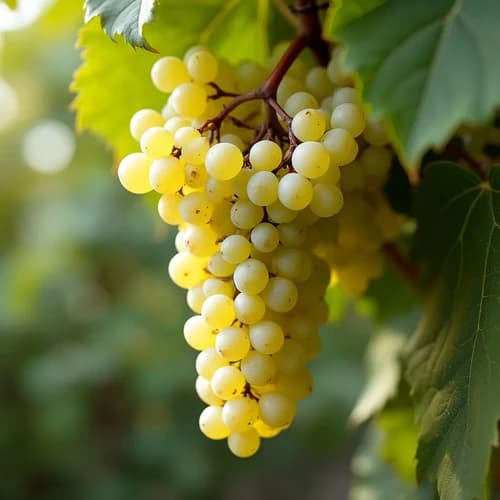
Airén is a late-ripening variety with large, loose clusters that are well-ventilated -- a natural protection against fungal diseases in the dry climate. The yields can be extremely high, making the grape economically attractive, though at the expense of concentration and quality. Modern quality producers therefore rely on yield reduction and earlier harvesting to produce fresher, more aromatic wines.
Outside Spain, Airén is hardly found -- isolated plantings exist in North Africa and South America, but the grape remains closely tied to its Castilian homeland.
Wine Styles & Variants
Airén shows itself in various wine styles, ranging from simple to surprisingly interesting:
Classic young wine: The most common variant is a young, fresh white wine that should be drunk within a year of harvest. These wines are aged in stainless steel tanks with temperature-controlled fermentation, thus preserving primary fruit aromas and freshness. They are uncomplicated, light and perfect for daily enjoyment.
Brandy base: A significant portion of the Airén harvest goes into the production of Spanish brandy, particularly in the region around Valdepeñas and Tomelloso. The neutral base wines are excellently suited for distillation and yield a clean, mild brandy.
Modern premium versions: Some innovative winemakers experiment with Airén and create more complex versions through late harvest, hand-picking, reduced yield or even brief contact with oak. These wines show more body, texture and can develop surprising aging potential.
Blending partner: Airén is frequently blended with other grape varieties to add structure and freshness. Typical partners include Macabeo, Sauvignon Blanc or international varieties like Chardonnay. In these blends, Airén contributes lightness and drinkability.
The modern trend is moving away from mass production toward more quality-oriented viticulture, which is slowly but surely bringing Airén out of its shadow existence.
Typical Aromas
Primary Aromas (from the grape)
Green apple: The defining primary aroma of Airén is fresh green apple -- crisp, slightly tart and refreshing. In cooler sites or with early harvesting, this aroma is more prominent and gives the wine a youthful sprightliness.
Pear: Ripe pear notes, often with a slightly watery quality, are typical for Airén. They are softer than the apple notes and dominate especially with fully ripe harvesting.
Citrus: Subtle citrus notes, usually lemon zest or light lime, bring an additional dimension of freshness. These aromas are subtle and supportive, not dominant.
Melon: In warmer vintages, Airén develops a light melon note -- often honeydew -- that gives the wine a gentle, slightly sweet fruitiness without the wine actually being sweet.
Fresh herbs: A fine, herbal nuance reminiscent of Mediterranean wild herbs or freshly cut grass. This note gives Airén its characteristic lightness and fits perfectly with the terroir of the Spanish plateau.
The primary aromas of Airén vary depending on terroir and aging: at higher elevations and in cooler microclimates, more green notes appear, while warmer sites produce riper fruit aromas.
Secondary Aromas (from winemaking)
Yeast notes: With some quality-conscious producers who practice sur-lie aging (aging on the fine lees), Airén develops a slightly creamy, yeasty note that gives the wine more texture and complexity.
Buttery notes: Modern vinification techniques, particularly in premium versions with malolactic fermentation, can produce subtle butter or brioche notes that fill out the slim body.
Tertiary Aromas (from aging)
Airén is not a grape designed for long aging. The vast majority of wines should be drunk young and fresh, within one to two years of harvest. Freshness and subtle fruit aromas are its strength -- with increasing age, Airén loses character and becomes flat.
Limited aging potential: In rare cases, with very quality-oriented producers using low yields and careful aging, Airén wines can age two to three years and develop notes of honey and dried fruits. These are absolute exceptions, however -- the rule is to enjoy Airén young.
The lack of aging ability is not a flaw but part of this grape's character: Airén is the perfect summer wine for the moment, not for the cellar.
Food Pairing
Perfect Combinations
Tapas and seafood: Airén is tailor-made for Spanish tapas culture. Its light, neutral structure makes it the ideal companion for grilled prawns, Pulpo a la Gallega, fried calamari or Boquerones (marinated anchovies). The subtle acidity cuts through the oiliness of fried foods without overpowering delicate sea flavors.
Paella and rice dishes: A classic pairing is Airén with Valencian paella or other Spanish rice dishes. The wine's lightness harmonizes perfectly with saffron, seafood and starchy rice, while the fresh herbal notes complement Mediterranean seasoning.
Light summer salads: On hot days, Airén is the perfect partner for salads with goat cheese, green asparagus, tomatoes and olive oil. The green apple and herbal notes in the wine mirror the freshness of the salad, and the slim body is not overwhelmed by crisp textures.
Gazpacho and cold soups: The refreshing quality of Airén makes it the ideal companion for gazpacho, salmorejo or other cold Spanish soups. The tomato acidity, olive oil and garlic heat find a perfect contrast in the wine's lightness.
General rule: Airén works best with simple, fresh dishes without heavy sauces or intense spices. Serve it well chilled (8-10°C) and enjoy it for what it is: an uncomplicated, refreshing companion for relaxed moments.