



Introduction
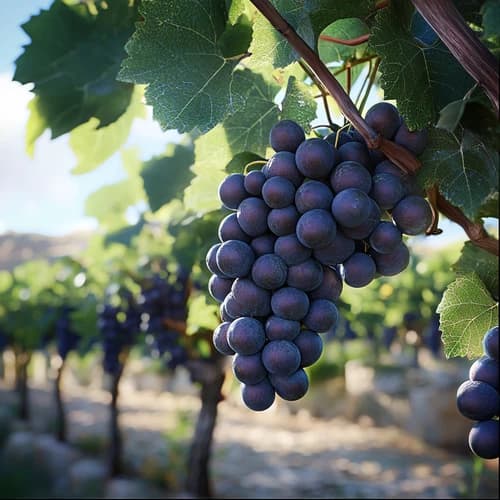
Grenache – known as Garnacha in its Spanish homeland and as Cannonau on Sardinia – is one of the world's most widely planted red grape varieties and the unsung hero behind many great Mediterranean red wines. This sun-drenched variety produces full-bodied, fruit-forward wines with velvety tannins, soft acidity and a characteristic touch of herbs and spice. From the rugged slate slopes of the Priorat to the pebble soils of Châteauneuf-du-Pape and the vineyards of southern Australia, Grenache shows its true colours everywhere: generous, warming and shamelessly drinkable.
Flavour Profile & Characteristics
Grenache is the embodiment of Mediterranean joie de vivre in a glass. The variety produces wines with generous, sweet fruit that recalls freshly picked red cherries, juicy strawberries and ripe raspberries. These are joined by spicy notes of black pepper, dried herbs such as thyme and rosemary, and a subtle hint of white pepper and liquorice. The body is full and powerful, the tannins soft and inviting – Grenache is not a wine that wants to impress through strictness, but through generosity and drinkability.
The alcohol content frequently falls between 14 and 16% by volume, lending the wine a certain warmth and fullness without feeling heavy or intrusive. The acidity is rather restrained, making Grenache an accessible, soft wine that also pleases beginners.
Depending on climate and terroir, Grenache shows different facets: in cooler sites or at higher yields, lighter, fruitier wines emerge with more freshness and elegance. In hot, dry regions and from old vines with low yields, highly concentrated, almost syrupy wines arise with intense fruit concentration and complex spice aromas. These powerful versions can develop considerable ageing potential and, after a few years in the cellar, form tertiary notes of leather, tobacco and forest floor.
Origin & History
The roots of Grenache lie in north-eastern Spain, more specifically in the region of Aragon. From there the variety spread first to Catalonia and later across the Pyrenees into the southern Rhône, to Sardinia (where it is known as Cannonau) and eventually to other Mediterranean regions. The precise history of its origin remains obscure, but DNA analyses point to a very ancient cultivated vine that may have been systematically grown as far back as the Middle Ages.
Over the centuries, Garnacha became Spain's most important red variety and shaped the character of numerous wine regions. It plays a central role especially in Rioja, Priorat, Campo de Borja and Navarra. In the 19th century the variety arrived in France, where it became the backbone of legendary appellations in the southern Rhône such as Châteauneuf-du-Pape, Gigondas and Côtes du Rhône. Grenache also found its way to Australia, California and South Africa, where it enjoys growing popularity.
Today Grenache ranks among the five most widely planted varieties in the world. Spain remains by far the largest producer, followed by France, Italy and emerging regions in the New World.
Viticulture & Terroir
Grenache is a robust, drought-resistant variety that prefers hot, dry climates. It ripens late and requires plenty of sunshine to develop its characteristic fruit richness and high alcohol levels. In sites that are too cool or damp, ripeness is often incomplete and the wines taste thin and green.
The vine is most at home on poor, well-drained soils. Slate soils as in the Priorat, pebbles as in Châteauneuf-du-Pape, or sandy clay as in parts of Australia deliver outstanding results. On overly fertile soils Grenache tends to over-crop, leading to diluted, characterless wines. Old vines with naturally limited yields produce the most concentrated and complex wines.
Important growing areas include Priorat, Calatayud, Campo de Borja, Terra Alta and Rioja in Spain. In France, Grenache dominates the southern Rhône, Languedoc-Roussillon and Corsica. It is also successfully cultivated in Sardinia (Cannonau), Australia (Barossa Valley, McLaren Vale), California (Paso Robles, Central Coast) and South Africa.
Wine Styles & Variants
Grenache is extremely versatile and shines both as a solo performer and as a cuvée partner. In its Spanish homeland it is often vinified as a single varietal, with wines ranging from youthfully fruity everyday bottles to powerful, age-worthy growths from old vines. Old Garnacha vines in regions such as Calatayud or Priorat produce wines of impressive concentration and complexity.
In the southern Rhône, Grenache is the main component of the famous GSM blends (Grenache, Syrah, Mourvèdre), where it contributes the fruit and fullness while Syrah adds structure and spice and Mourvèdre brings tannin and ageing potential. Châteauneuf-du-Pape, where up to 13 varieties are permitted, often consists of 60–80% Grenache. In Australia, GSM blends also enjoy great popularity and stand for powerful, characterful red wines.
Beyond reds, there are also rosé wines from Grenache, particularly prized in southern France (Tavel, Côtes de Provence). These rosés show intense strawberry and cherry aromas with a pleasant spiciness. Rarer but highly interesting are sweet dessert wines from Grenache, such as the Vins Doux Naturels (Banyuls, Maury) from Roussillon, where fermentation is halted by the addition of alcohol.
Ageing frequently takes place in large old oak barrels or concrete tanks to preserve the primary fruit. Some top wines also age in barriques, adding extra spice and structure, though Grenache runs the risk of being overwhelmed by too much new oak.
Typical Aromas
Primary Aromas (from the grape)
Red cherry: The leitmotif of Grenache – juicy, sweet cherry aromas characterise almost every wine and give it its inviting, fruit-forward quality. In hot sites the fruit tends more toward black cherry and cherry jam.
Strawberry & raspberry: Fresh red berry fruit lends the wine liveliness and drinkability. These bright, sweet fruit aromas dominate especially in rosés and younger red wines.
Black pepper & spices: A characteristic spice profile with notes of black and white pepper, anise and a hint of cinnamon. These spicy components give Grenache depth and Mediterranean complexity.
Dried herbs: Typical for wines from hot regions are hints of dried thyme, rosemary, lavender and garrigue – the fragrant scrubland of Provence that finds its way into every sip.
Secondary Aromas (from winemaking)
Sweet spices & vanilla: With oak ageing, aromas of vanilla, cinnamon and sweet baked goods develop. These lend the wine additional complexity but should not dominate the primary fruit.
Cocoa & chocolate: High-quality Grenache often shows notes of dark chocolate or cocoa, especially with longer maceration and lees ageing.
Tertiary Aromas (from ageing)
Leather & tobacco: With increasing age, powerful Grenache wines develop earthy, animal-like notes of fine leather and sweet tobacco. These tertiary aromas harmonise beautifully with the still-present fruit.
Forest floor & mushrooms: Older vintages can show undergrowth aromas, moist earth and truffle, lending the wine a rustic, Mediterranean depth.
Dried fruits: The fresh cherry transforms over time into cherry jam; strawberries become dried figs – the fruit concentrates and caramelises without losing its sweetness.
Grenache from old vines and high-quality sites can certainly age for 10–15 years and beyond, with the finest examples preserving a remarkable balance between fruit, spice and complexity. Simpler, fruit-driven versions, on the other hand, are made for early enjoyment and should be drunk young.
Food Pairing
Perfect Combinations
Braised lamb with herbs of Provence: The classic combination par excellence. The juicy tannins and spicy herbal notes of Grenache harmonise perfectly with the tenderness of braised lamb. A leg of lamb with rosemary and garlic or a Moroccan lamb tagine with spices and dried fruits are ideal partners.
Mediterranean vegetable dishes & ratatouille: The fruit-driven richness of Grenache pairs wonderfully with roasted aubergine, peppers, courgettes and tomatoes. A classic ratatouille or grilled vegetables with olive oil and fresh herbs underscores the wine's southern aromas.
Grilled meats & churrasco: Powerful Grenache from old vines pairs excellently with robustly seasoned grilled meats. Argentinian beef steak, Spanish chorizo or Provençal herb sausages bring out the spicy sides of the variety.
Hearty stews & cassoulet: The soft tannins and moderate acidity of Grenache make it the ideal companion for rich braises such as cassoulet, ossobuco or Spanish cocido. The wine's fruit tempers the heaviness of the dish while its spice complements the food.
Grenache is a variety that impresses with its generosity, warmth and Mediterranean soul. It shows that great wines do not always need to be strict and tannin-driven – sometimes pure drinkability combined with character and personality is enough.