




Introduction
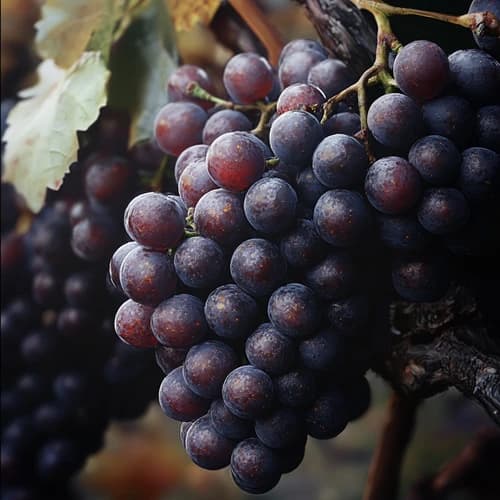
Tempranillo is the undisputed queen of Spanish grape varieties and the heartbeat of world-class wines from Rioja and Ribera del Duero. This versatile red grape produces elegant, fruit-forward wines with spicy complexity, ranging from youthfully fresh Jóvenes to age-worthy Gran Reservas with decades of maturing potential. What makes Tempranillo so special is its ability to produce both accessible everyday wines and complex, world-class reds – always with a characteristic balance of juicy fruit, supple tannins and a hint of Mediterranean spice.
Flavour Profile & Character
Tempranillo presents a balanced, elegant profile that sets it apart from many other powerful reds. In the glass, young Tempranillos show a bright ruby colour with violet reflections, while aged examples develop a deep garnet with orange-tinged rims.
The typical flavour is defined by ripe red fruits – above all black cherries and plums dominate, accompanied by notes of red berries. Acidity is moderate to lively and provides freshness without dominating. The tannins are present yet supple, almost velvety in texture, making Tempranillo very approachable.
In cooler climates such as Rioja Alta, more elegant wines emerge with higher acidity, pronounced cherry notes and subtler fruit expression. In warmer regions like Ribera del Duero or Toro, Tempranillo develops more power, concentration and darker fruit aromas with more robust tannins.
Oak ageing plays a central role in the character of Tempranillo. While young Jóvenes without oak contact showcase the pure, fruity side, Crianzas, Reservas and Gran Reservas develop complex aromas of vanilla, spices, leather and tobacco through barrel maturation. With increasing age, premium Tempranillos develop a fascinating tertiary complexity featuring notes of dried herbs, forest floor and mushrooms, while the fruit becomes more elegant and subtle.
Origin & History
Tempranillo has its roots in northern Spain, though its precise origin is debated among researchers. DNA analyses suggest it may descend from the ancient variety Albillo Mayor. The name "Tempranillo" derives from the Spanish word "temprano" (early) and refers to the grape's early ripening – typically several weeks before other red varieties of the region.
Historical records confirm the cultivation of Tempranillo in Rioja as far back as the 13th century. Cistercian monks played an important role in spreading and cultivating the variety along the Camino de Santiago pilgrimage route. In the 19th century, when phylloxera devastated French vineyards, French winemakers settled in Rioja and brought their winemaking techniques with them – in particular barrique ageing, which is today inseparably linked with Tempranillo.
Today Tempranillo is Spain's most widely planted red variety with over 200,000 hectares of vineyard. The most important growing regions are Rioja, Ribera del Duero, Toro, La Mancha and Navarra. Under various names it is also known in other regions: as Tinto Fino or Tinto del País in Ribera del Duero, as Tinta de Toro in Toro and as Ull de Llebre in Catalonia.
Cultivation & Terroir
Tempranillo is a relatively demanding variety that prefers continental climates with hot days and cool nights. These temperature fluctuations are decisive in maintaining the balance between sugar ripeness and acidity. Early ripening makes it less vulnerable to autumn frosts but more susceptible to spring frosts.
The finest Tempranillo wines emerge from calcareous, clay-rich soils with good drainage at elevations between 400 and 800 metres. In Rioja it thrives particularly well on iron-rich clay soils, while in Ribera del Duero the combination of limestone and sand creates ideal conditions. Altitude is crucial: it moderates temperatures and extends the growing season, leading to more complex aromas.
The three sub-zones of Rioja differ markedly: Rioja Alta in the west offers a cooler climate and produces elegant, acidity-driven wines. Rioja Alavesa on the northern bank of the Ebro yields aromatic, fine-grained wines. The warmer Rioja Baja in the east produces more powerful, alcohol-rich wines.
Ribera del Duero sits on a high plateau with extreme temperature swings and yields concentrated, powerful Tempranillos with intense fruit and robust structure. The Toro region south-west of Ribera del Duero is even warmer and produces the most powerful Tempranillo interpretations with high alcohol and extraction.
Outside Spain, Tempranillo is successfully grown in Portugal (as Tinta Roriz in the Douro and Aragonez in the Alentejo), Argentina, California and Australia, though it rarely reaches the elegance of the Spanish classics.
Wine Styles & Variants
The style spectrum of Tempranillo is extraordinarily wide and is defined in Spain by a classification system based on ageing time:
Joven (young): Wines with little or no oak contact that come to market in the year following the harvest. They display the fruity, lively side of Tempranillo with aromas of red cherries, plums and fresh herbs. These wines are accessible, refreshing and should be drunk young.
Crianza: Minimum two years of ageing, including at least one year in oak. These wines unite youthful fruit with the first signs of oak spice – vanilla, coconut and a hint of spices. They are the all-rounders among Tempranillos: complex enough for special occasions, yet accessible enough for everyday enjoyment.
Reserva: Minimum three years of ageing, including at least one year in barrel. Reservas show considerably more complexity with secondary and nascent tertiary aromas. The fruit is more concentrated, the tannins are more softly integrated, and notes of leather, tobacco and dried herbs come to the fore.
Gran Reserva: Produced only in exceptional vintages, with at least five years of ageing (including two years in barrel). These wines represent the pinnacle of the Tempranillo art: complex, layered, with perfectly integrated oak and a bouquet of dried fruits, leather, undergrowth and fine spices.
In modern winemaking, many producers experiment with different ageing methods: French versus American oak (the latter yields more intense vanilla and coconut aromas), new versus used barrels, barriques versus larger foudres. Some producers also rely on spontaneous fermentation and minimal sulphur additions for a more authentic terroir expression.
Tempranillo is rarely bottled as a single variety but is frequently blended with other grapes: in Rioja classically with Garnacha (for fruit and alcohol), Graciano (for acidity and structure) and Mazuelo/Cariñena (for colour and tannin). In Ribera del Duero it is often blended with Cabernet Sauvignon, which adds additional structure and an international character.
Typical Aromas
Primary Aromas (from the grape)
Black cherry: The most characteristic aroma of Tempranillo – juicy, ripe, sometimes with a hint of bitterness on the finish. In cooler sites it tends towards pale cherry, in warmer ones towards darker, more concentrated cherry tones.
Plum: Dark, ripe plums dominate particularly in warmer regions such as Toro or Ribera del Duero. With increasing maturity these notes can move towards dried plums (prunes).
Dried herbs: A Mediterranean spiciness with notes of thyme, rosemary and dried oregano gives Tempranillo its characteristic complexity. These herb notes are especially pronounced in wines from higher elevations.
Red berries: Strawberry and raspberry emerge in younger, fresher styles, particularly in Jóvenes and lightly aged Crianzas from cooler climates.
Violet: A subtle but important floral element, especially perceptible in elegant Rioja wines, that contributes finesse.
Blackcurrant: In more powerful versions, especially when Tempranillo is blended with Cabernet Sauvignon, cassis notes emerge.
Secondary Aromas (through winemaking)
Vanilla: The most prominent aroma from oak barrel ageing, particularly intense when American oak is used. It gives the wine a sweet, creamy note.
Coconut & dill: Also typical of American oak, these aromas are clearly perceptible in traditional Rioja wines and form part of their identity.
Chocolate & cocoa: Through interaction with toasted oak, fine roasted aromas develop that recall dark chocolate and cocoa powder.
Spices: Clove, cinnamon, nutmeg and white pepper develop through barrel maturation and lend the wine spice and complexity.
Tertiary Aromas (through ageing)
Leather: One of the classic maturation aromas of Tempranillo – supple, fine leather is a sign of well-aged Reservas and Gran Reservas.
Tobacco: Not smoky, but a sweet, aromatic tobacco note that often appears in combination with cedarwood.
Mushrooms & undergrowth: In older wines, earthy, forest-floor notes develop that recall porcini mushrooms, damp leaves and humus.
Tempranillo shows different ageing potential depending on style: Jóvenes should be drunk within 1–2 years, Crianzas last 5–8 years, Reservas 10–15 years, and exceptional Gran Reservas can mature for 20–30 years or longer. The finest examples develop a unique elegance and complexity over time, as the primary fruit recedes and makes way for fascinating tertiary notes.
Food Pairing
Perfect Combinations
Herb-crusted rack of lamb: The elegant tannins and spicy notes of Tempranillo harmonise perfectly with the slightly fatty, aromatic lamb. A Crianza or young Reserva ideally complements the roasted aromas and Mediterranean herbs of the crust. The wine's moderate acidity cuts through the fat while its fruity cherry aromas underscore the sweetness of the meat.
Iberian ham (Jamón Ibérico) & aged Manchego: A classic of Spanish cuisine – the salty, nutty complexity of the ham and the spicy creaminess of aged Manchego find their perfect partner in a Gran Reserva. The wine's tertiary aromas of leather and undergrowth mirror the maturation notes of the cheese, while the silky tannins complement the texture.
Braised beef cheeks in red wine sauce: For robust, slow-braised dishes, a full-bodied Tempranillo from Ribera del Duero or Toro works superbly. The concentrated fruit aromas and powerful structure of the wine can keep pace with the intensity of the dish, while the spicy oak notes complement the sauce.
Tapas variety: A fruit-forward Crianza is the ideal companion for a mixed tapas platter with chorizo, patatas bravas, grilled mushrooms and marinated olives. The versatility of Tempranillo allows it to harmonise with different flavours and textures – from spicy-hot to earthy to salty-intense.
Tempranillo embodies the soul of Spanish wine: spirited yet elegant, powerful yet never heavy, rooted in tradition yet open to innovation. Whether you're looking for an accessible Crianza for everyday enjoyment or a complex Gran Reserva for special moments – Tempranillo offers a fascinating spectrum of wines that all share the characteristic style of this great grape variety.