


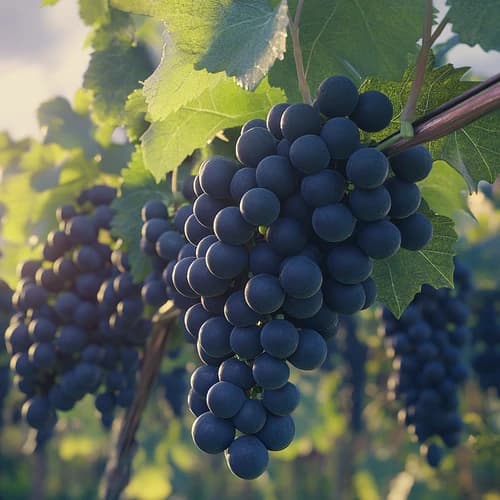


Schwarzriesling: The Underrated Grape with Great Charm
Schwarzriesling is one of those grape varieties that often stands in the shadow of its famous relatives — yet it has absolutely what it takes to be a star. In Germany it is known as Schwarzriesling or Müllerrebe, in France as Pinot Meunier, and in Champagne it is one of the three great Champagne grapes. This versatile variety delivers approachable, fruity red wines with charming lightness and plays a decisive role in the world of sparkling wines. With its soft tannins and early drinkability, Schwarzriesling is the perfect choice for those seeking uncomplicated but characterful wines.
At a Glance
- Identity: Mutation of Pinot Noir with downy leaves (hence "Meunier" = miller)
- Main growing regions: Champagne (France), Württemberg (Germany), Victoria (Australia)
- Style: Fruity red wines with soft tannins and lively acidity
- Champagne role: Provides approximately 30–40% of the grapes for Champagne and brings fruitiness and roundness
- Personality: Approachable, fruity, less complex than Pinot Noir, but with its own charm
- Aging potential: Best when young, but high-quality Champagnes can cellar for decades
Flavor Profile & Character
Schwarzriesling shows its most welcoming side: the wines are approachable, fruity, and pleasantly uncomplicated. In the glass, a typical medium ruby-red is presented, often with a slightly orange tinge in younger wines. On the palate, red fruit aromas dominate — juicy red apples, fresh strawberries, and ripe cherries perform a harmonious duet. The acidity is clearly present but never aggressive, lending the wine a refreshing vibrancy.
What particularly distinguishes Schwarzriesling is its soft, silky tannins. Compared to its famous relative Pinot Noir, Schwarzriesling shows itself noticeably gentler and less structured. This makes the wines accessible early and turns them into perfect everyday companions. The texture is pleasantly medium-weight — not too light, not too full, but exactly right for diverse occasions.
In cooler climates such as Champagne or Württemberg, Schwarzriesling develops a particularly lively acidity and shows floral notes — delicate rose petals join the red fruits. In warmer regions, the fruit aromas become more concentrated and the wines gain body, while remaining characteristically soft and approachable.
With age, Schwarzriesling wines develop a softer, rounder character. The fresh fruit aromas slowly transform into notes of dried fruits, while a subtle spiciness is added. Unlike Pinot Noir, Schwarzriesling is not made for long cellaring — most wines show their best side within the first 2–4 years after harvest.
Origin & History
Schwarzriesling is a natural mutation of Pinot Noir that most likely arose in France in the 16th or 17th century. The French name "Pinot Meunier" translates as "miller's Pinot" and refers to the white, downy underside of young leaves, which looks as if it has been dusted with flour — a characteristic distinguishing feature of this variety.
The homeland of Schwarzriesling is Champagne, where the variety dominates particularly in the Vallée de la Marne. For centuries, its ability to deliver reliable yields even in cooler years and to bud earlier than Pinot Noir has been valued here. This robustness made Schwarzriesling the most important grape for many Champagne producers, even if it has often stood in the shadow of Chardonnay and Pinot Noir in public perception.
The variety most likely reached Germany in the 19th century, where it found its second home particularly in Württemberg. Here it is traditionally called Schwarzriesling, even though it has nothing botanically in common with Riesling. In Württemberg a distinct tradition of growing Schwarzriesling for red wine developed, while in Champagne the grape is used primarily for sparkling wine.
Today Schwarzriesling is found on approximately 11,000 hectares worldwide, with Champagne clearly dominating with around 10,000 hectares. Smaller but significant plantings exist in Germany (approximately 2,500 hectares, mainly in Württemberg), Australia, and sporadically in other wine-producing countries.
Viticulture & Terroir
Schwarzriesling proves itself a robust and adaptable variety that copes particularly well with cooler climates. It buds earlier than Pinot Noir, which can pose a risk in frost-prone sites, but equally ripens earlier and can thus often outpace unfavorable autumn weather conditions. This combination of early budbreak and early ripening makes it ideal for regions with short growing seasons.
The variety prefers calcareous soils, as are typical in Champagne. In Württemberg too, Schwarzriesling thrives particularly well on shell limestone and Keuper marl. Good water supply is important, as the vines can quickly suffer under drought stress and the quality of the grapes can deteriorate. At the same time, waterlogging and excessively heavy soils should be avoided.
In Champagne, cultivation is concentrated in the Vallée de la Marne, where the variety occupies approximately half of the planted area. The cooler temperatures and chalky soils of this region provide ideal conditions for Schwarzriesling as a Champagne grape. The high acidity and moderate alcohol levels are perfect for sparkling wine production.
In Württemberg, Schwarzriesling is found mainly in sheltered sites in the Neckar Valley and its tributaries. Here the variety benefits from the milder climate and mineral soils. German producers appreciate the variety for its reliability and its ability to deliver attractive wines even in more difficult vintages.
Internationally, Schwarzriesling is slowly gaining significance, particularly in cooler regions of Australia such as the Yarra Valley or parts of California, where producers are looking for alternatives to the more demanding Pinot Noir.
Wine Styles & Variants
As a red wine, Schwarzriesling is typically produced using classical methods. In Württemberg, mostly fruity, approachable red wines are made that are drunk young. Fermentation takes place often in stainless steel tanks or used wooden barrels to preserve the fruity character. Some ambitious producers also experiment with barrique aging, which lends the wines additional complexity and a creamier texture — though care must be taken that the wood does not overwhelm the delicate fruit aromas.
The rosé variant is equally popular, particularly in Germany. Schwarzriesling rosé (often labeled Weißherbst when exclusively this variety is used) shows charming strawberry notes and refreshing acidity. These wines are perfect summer companions and are typically produced without oak contact to preserve their freshness.
In Champagne, Schwarzriesling plays to its true strength: as a component of Champagne, the variety brings fruitiness, roundness, and early approachability to the blend. Many of the great Champagne houses use 30–40% Schwarzriesling in their blends, especially in their non-vintage Champagnes. The grape delivers the soft, fruity notes that act as a counterweight to the structure of Pinot Noir and the elegance of Chardonnay.
Single-variety Schwarzriesling Champagnes (often labeled "Blanc de Noirs" when only black grapes are used) are rarer but gaining in popularity. These Champagnes show the fruit-forward side of the variety particularly clearly and are often more approachable than Pinot Noir-dominated Champagnes.
As a blending partner, Schwarzriesling harmonizes superbly with Pinot Noir and Chardonnay in the classic Champagne blend. In Germany, the variety is sometimes also blended with Spätburgunder or Lemberger, yielding interesting, more complex red wines.
Typical Aromas
Primary Aromas (from the grape):
Red apples are the heart of the Schwarzriesling aroma — juicy, fresh, and with a slight acidity reminiscent of crisp Elstar apples. In cooler regions such as Champagne these apple notes are especially pronounced and give the wines their characteristic freshness.
Strawberries appear in their finest form: from fresh, slightly green wild strawberries in cool years to riper, sweeter strawberry notes in warmer climates. This strawberry fruit is less concentrated than in Pinot Noir, but all the more charming and approachable for it.
Red cherries round out the fruit spectrum — bright, juicy, and with a pleasant freshness. These cherry aromas are typically less dark and concentrated than in Pinot Noir, giving Schwarzriesling its lighter, more accessible character.
Rose petals are the floral element that shines through in high-quality Schwarzriesling wines. These subtle blossom notes lend the wines an additional aromatic dimension and provide elegance.
Secondary Aromas (from winemaking):
Bread dough notes develop especially during traditional bottle fermentation in Champagne. These yeasty, slightly nutty aromas arise through autolysis during aging on the lees and give Schwarzriesling Champagnes their creamy, complex side.
With barrique aging, subtle vanilla notes can be added that blend harmoniously with the red fruits without overwhelming them. A sensitive approach is important here, since Schwarzriesling possesses less structure than Pinot Noir.
Tertiary Aromas (from aging):
Schwarzriesling is fundamentally not a variety for long cellaring. Most red wines should be drunk within 2–4 years while the fresh fruit aromas are still vibrant. With increasing age the wines develop softer, rounder fruit aromas — the fresh strawberries transform into stewed fruits, the cherries become sweeter and more velvety.
With high-quality Champagnes the situation is different: here Schwarzriesling can certainly contribute to extended cellaring. Vintage Champagnes with a significant Schwarzriesling component can age over decades, developing aromas of toasted nuts, honey, and increasing complexity. The autolysis notes become deeper and richer while the fruit becomes more elegant and integrated.
Food Pairing
Perfect Combinations:
Roast chicken with herb butter is the classic partner for Schwarzriesling red wine. The soft tannins and fruity acidity harmonize perfectly with the tender poultry meat, while the red fruit aromas form a lovely bridge to the herbs. This combination works especially well when the chicken is slightly crispy — the roasted notes complement the fruitiness of the wine wonderfully.
Mushroom risotto or mushroom ragout are ideal partners for Schwarzriesling, particularly for the somewhat more robust Württemberg variants. The earthy mushroom notes and creamy texture of the risotto pick up the soft structure of the wine, while the wine's acidity compensates for the heaviness of the butter or Parmesan. Button mushrooms, porcini, or chanterelles all work equally well.
Salmon or char — whether grilled, pan-fried, or poached — are excellent companions for Schwarzriesling rosé or lighter red wines. The combination of the oily fish and the wine's lively acidity is a dream, while the fruity notes of the wine underscore the natural sweetness of the fish. A touch of dill or lemon in the dish enhances this harmony further.
Fresh strawberries with whipped cream or strawberry desserts are a wonderful pairing with Schwarzriesling Champagne or a light rosé. The strawberry aromas in the wine are mirrored in the dessert, and the prickling acidity of the Champagne cuts perfectly through the sweetness and creaminess. This combination shows how versatile Schwarzriesling can be — from a hearty main course to a sweet finale.
Schwarzriesling is the perfect variety for those seeking uncomplicated but characterful wines. Whether as a fruity red wine from Württemberg, a refreshing summer rosé, or as an important component of great Champagnes — this underrated grape definitely deserves more attention. Try it and discover its charming, accessible character for yourself!