




Introduction
Roussanne is among the noblest white grape varieties in France and the heart of many great Rhône wines. With its full-bodied character, silky texture, and complex aromatic spectrum ranging from ripe pears to honey and Provençal herbs, it embodies southern French elegance in perfection. While it is often overlooked in the shadow of its more famous sibling Marsanne, connoisseurs prize Roussanne for its remarkable longevity and enormous aging potential, which makes it one of the most cellar-worthy white wine grapes in the world.
Flavor Profile & Character
Roussanne presents itself as a powerful yet simultaneously elegant white wine grape with an impressively multi-layered aromatic profile. On the palate the variety is full-bodied and oily with a silky, almost creamy texture that harmonizes perfectly with its moderate acidity. The characteristic low to medium acidity gives Roussanne wines a pleasant softness without making them feel heavy.
In cooler climates Roussanne tends toward fresher notes of green pear, white peach, and delicate floral accents of acacia blossom and honeysuckle. The wines remain tauter here and show more pronounced minerality. In warmer sites the variety develops more opulent aromas of ripe pears, apricots, and honey, combined with a hint of almonds and Provençal herbs such as thyme.
With increasing age, Roussanne undergoes a fascinating transformation. The primary fruit aromas give way to complex tertiary notes of honeycomb, toasted nuts, beeswax, and sometimes even a hint of white truffle. This development makes high-quality Roussanne wines true long-distance runners, capable of aging 15–20 years and gaining continuously in complexity.
Origin & History
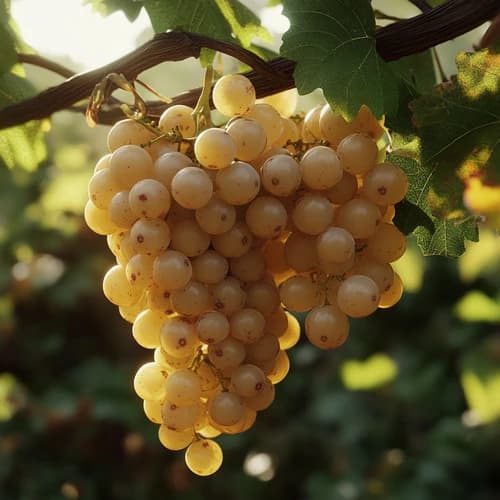
Roussanne originates from the northern Rhône in France, where it has been cultivated for centuries. The name most likely derives from the russet coloring (French: "roux") that the grapes take on at full ripeness. Historical records document the cultivation of the variety in the Rhône Valley as far back as the 16th century, where it played a central role particularly in the prestigious appellations of Hermitage and Crozes-Hermitage.
Over the course of history, Roussanne experienced mixed fortunes. Due to its demanding nature — it is susceptible to powdery mildew and prone to irregular yields — it was partially replaced in the 20th century by the more robust Marsanne. Only in recent decades has the variety experienced a renaissance as producers rediscovered its exceptional qualitative properties.
Today Roussanne is firmly rooted in the northern Rhône, where it has significance both as a blending partner and as a single-variety wine. From here it has made its way into other French wine regions such as Languedoc-Roussillon and Savoie. Internationally it is increasingly cultivated in California, Australia, and Washington State, where producers have recognized the potential of this noble variety.
Viticulture & Terroir
Roussanne is a demanding diva in the vineyard, requiring both patience and a deft touch from the winemaker. The variety prefers warm, sunny sites with good drainage and benefits from the long growing seasons of Mediterranean climates. At the same time it needs a certain coolness at night to maintain its characteristic balance between ripeness and freshness.
The best results are achieved from Roussanne on granite, limestone, and slate soils, such as those found in the northern Rhône. These lean, mineral-rich soils force the vines to root deeply and encourage concentration of flavors. In Hermitage it thrives especially on the steep granite slopes, which store warmth during the day and release it slowly at night — ideal conditions for slow, even ripening.
The main growing areas are concentrated in the northern Rhône, where Roussanne is at home in the appellations of Hermitage, Crozes-Hermitage, Saint-Joseph, and Saint-Péray. In the southern Rhône it plays a minor role in Châteauneuf-du-Pape Blanc. Outside the Rhône, Roussanne has established itself in the Languedoc, where the warm climate yields fully ripe grapes with intense aromas. In Savoie it is traditionally used for the Chignin-Bergeron appellation, where it produces particularly mineral wines on calcareous soils at medium elevations.
Internationally, successful plantings can be found on California's Central Coast, where the "Rhône Rangers" cultivate the variety with enthusiasm, as well as in the cooler regions of Australia such as Victoria and the Barossa Valley.
Wine Styles & Variants
Roussanne is produced in various styles, each emphasizing different facets of the variety. The classic style is dry and is often fermented and aged in stainless steel tanks or large, old wooden casks. This method preserves the fresh fruit aromas and the mineral component of the variety, resulting in elegant, enjoyable wines that reach their first drinking window after 2–3 years.
Ambitious producers are increasingly turning to barrique aging, sometimes with bâtonnage (stirring of the fine lees). This technique lends the wines additional complexity, creamy texture, and nutty notes without masking the characteristic aromas. Top wines from Hermitage or high-quality Californian blends benefit from this approach and can then age for 10–20 years or longer.
In the northern Rhône, Roussanne is rarely found as a single-variety wine. Traditionally it is blended with Marsanne, with Roussanne contributing structure, acidity, and aromatic finesse while Marsanne provides body and richness. The blend ratio varies according to the appellation and the producer's philosophy. In Saint-Joseph and Crozes-Hermitage, small amounts of Viognier may also be added, which contributes floral notes.
Regionally, clear stylistic differences emerge: Roussanne from the cool Savoie region is tighter and more mineral, while wines from the warm Languedoc are more opulent and fruit-forward. Californian Roussanne wines tend toward a more opulent style with higher alcohol and riper fruit aromas.
Typical Aromas
Primary Aromas (from the grape)
Pear: The leitmotif of Roussanne — from green pear in cool years to fully ripe, juicy Williams pears in sunny vintages. This aroma runs like a thread through the various production levels.
White peach: Especially in warmer climates, Roussanne develops this delicate, aromatic stone-fruit note that lends the wine elegance and depth.
Apricot: In fully ripe grapes from southern sites, an apricot note frequently appears, which can seem both fresh and slightly dried, giving the wine sweetness and complexity.
Honeysuckle and acacia blossom: Characteristic floral notes, especially pronounced in Roussanne from cooler sites or younger wines. They lend the wine a fragrant, elegant dimension.
Provençal herbs: A hint of thyme, sometimes also fennel or dry Mediterranean herbs, which give the variety its typically southern French personality and come to the fore especially in sun-drenched sites.
Secondary Aromas (from winemaking)
Honey: Develops particularly in riper grapes and with longer skin contact; gives the wine a warm, sweet component without actual residual sugar.
Almond: A delicate almond note often develops through contact with the lees and barrel aging, ranging from fresh green almonds to toasted almonds.
Brioche and butter: In wines produced with bâtonnage and barrique aging, these creamy, yeasty notes develop, lending the wine additional texture and complexity.
Tertiary Aromas (from aging)
Beeswax: As high-quality Roussanne wines age, they develop this characteristic note, often accompanied by a hint of propolis — a sign of great maturity and complexity.
Toasted nuts: Almonds and hazelnuts become more intense over time and show toasted nuances, lending the wine depth and an almost meditative character.
White truffle: In very old, exceptional Roussanne wines, a delicate truffle note can develop — rare, but fascinating and a sign of supreme maturity.
Roussanne is among the most cellar-worthy of all white wine grapes. While simpler wines reach their peak after just 2–3 years, top wines from Hermitage can comfortably age 15–20 years, some even longer. During this time the wine undergoes a remarkable evolution from fruit-forward to complex, nuanced tertiary aromas.
Food Pairing
Perfect Combinations
Roasted turbot or sole with herb butter: The full-bodied, oily texture of Roussanne harmonizes perfectly with these premium fish prepared with butter. The moderate acidity cuts through the richness, while the herb notes in the wine pick up the fresh herbs in the dish. A classic Hermitage Blanc makes this a truly unforgettable experience.
Chicken or pork in a cream sauce with mushrooms: The creamy texture and nutty aromas of Roussanne mirror the sauce perfectly, while the fruit aromas provide a lovely counterpoint to the earthy mushrooms. Wines with barrique aging particularly shine here.
Soft cheeses such as Brie or Camembert: The creaminess of the cheese and the oily texture of Roussanne meld on the palate into a harmonious whole. The honey and nut notes in the wine ideally complement the buttery aromas of the cheese — a pairing that works with both younger and aged wines.
Risotto with pumpkin or porcini mushrooms: The creamy consistency of the risotto and the full-bodied character of Roussanne are made for each other. The earthy mushroom or sweet pumpkin notes find their counterpart in the complex aromas of the wine, while the acidity balances the richness of the dish.