



Introduction
Blaufränkisch is the uncrowned king of Austrian red wines – a grape variety with character, admired worldwide for its intense fruit, distinctive spice and impressive ageing potential. Shaped by the Pannonian climate of Burgenland, this indigenous variety produces wines that are powerful and elegant at the same time. What makes Blaufränkisch so special is the perfect balance between juicy cherry fruit, peppery spice and a vibrant acidity structure that lends even full-bodied wines a refreshing tension.
Flavour Profile & Characteristics
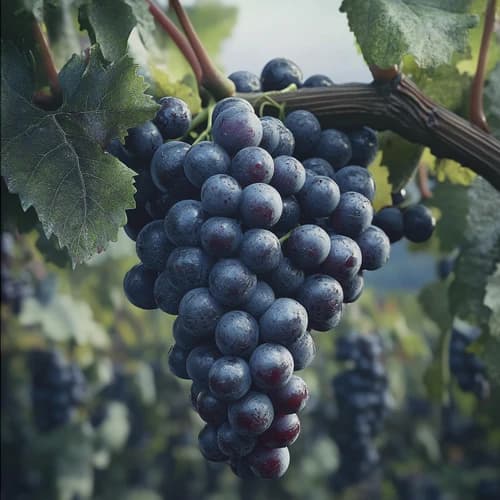
Blaufränkisch impresses with a distinctive, individual flavour profile that clearly sets it apart from other red varieties. In the glass the variety presents a deep, dark ruby red that already promises power and concentration.
The first impression on the palate is dominated by juicy black cherry and ripe blackberry. This dark fruitiness is never jammy or overripe, however; it always retains a fresh, lively component. The characteristic high acidity of Blaufränkisch ensures that even full-bodied, alcohol-rich wines never feel heavy or tiring – on the contrary, they invite the next sip.
What especially distinguishes Blaufränkisch is its spicy component: black pepper, sometimes white pepper notes too, runs through the wine and gives it a piquant, almost smoky nuance. Floral hints of violet and a subtle earthiness reminiscent of damp forest floor or freshly turned soil add further complexity.
The tannic structure is firm but fine-grained – in young wines still grippy and present, in aged examples velvety and integrated. Depending on the ageing method, the flavour profile varies: wines aged in stainless steel emphasise the fruity, spicy side, while wines from the barrique additionally develop notes of vanilla, chocolate and toasty aromas.
With age, Blaufränkisch improves enormously: the fruit becomes more concentrated, the spice more complex, and tertiary aromas of tobacco, leather and dried herbs develop. A well-made Blaufränkisch from a good vintage can comfortably age 15–20 years, steadily gaining depth and elegance throughout.
Origin & History
The origins of Blaufränkisch lie in the mists of history, yet DNA analyses have revealed that the variety is most likely a natural cross between Heunisch (Gouais Blanc) and an unknown wild vine. The name "Blaufränkisch" first appears in Austrian winegrowing records in the 18th century; the "Fränkisch" element probably does not refer to the Franconia region but rather to the origin of the vines from the French-speaking world.
The variety has a long tradition in the Pannonian region – that is, in Austria, Hungary and the surrounding areas. In Hungary it has been cultivated for centuries as Kékfrankos and is one of the most important red varieties there. In Germany, specifically in Württemberg, the variety is known as Lemberger and is enjoying increasing popularity.
The true epicentre of Blaufränkisch lies in Austrian Mittelburgenland, specifically around the villages of Deutschkreutz, Neckenmarkt and Horitschon. Here, on the iron-rich soils of the Pannonian basin, the variety has found its perfect home. The continental climate with hot summers and cool nights creates ideal conditions for the development of its characteristic aromatics.
Since the 1990s Blaufränkisch has experienced a renaissance. Visionary producers recognised the enormous potential of the variety and, through careful vineyard work, yield reduction and targeted ageing, created wines of world-class level. Today Blaufränkisch is counted among the internationally recognised quality varieties and is often mentioned in the same breath as Nebbiolo, Syrah or Cabernet Franc.
Viticulture & Terroir
Blaufränkisch is demanding and thrives optimally only under specific conditions. The variety prefers warm, continental climates with sufficient rainfall during the growing season. Particularly important are hot summer days that ensure phenolic ripeness, combined with cool nights that preserve the characteristic acidity.
Soils play a decisive role in shaping the character of the wine. In Mittelburgenland, the stronghold of Blaufränkisch, iron-rich loam soils dominate, often interspersed with limestone and slate. These soils yield particularly spicy, mineral wines with good structure. Slate soils produce more elegant, finer variants, while limestone soils contribute more power and concentration.
The variety ripens relatively late – usually from late September to early October – and therefore requires a long growing season. Harvesting too early leads to unripe tannins and green notes; harvesting too late can cost the wine its typical acidity. Timing is critical.
Key growing regions worldwide:
- Austria: Mittelburgenland (DAC), Leithaberg, Carnuntum, Eisenberg
- Hungary: Sopron, Eger, Szekszárd
- Germany: Württemberg (as Lemberger)
- Slovakia: Small Carpathians
- Czech Republic, Croatia, USA (Washington State): Isolated but promising projects
In Austria, the Mittelburgenland DAC appellation was established in 2005, dedicated exclusively to Blaufränkisch and prescribing strict quality criteria. This classification has contributed significantly to the variety's international reputation.
Wine Styles & Variants
Blaufränkisch presents itself in various styles depending on the winemaker's philosophy and ageing method:
Classic ageing in stainless steel or large wooden cask: These wines emphasise the primary fruit and spice of the variety. They are approachable, juicy and show the typical pepper note particularly clearly. Ideal for earlier drinking, usually after 2–5 years.
Barrique ageing: Many top producers opt for ageing in French barriques (usually 225-litre barrels). The oak influence should remain subtle and not overshadow the fruit. These wines are more concentrated, complex and long-lived. The toasty aromas integrate over time and lend the wine additional depth.
Reserve and single-vineyard wines: The top categories come from the best sites and low yields. These wines possess enormous ageing potential and develop an impressive complexity over the years. They combine power with elegance and belong to the absolute world elite.
Blends: Blaufränkisch is also frequently blended with other varieties – for example with Zweigelt (for greater accessibility), Cabernet Sauvignon or Merlot (for more structure) or St. Laurent (for more elegance). In Hungary, blends with Kékfrankos are very common.
Rosé: Excellent rosé wines are also made from Blaufränkisch, usually marketed as "Schilcher" or simply "Blaufränkisch Rosé". These wines are powerful, spicy and far more structured than many other rosés.
Typical Aromas
Primary Aromas (from the grape)
Black cherry: The centrepiece of the aroma profile – juicy, dark and intense, never sweet. Depending on climate, riper or more tart, but always present.
Blackberry: Dark, berry-fruit notes complement the cherry, especially in warm years or with fully ripe fruit. Sometimes blueberry notes appear too.
Black pepper: The signature of Blaufränkisch – a spicy, almost smoky note that gives the wine its characteristic piquancy. Particularly pronounced on lean soils.
Violet: Floral nuances, perceivable above all on the nose, give the wine an elegant, perfumed component.
Earthy notes: Subtle hints of moist earth, forest floor or undergrowth lend the wine groundedness and terroir expression.
Secondary Aromas (from winemaking)
Vanilla and clove: Barrique ageing produces gentle vanilla notes and sweet spice aromas that interweave with the fruit.
Cocoa and dark chocolate: With longer maceration time and ageing in wood, chocolatey nuances develop that give the wine fullness and creaminess.
Toasty aromas: Light toast and roasting notes from the oak lend the wine additional complexity without dominating the fruit.
Tertiary Aromas (from ageing)
Tobacco and leather: With increasing bottle age, spicy, leathery notes develop reminiscent of fine suede or dry tobacco.
Dried herbs: Thyme, sage and other Mediterranean herbs in dried form emerge after several years of ageing.
Mushrooms and truffle: In very old wines (15+ years) earthy, mushroomy notes can develop, lending the wine additional depth and umami character.
Blaufränkisch belongs among the age-worthy reds. Simpler qualities are ready to drink after 2–4 years, while high-quality reserve wines can age 10–20 years and beyond. The high acidity and firm tannic structure are the guarantee of longevity.
Food Pairing
Perfect Combinations
Braised beef or pot roast: The firm tannins and spicy aromatics of Blaufränkisch harmonise perfectly with slowly braised meat. The wine's acidity cuts through the fattiness of the sauce, while the dark fruit complements the roasted aromas of the meat. A classic Sunday roast with red cabbage and dumplings is the perfect accompaniment.
Game dishes – venison goulash or saddle of roe deer: Blaufränkisch and game are made for each other. The earthy notes of the wine mirror the gaminess of the meat, the acidity refreshes, and the spice harmonises with the typical juniper berry or lingonberry garnishes. A medium-weight Blaufränkisch for wild goulash, or a powerful reserve wine for pink-roasted saddle of roe deer – perfect.
Hungarian goulash or paprikash: Since Blaufränkisch is also at home in Hungary, it pairs excellently with hearty Hungarian dishes. The spice of the paprika finds its echo in the peppery note of the wine, while the acidity balances the richness of the sauce.
Aged hard cheese – mountain cheese or old Gouda: An aged Blaufränkisch particularly comes into its own with mature, well-seasoned cheeses. The umami notes of the cheese and the tertiary aromas of the wine complement each other wonderfully, while the tannins provide structure against the creaminess of the cheese.
Vegetarian alternative – lentil and mushroom stew: Even without meat, Blaufränkisch can shine. A hearty stew of beluga lentils, wild mushrooms, root vegetables and thyme picks up the earthy, spicy notes of the wine and offers sufficient substance for its powerful structure.
Blaufränkisch is a variety well worth discovering – an Austrian treasure with international stature, bridging tradition and modernity. Whether young and fruity or aged and complex, this variety offers something for every wine lover and proves that Austrian red wine stands shoulder to shoulder with the great names of the world.